





Pedestal Sugar Basket
A pedestal sugar basket sits on a footed base, offering delicate tableware for the dining table across Georgian and Victorian periods.
Pedestal Sugar Basket
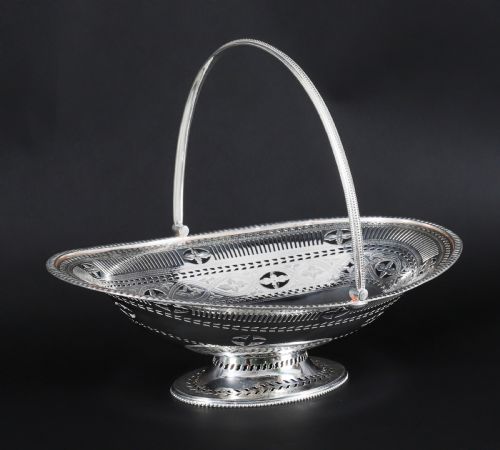
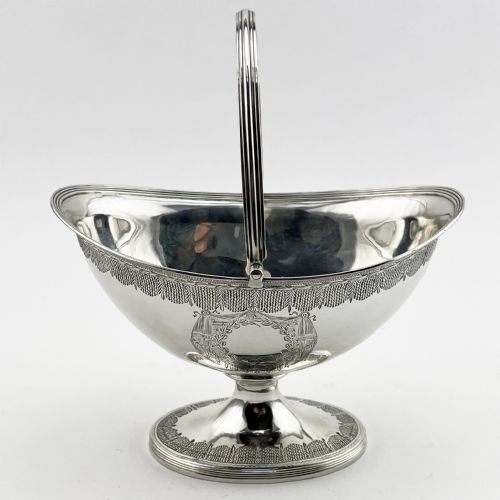
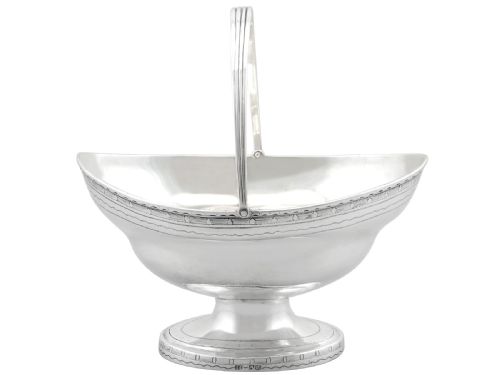
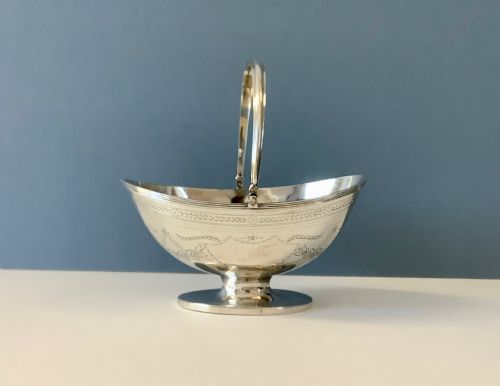
A pedestal sugar basket stands on a raised foot, serving as tableware for holding sugar, sweets, or fruit across the Georgian, Victorian, and Edwardian eras. These forms appear in sterling silver, silver plate, and old Sheffield plate, often featuring swing handles or fretwork.
The pieces on this page span from the mid-eighteenth century to the early twentieth century. Alongside traditional sugar baskets, buyers encounter sweetmeat baskets, fruit baskets, bonbon dishes, and pot pourri baskets sharing similar pedestal construction.
How they were made
Silversmiths constructed these vessels using sterling silver or copper base metals coated in silver plate. Many interiors feature a gold wash, known as vermeil, which protected the metal from the corrosive nature of loose sugar.
Craftsmen employed techniques such as piercing, fretwork, and chasing to decorate the body of the basket. Swing handles were riveted or pinned to the rim, allowing the handle to fold down beside the pedestal foot.
Some baskets swing both ways, proving that indecision was fully engineered into Victorian dining etiquette.
What varies in quality
The refinement of the piercing and the crispness of the chased decoration separate standard examples from finer pieces. Heavier gauge silver provides a more rigid structure, particularly in the delicate openwork of the basket walls.
The retention of the original gold wash inside the bowl indicates better preservation and higher initial status. Maker marks and clear hallmarks add distinction, showing the work of recognised silversmiths.
Henry Chawner·Hammond, Creake And Co·W M F
The Pedestal Sugar Basket Glossary
- Sterling silver
- An alloy containing 92.5 percent silver by weight, used for durable and high-status tableware. It bears hallmarks indicating the maker and year of assay.
- Old Sheffield plate
- A fused composite of silver and copper produced before electroplating was invented. This technique sandwiches a thin sheet of silver onto a thicker copper core.
- Gold wash
- A thin layer of gold applied to the interior silver surface of a basket. This finish prevented the sulfur in unrefined sugar from tarnishing the silver.
- Fretwork
- Open patterns cut through the metal sheet of the basket body. This technique created light, decorative walls for sweetmeat and sugar containers.
- Swing handle
- A movable arched handle attached to opposite sides of the rim. It allowed easy access to the contents while maintaining a balanced profile on the pedestal.
Pedestal Sugar Basket: Frequently Asked Questions
What was a pedestal sugar basket used for?
These vessels held loose lump or grain sugar on the dining table during formal tea and dessert services. Guests used small tongs to serve sugar directly from the basket into their cups.
Over time, similar pedestal forms also served for sweetmeats, bonbons, and fruit. Their elevated design kept the contents prominent and within reach during gatherings.
How do I know if it is sterling silver or silver plate?
Sterling silver pieces typically carry a set of hallmarks stamping the lion passant, city mark, and date letter. These marks confirm the standard of the metal through official testing.
Silver plated and old Sheffield plated items lack these sterling marks and may show hints of copper beneath the silver surface where wear has occurred over decades of use.
What is a gold wash inside the basket?
A gold wash, or vermeil, is a thin coating of gold applied to the interior bowl of the basket. Eighteenth and nineteenth-century sugar was often acidic or unrefined, which could tarnish bare silver.
The gold layer protected the underlying silver from chemical reactions and provided a warm, contrasting interior colour against the polished exterior.
How do I date a pedestal sugar basket?
Hallmarks on sterling pieces provide the most precise dating by recording the exact year and assay office. Stylistic clues, such as Neo-Classical swags or Art Nouveau curves, also indicate the period of manufacture.
Manufacturing methods changed over time, moving from hand-pierced Georgian sheet silver to Victorian cast components and Edwardian machine-assisted fretwork.