

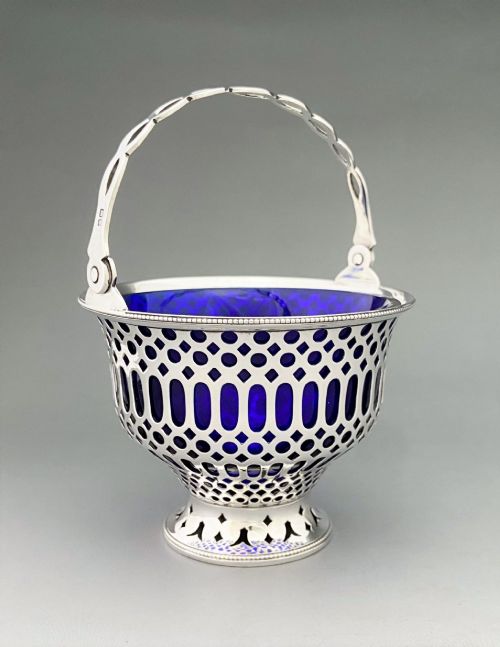


Silver Basket Blue Liner
These silver basket blue liner pieces combine bright metalwork and deep cobalt vessels to grace any traditional table setting.
Silver Basket Blue Liner
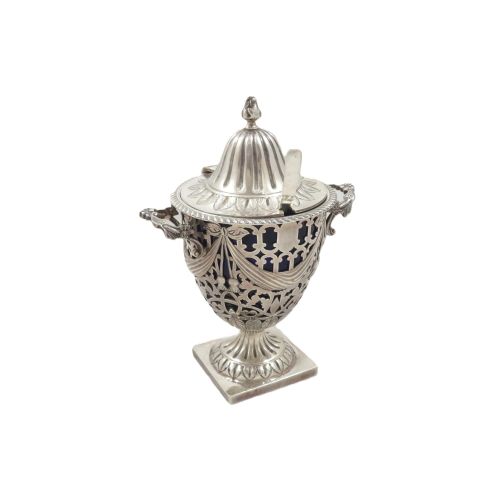
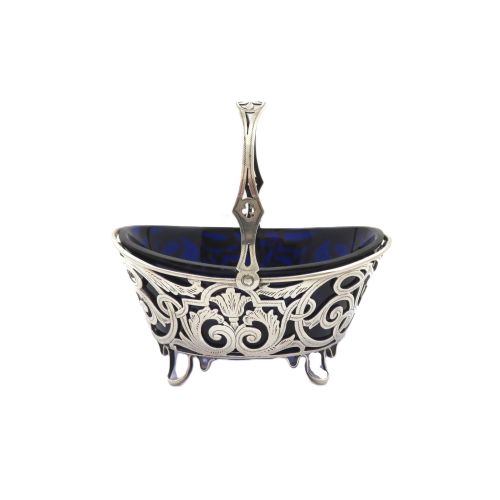
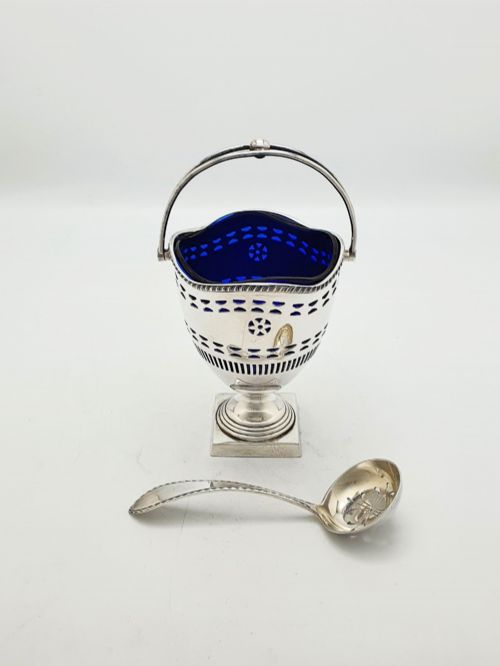
When you search for a silver basket blue liner, you are looking at tableware designed to hold sugar or cream upon the dining table, often taking the form of a sugar basket, sugar bowl, or cream pail. These table pieces serve both a decorative and a practical purpose, presenting a colourful contrast between the polished metal frame and the vivid glass insert placed inside.
You are most likely to meet Victorian and Edwardian examples on this page, alongside Georgian pieces dating back to the eighteenth century. The forms range from pierced frames and wirework structures to covered urns with swing handles, reflecting the changing tastes of dining room presentation across multiple periods.
The materials combine precious or plated silver with striking blue glass liners, sometimes referred to as Bristol blue glass. This pairing allows the deep cobalt tone of the glass insert to shine through the intricate cut-outs and pierced patterns of the surrounding silver frame.
How they were made
Makers formed the metal frames using sterling silver or silver plate, often employing piercing, wirework, and casting techniques to create openwork patterns. Pierced scrollwork and wirework frames required steady hand-sawing and soldering, whilst cast elements such as floral handles added weight and relief detail.
The glass liners were typically blown or moulded from cobalt or Bristol blue glass to fit snugly within the metal cage. This inner vessel protected the silver from moisture and food acids while providing a vivid splash of colour.
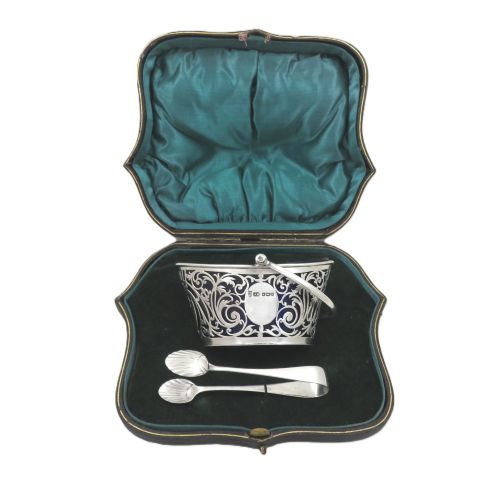
Some baskets come with original cases, as if someone treated a sugar bowl with the reverence usually reserved for fine jewellery.
What varies in quality
The distinction between ordinary items and the finest pieces lies in the crispness of the piercing and the weight of the metal. Heavier sterling silver frames with hand-cut pierced designs and cast cast-work show superior craftsmanship compared to lighter silver plate alternatives.
The presence of an original glass liner also influences the character of the piece. Matching an antique frame with its proper cobalt or Bristol blue glass insert preserves the integrity of the design.
Aldridge & Green·Elkington & Co
The Silver Basket Blue Liner Glossary
- Cream pail
- A small bucket-shaped vessel used for serving cream, often featuring a swing handle and a matching glass liner. These items date predominantly from the Georgian period.
- Pierced work
- A technique where metal is pierced and cut away to form decorative patterns, allowing the blue glass liner to show through. This openwork style defines many eighteenth and nineteenth-century designs.
- Wirework
- A method of constructing baskets from intertwined or soldered silver wires rather than solid sheet metal. This creates a lightweight, cage-like appearance popular in Georgian and later tableware.
- Bristol blue glass
- A deep vibrant cobalt blue glass traditionally produced in the Bristol area during the eighteenth and nineteenth centuries. It remains a hallmark of quality liners in sugar baskets.
- Swing handle
- A movable arched handle attached to the rim of the basket by pivots. This feature allows the handle to drop to the side for easy access to the contents.
Silver Basket Blue Liner: Frequently Asked Questions
What is a silver basket blue liner used for?
These pieces were primarily designed as sugar bowls, cream pails, or sweetmeat baskets for the dining table. The inner glass vessel held loose sugar or cream while protecting the metal exterior.
Over time, they transitioned from functional dining implements into decorative display objects valued for their striking contrast between silver and cobalt glass.
How do I date a silver basket?
Dating relies upon stylistic markers such as Georgian wirework, Victorian floral casting, or Edwardian neo-classical motifs. Hallmarks stamped into the silver provide official assay office symbols and date letters.
Comparing the manufacturing technique and the shape of the swing handle also helps distinguish eighteenth-century pieces from later nineteenth-century revivals.
Are the blue glass liners removable?
Yes, the glass inserts are designed to lift out independently from the metal frame. This allows for easy cleaning after use and safe washing separate from the silver.
Collectors look for original glass liners that fit the contours of the basket precisely without rocking or catching on the internal frame.
How do I care for silver with glass liners?
Wash the glass liner in warm soapy water and dry it thoroughly before placing it back into the metal frame. Avoid harsh abrasives that could scratch the cobalt surface.
Polish the silver frame with a soft cloth and approved cleaner, taking care not to let polish residue gather in the pierced openings or wirework joints.