




Enamelled Glass Vase
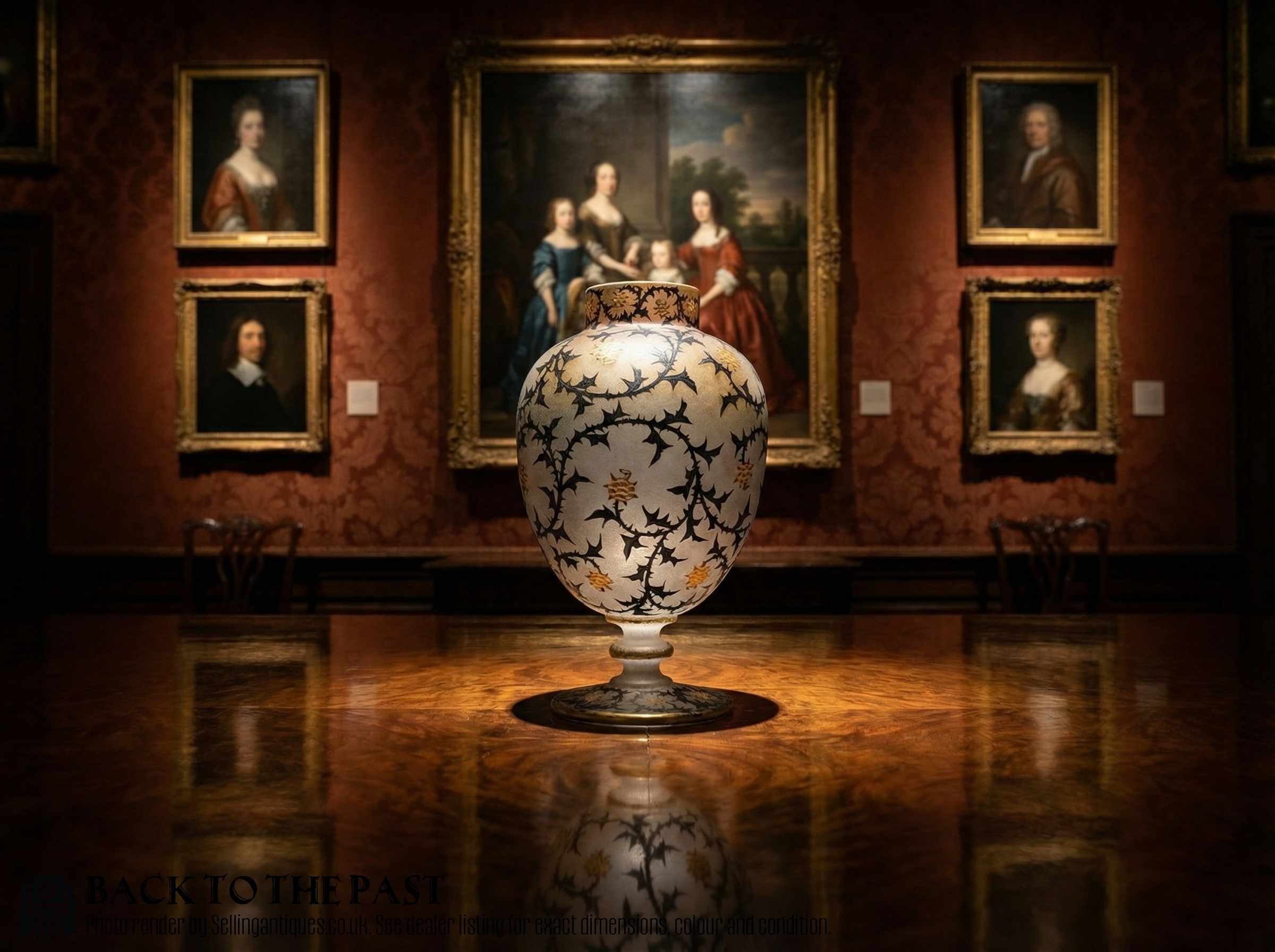
An enamelled glass vase brings together the chemistry of coloured glass and the precision of surface painting, rewarding close inspection with layered depth.
Enamelled Glass Vase
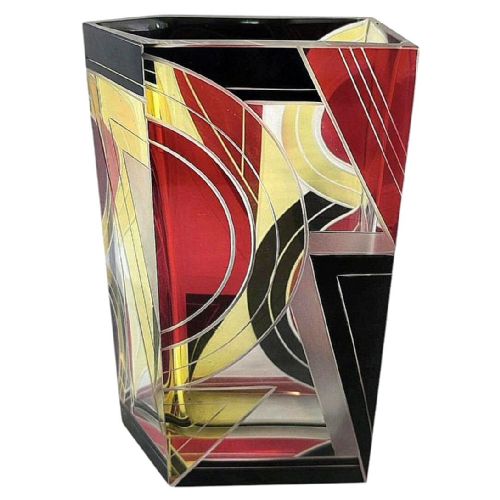
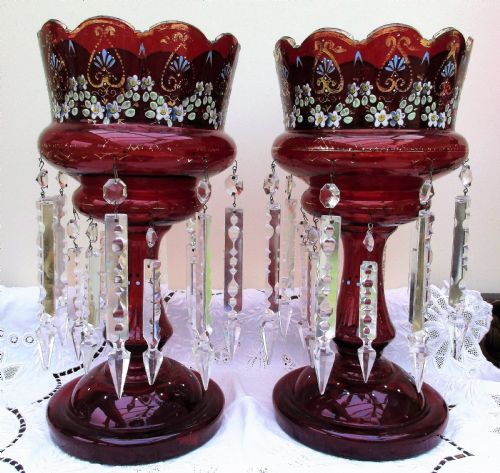
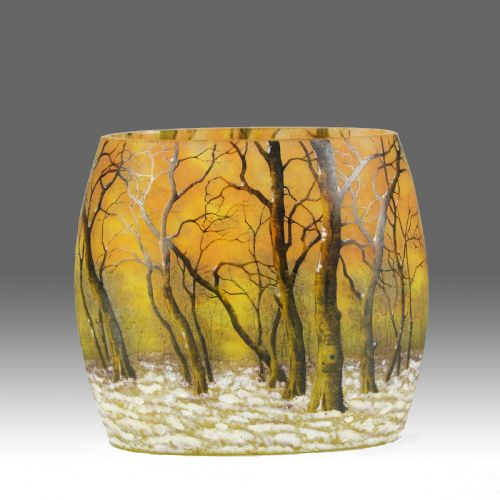
When you search for an enamelled glass vase, you encounter vessels that span from the Victorian period through the Art Nouveau and Art Deco eras, showcasing diverse coloured grounds from cranberry and ruby to deep amethyst, black, and white opaline glass.
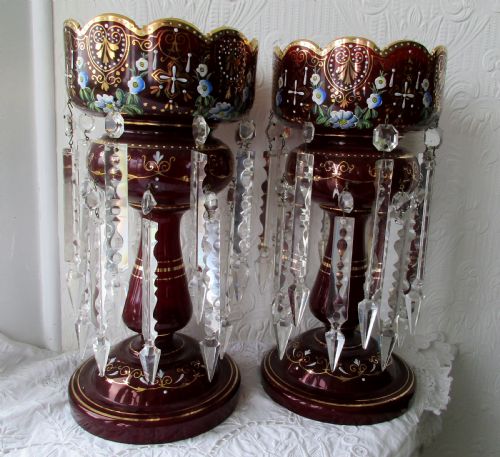
The objects themselves range from simple bulb vases and mantel lustres to large cameo pieces, garniture sets, and geometric forms produced across Britain, France, and Bohemia.
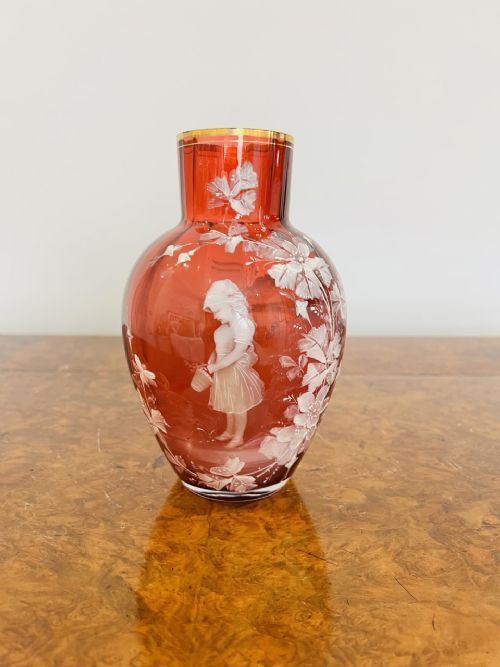
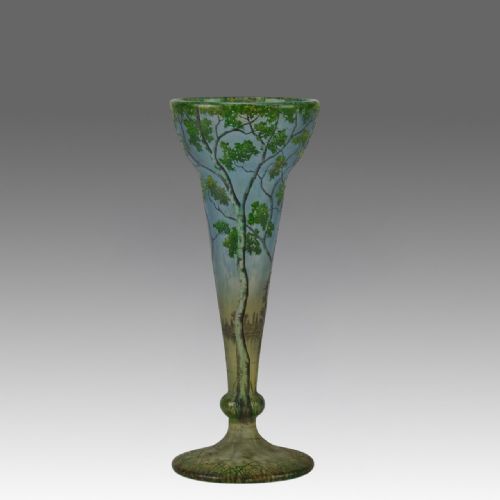
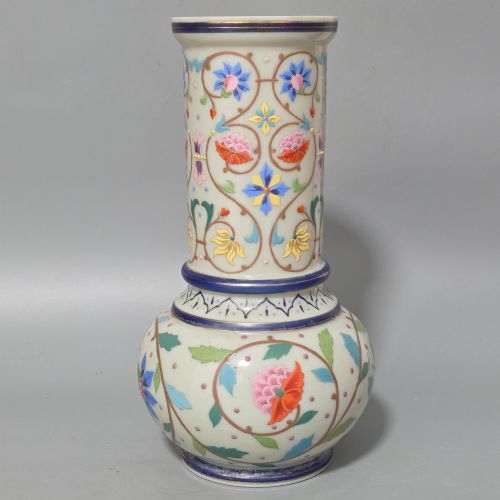
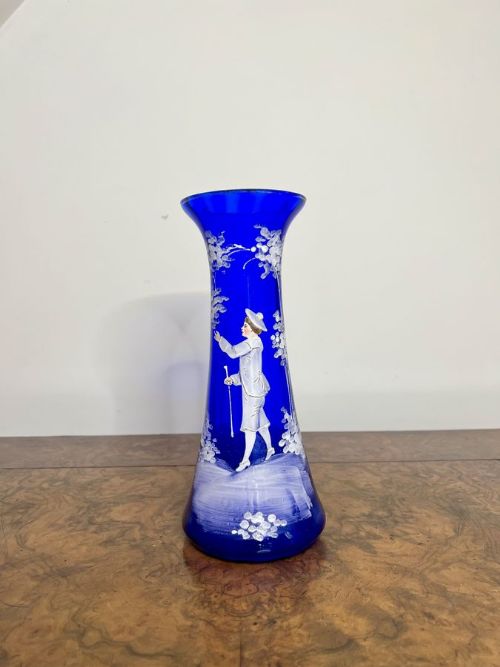
You are most likely to meet Victorian pieces featuring hand-painted floral motifs or the distinct white enamel silhouettes associated with Mary Gregory, alongside Continental Art Nouveau botanical scenes.

How they were made
Makers utilised free-blown, cased, or cameo glass as a foundation, applying powdered glass enamels suspended in an oil or water medium directly onto the surface before firing.
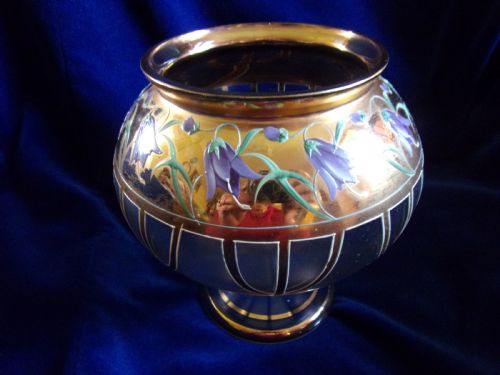
Gold leaf and gilding were frequently layered alongside opaque and translucent enamels, requiring multiple firings in a kiln to bond the metallic pigments permanently to the lead crystal, ruby glass, or opaline body.
Enamelled Glass Vase Retail Price Guide 2026
Typical asking prices for enamelled glass vase among the pieces listed under this phrase on Sellingantiques today, from the lower quarter to the upper quarter. They describe what is for sale here now, not the wider market.
French and Bohemian workshops dominate the documented makers, ranging from Daum Frères cameo glass to Moser gilt and enamelled production.
What varies in quality
The distinction between ordinary production and top-tier output lies in the crispness of the brushwork and the complexity of the enamelling technique, where multi-layered floral or landscape designs demonstrate superior draughtsmanship.
The weight of the glass body, the richness of underlying ruby, cranberry, or amethyst tones, and the integration of acid-etching or gold leaf all elevate a piece from standard decorative ware to exceptional craftsmanship.
Daum Frères·Thomas Webb·Legras·Karl Palda·Moser·Kralik Glass·Harrach·Meyr's Neffe·Philippe-Joseph Brocard
The Enamelled Glass Vase Glossary
- Enamel
- A powdered glass flux mixed with metallic oxides for colour, painted onto a glass body and fired in a kiln. This technique allows for opaque and translucent surface decoration.
- Cameo Glass
- Glass vessels created by layering two or more distinct colours, then carving away the exterior layer to leave a raised design in relief. This method requires immense skill from the glassmaker.
- Cased Glass
- A technique where a layer of glass is encased in one or more outer layers of a different colour. When cut or etched, the contrasting layers beneath are revealed.
- Mantel Lustre
- A decorative vase or urn fitted with hanging glass prisms intended to catch and refract light. They were popular centrepieces on Victorian mantelpieces.
- Opaline Glass
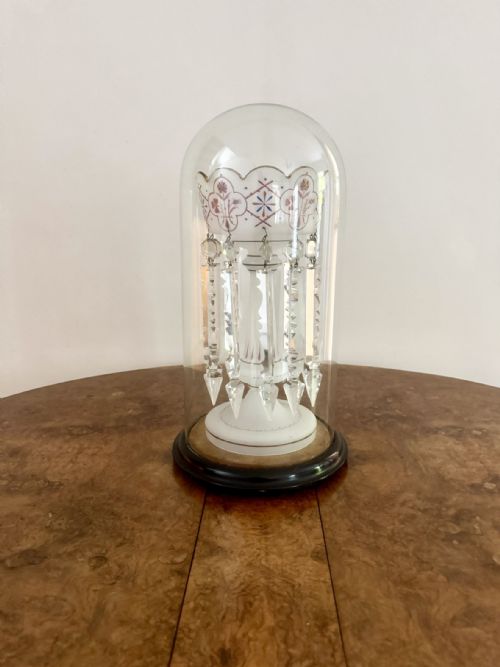
- An opaque, pale pastel glass developed in the nineteenth century to imitate porcelain. It provides a smooth white ground well-suited for hand-painted enamel floral details.
Enamelled Glass Vase: Frequently Asked Questions
Are these vases safe to hold water?
Many nineteenth-century and early twentieth-century vessels were intended primarily for display as mantel ornaments or garniture sets rather than for holding fresh flowers.
Test the interior for hairline cracks before filling, and avoid using cold water in antique lead crystal or cased glass to prevent thermal shock.
How can I tell Victorian pieces from Art Nouveau ones?
Victorian examples often favour symmetrical floral compositions, opaque opaline grounds, or the distinct white enamel figures of children against ruby and cranberry glass.
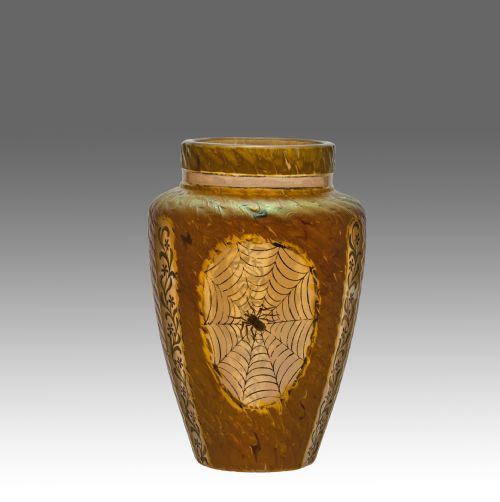
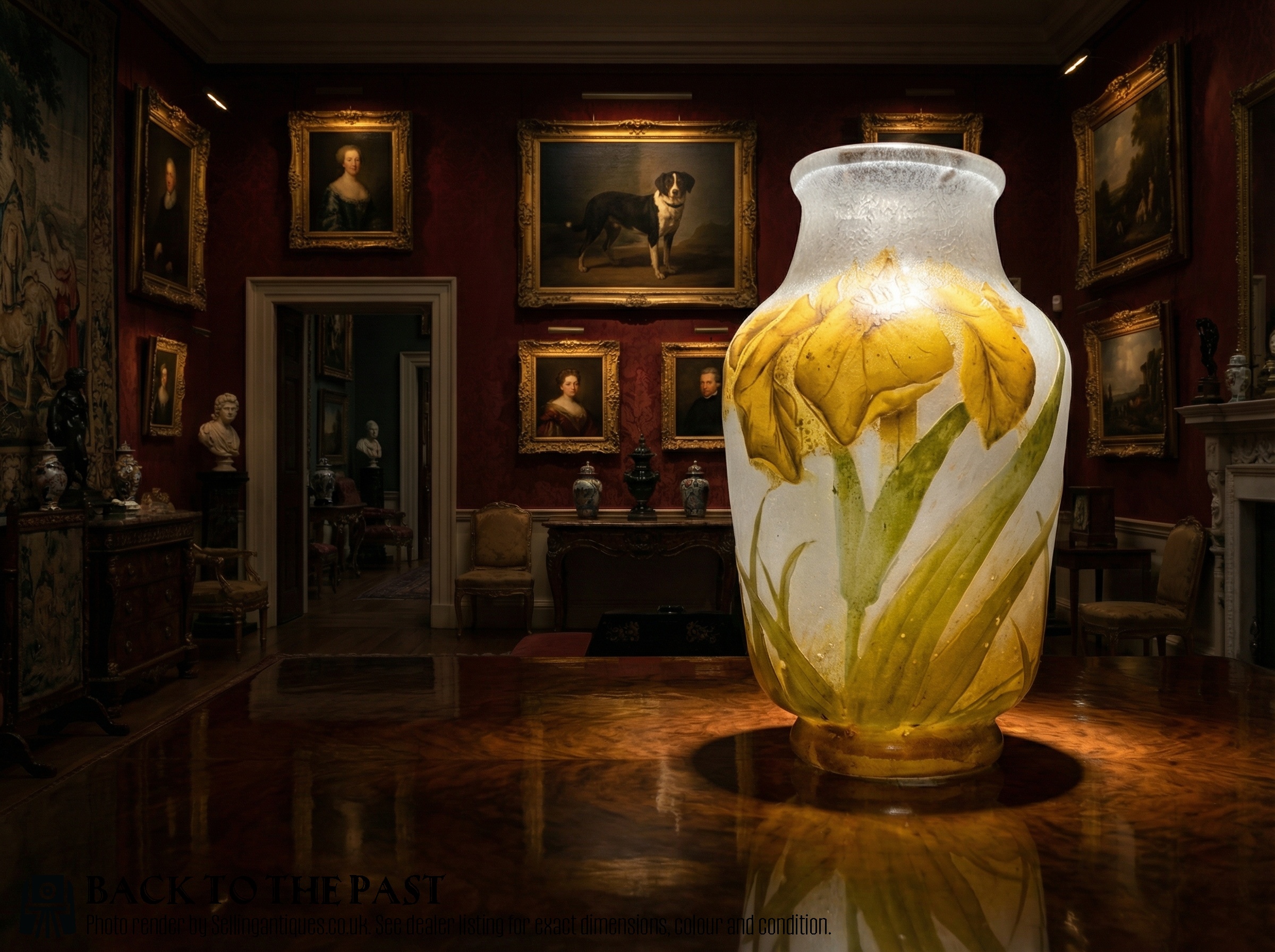
Art Nouveau pieces typically display flowing organic lines, stylised botanical motifs such as irises or thistles, and iridescent or cameo surfaces inspired by natural forms.
What is the difference between Bohemian and French glass?
Bohemian production frequently utilises heavy overlay techniques, deep amber or green tones, and robust geometric or rustic hunting scenes that reflect Central European traditions.
French output from makers like Daum or Legras tends to lean towards delicate cameo carving, subtle acid-etched landscapes, and refined floral enamelling characteristic of the École de Nancy.