




Yellow Glass Vase
A yellow glass vase brings vibrant colour and layered craftsmanship into a room, spanning delicate Victorian vaseline glass and bold Art Nouveau cameo pieces.
Yellow Glass Vase
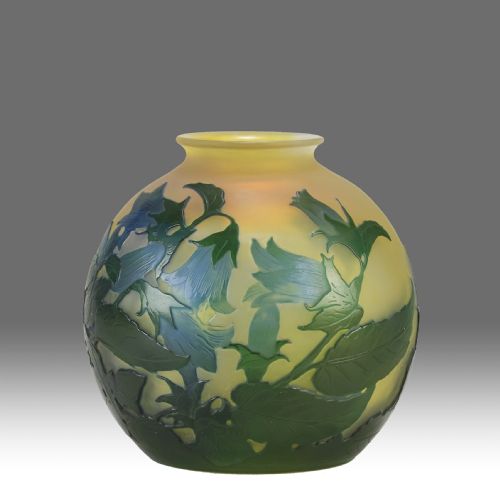
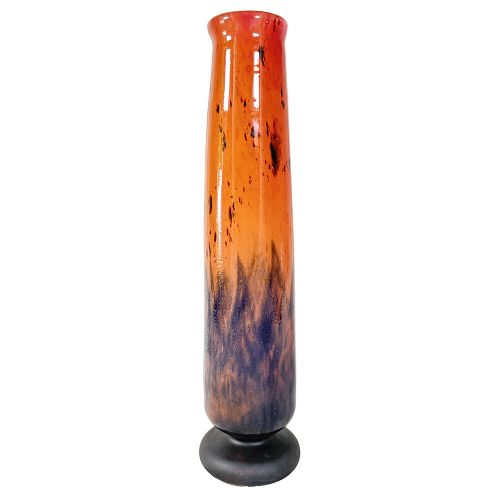
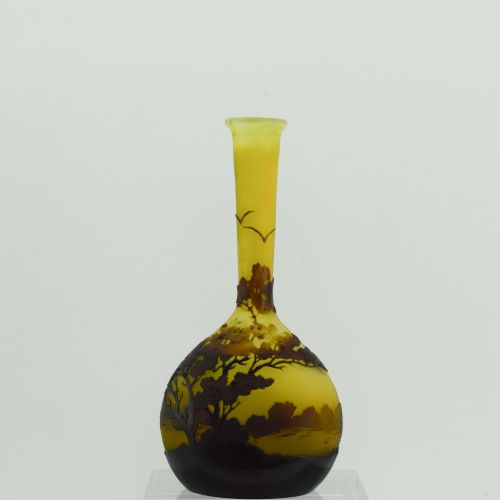
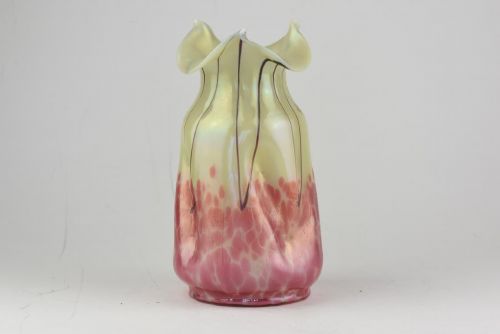
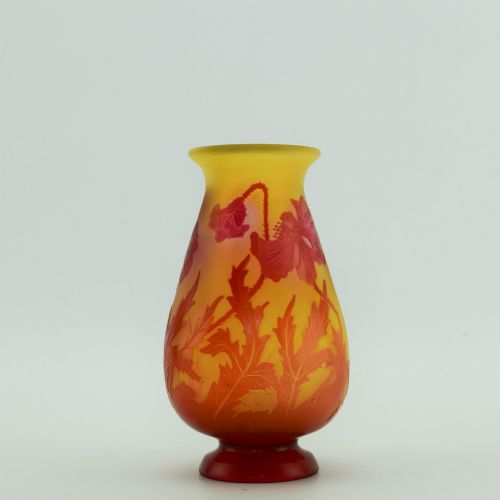
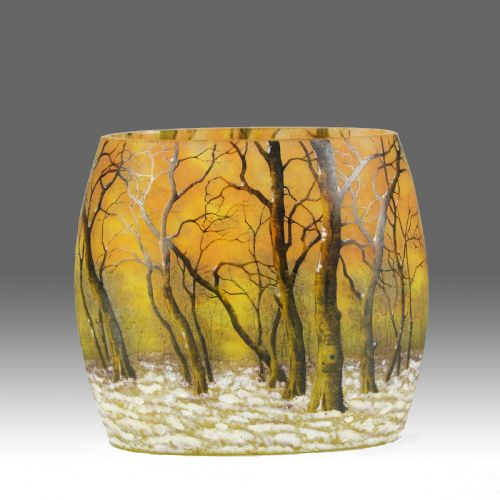
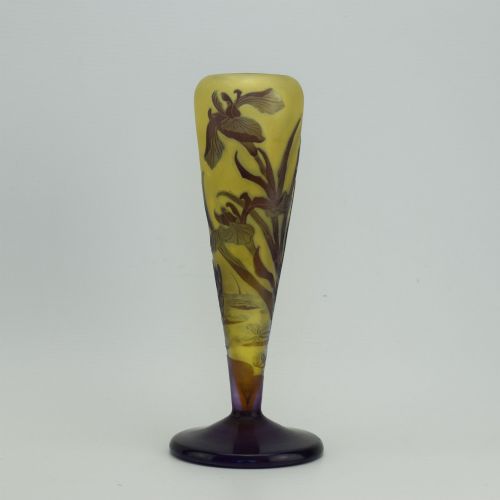
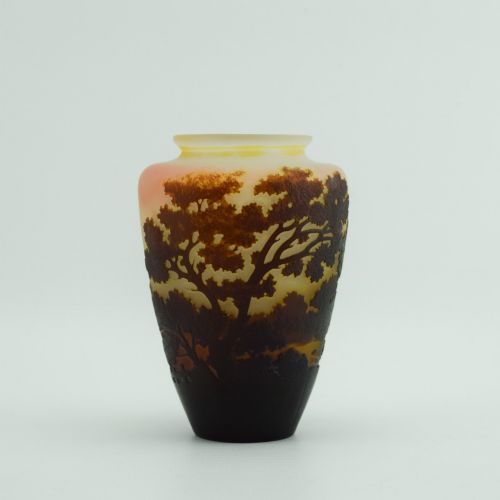
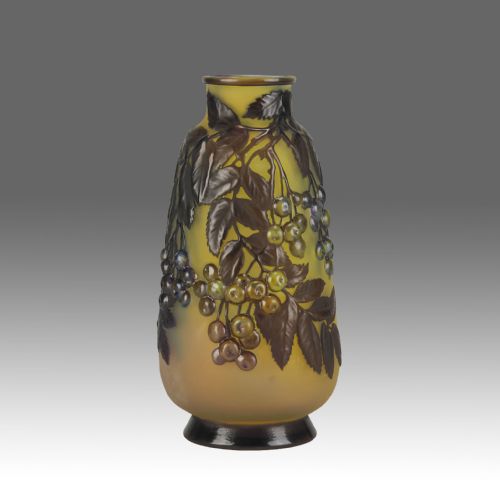
A yellow glass vase encompasses vessels produced across the nineteenth and twentieth centuries, utilising techniques ranging from free-blowing to intricate acid-etching. The selection here leans heavily towards early twentieth-century French cameo glass and Art Deco Bohemian designs.
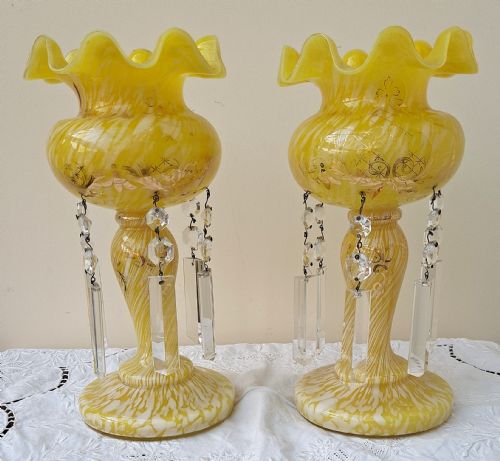
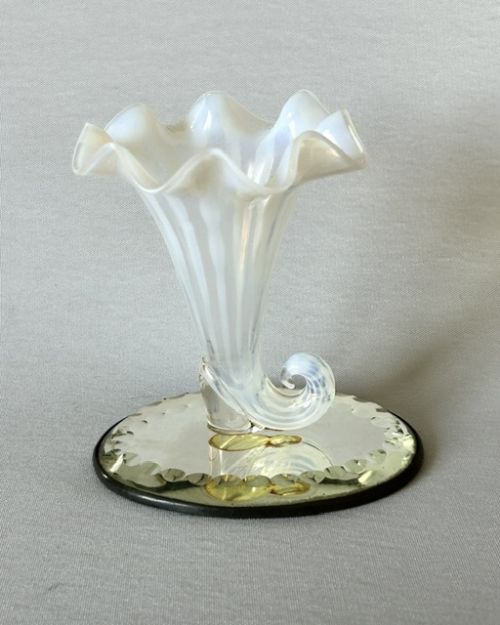
Makers utilised various forms, including tall floral vessels, small cabinet pieces, and nineteenth-century Victorian lustres adorned with hanging drops. The colour yellow appears in translucent vaseline glass, opaque opaline, and layered cameo glass revealing contrasting hues beneath.
How they were made
Cameo glass pieces required multiple layers of coloured glass fused together before being hand-carved or acid-etched to create raised floral and landscape motifs. Enamel and gilt details were frequently added to the surface and fired for permanence.
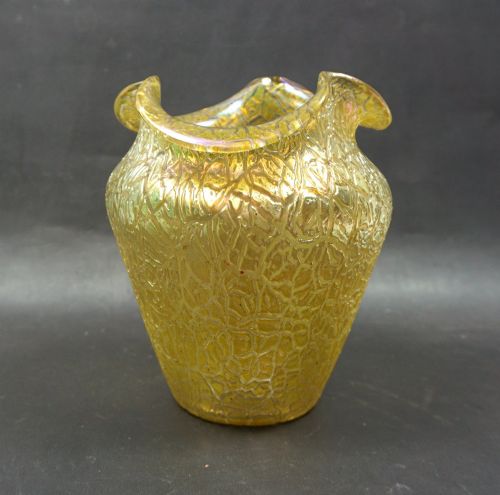
Vaseline glass incorporated uranium oxide into the batch to achieve a distinctive translucent yellow-green tone that reacts under ultraviolet light. Mold-blown and free-blown techniques shaped the basic vessel before rims were crimped or surfaces wheel-engraved.
Vaseline glass owes its glowing personality to a pinch of uranium, making antique tableware cheerfully radioactive.
What varies in quality
The distinction between ordinary production and superior work lies in the depth and crispness of the acid-etching or hand-carving on cameo pieces. Finer examples show careful control over glass layers, resulting in realistic shading across botanical and landscape subjects.
Surface finishing and hand-painted enamel details also determine quality, with superior pieces displaying precise brushwork and balanced compositions. The weight and clarity of the base material reflect the skill of the original workshop.
Emile Gallé·Daum Frères·Loetz·Karl Palda·Thomas Webb and Sons·Paul Nicolas
The Yellow Glass Vase Glossary
- Cameo Glass
- Glass formed with multiple distinct layers of different colours, where outer layers are cut away to leave a raised design. This technique demands immense precision from the glassblower and carver.
- Vaseline Glass
- Glass containing uranium dioxide that produces a transparent or translucent yellow-green coloration. It glows brightly under ultraviolet light.
- Acid-Etched Glass
- Glass decorated by submerging the vessel in acid, with specific areas protected by a resistant substance. This method was widely utilised by major French and Czech glassworks.
- Lustres
- Decorative mantel vases fitted with hanging glass prisms that catch and refract the light. Victorian examples often feature hand-painted floral motifs.
- Opaline Glass
- An opaque or semi-translucent glass developed in nineteenth-century France. It mimics the appearance of porcelain while retaining a soft, glowing quality.
Yellow Glass Vase: Frequently Asked Questions
How do I identify vaseline glass?
Vaseline glass is characterised by its transparent or translucent yellow-green hue, which stems from the inclusion of trace amounts of uranium in the glass mixture.
Under a standard ultraviolet light, genuine pieces emit a bright, unmistakable green fluorescence that helps distinguish them from ordinary yellow glass.
What periods do these vases cover?
The pieces span from the late nineteenth century through the mid twentieth century, encompassing Victorian, Art Nouveau, and Art Deco movements.
Early examples feature Victorian opaline and vaseline vessels, while later decades are dominated by French cameo work and geometric Czech designs.
Are all cameo glass vases signed?
Many significant makers signed their pieces, either with cameo signatures etched into the outer glass layer or with enamel painted marks on the base.
However, some authentic period pieces and attribution works bear no signature, relying instead on technique, colour palette, and form for identification.