

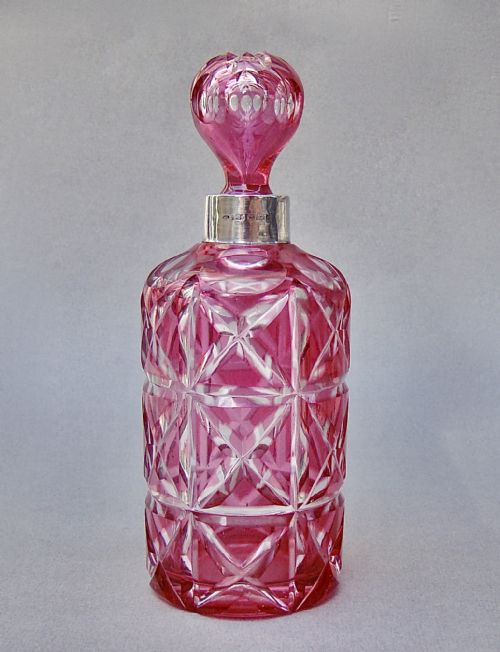


Birmingham Silver Scent Bottle
A birmingham silver scent bottle combines precision assay office metalwork with decorative glass or ceramic bodies from the Victorian, Edwardian and Art Deco eras.
Birmingham Silver Scent Bottle
A birmingham silver scent bottle represents a portable vessel designed for personal fragrance, featuring metal mounts hallmarked in the Midlands manufacturing hub. These pieces span late nineteenth-century Victorian designs, Edwardian creations and geometric Art Deco shapes.
The body of each piece typically combines sterling silver caps, collars or hinged lids with colourful glass, ceramic or enamel. Collectors encounter everything from plain cut crystal to elaborate coloured glass variants produced by major Midlands silversmiths.
Materials and construction methods
Craftsmen paired sterling silver mounts with blown, moulded or cut glass, utilising materials such as cranberry glass, uranium glass and speckled ceramic eggs. Metal components were stamped, chased or engraved before receiving official assay office marks.
Specialised techniques include layered glass overlays, millefiori patterns and guilloche enamel applied directly to the metal or glass surfaces. These diverse elements required collaborative work between specialist glasshouses and silversmithing workshops.
Birmingham Silver Scent Bottle Retail Price Guide 2026
Typical asking prices for birmingham silver scent bottle among the pieces listed under this phrase on Sellingantiques today, from the lower quarter to the upper quarter. They describe what is for sale here now, not the wider market.
Victorian makers even shaped these tiny vessels to resemble speckled bird eggs and coiled snakes.
Assessing quality and craftsmanship
Superior examples distinguish themselves through the weight and thickness of the sterling silver mount, alongside crispness in the hallmarks and chasing. Finer glass bodies exhibit deep, consistent coloration, complex optical effects or intricate hand-painting rather than simple moulded patterns.
The integrity of the hinged mechanisms and the precision of the fit between the silver collar and the glass neck indicate superior workshop standards. Well-preserved enamel work and undamaged internal stoppers further elevate the standing of an individual specimen.
Charles May·The Mousley Brothers·Adie Brothers Ltd·George Unite·Levi & Salaman
The Birmingham Silver Scent Bottle Glossary
- Hallmark
- Official stamps struck into precious metals to indicate the maker, standard of purity, assay office and year of testing.
- Guilloche
- A decorative mechanical engraving technique that produces precise, intricate geometric patterns beneath translucent enamel.
- Cranberry glass
- A rich red glass created by adding gold chloride to the molten batch, frequently utilised for Victorian and Edwardian scent containers.
- Millefiori
- A glasswork technique producing distinctive floral mosaic patterns, often incorporated into Victorian perfume bottle bodies.
- Cut glass
- Glass decorated by grinding and polishing facets onto the surface to refract light and enhance brilliance.
Birmingham Silver Scent Bottle: Frequently Asked Questions
How do I date a silver scent bottle?
Dating relies heavily on the assay office hallmarks stamped directly onto the sterling silver mounts. These official marks usually include a specific letter code corresponding to the year of testing.
Stylistic cues such as Victorian floral chasing or geometric Art Deco lines also help narrow down the period of production.
Were these bottles meant for daily use?
Victorian and Edwardian owners carried these small vessels in purses or displayed them on dressing tables for daily grooming. The tight silver caps and internal stoppers prevented precious perfumes from evaporating.
Today, collectors primarily display them as cabinet pieces rather than functional accessories.
What glass types are most common?
Cut glass and plain crystal appear frequently across pieces from all periods, offering a clear view of the liquid inside. Coloured variations such as cranberry, amber and amethyst glass also feature prominently in surviving examples.
Specialised techniques like millefiori, splatter glass and guilloche enamel occur less frequently.
How should I clean the silver mounts?
Gentle dusting with a soft microfibre cloth preserves the historical patina of the sterling silver components. Avoid harsh chemical dips, especially near fragile glass bodies, glued joints or delicate enamel work.
Professional care prevents accidental damage to fragile antique materials.