







Edwardian Vanity Jar
An edwardian vanity jar brings dressing table elegance into focus, combining cut crystal bodies with sterling silver lids.
Edwardian Vanity Jar
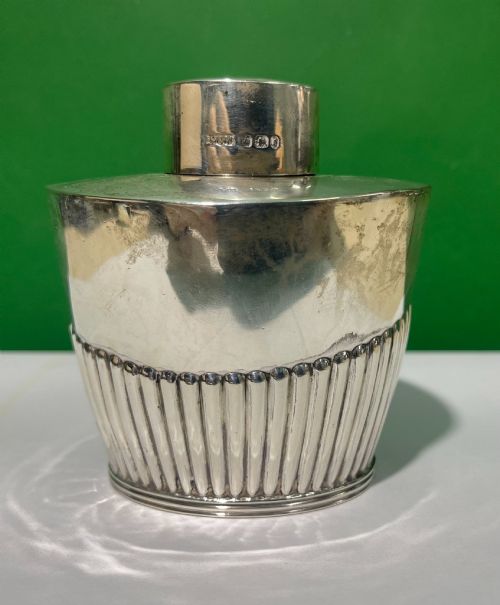
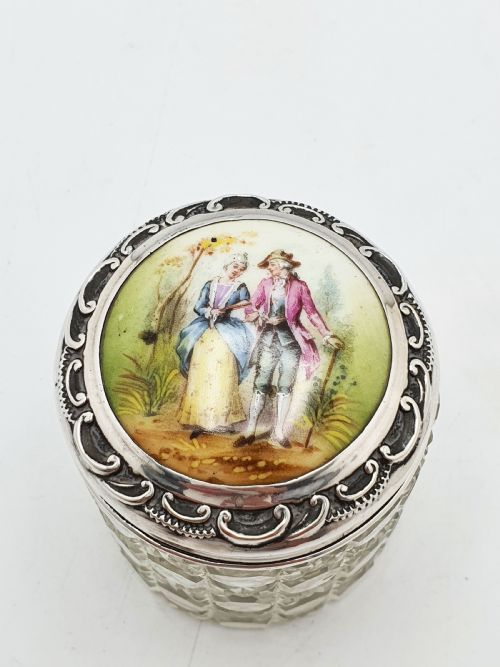
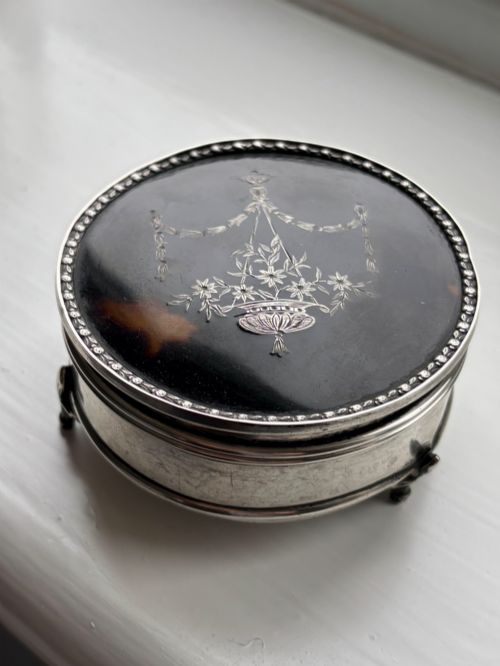
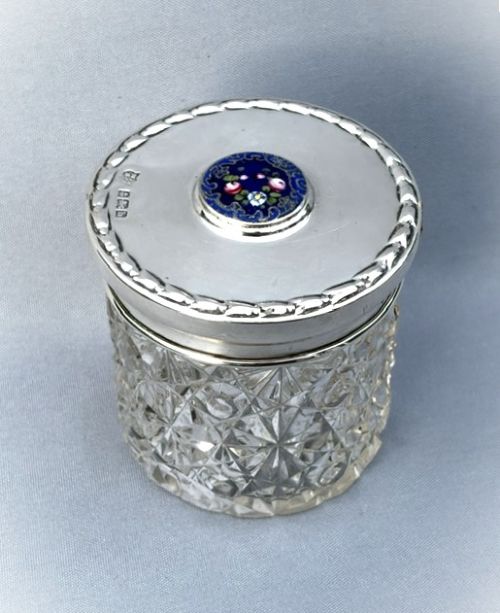
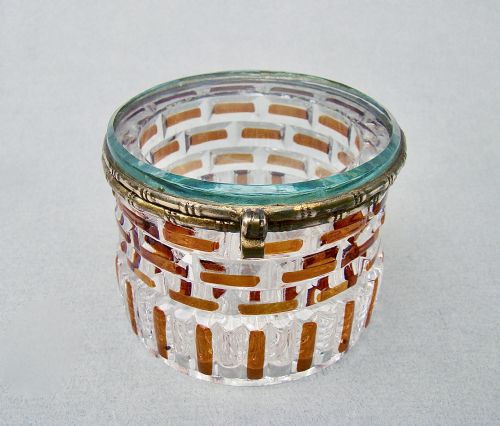
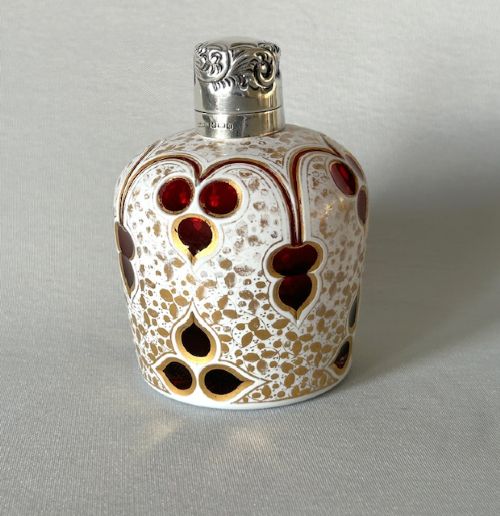
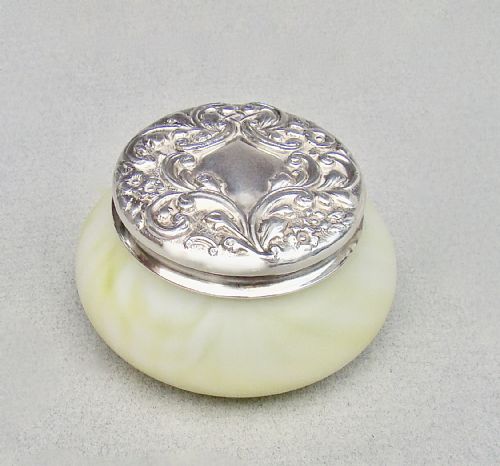
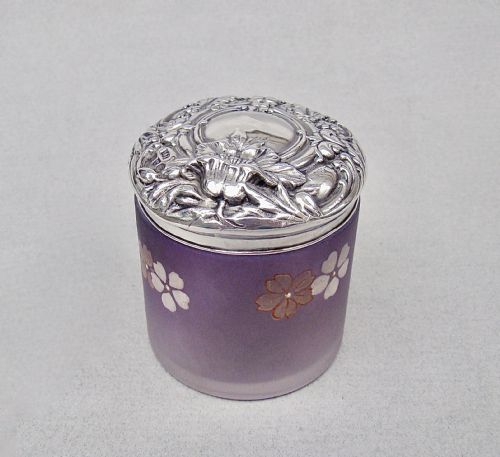
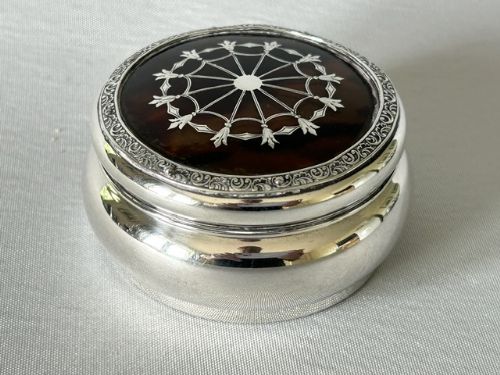
An edwardian vanity jar sits upon dressing tables as a receptacle for powders, trinkets, or scents, reflecting the refined grooming habits of the period. The version most commonly met on this page pairs a heavy cut glass or crystal base with a hallmarked sterling silver lid, though variations incorporate tortoiseshell, enamel, and ceramic.
While the Edwardian era proper provides the core of these objects, pieces spanning from the Victorian period through the Art Deco years appear frequently. Forms range from cylindrical jars and heart-shaped trinket boxes to globular perfume bottles and lidded bowls.
Origins stretch across English assay offices such as Birmingham and Chester, alongside continental workshops including French makers like Baccarat and Limoges. Each piece served a specific dressing table function, whether holding cologne, pins, or cosmetics.
How they were made
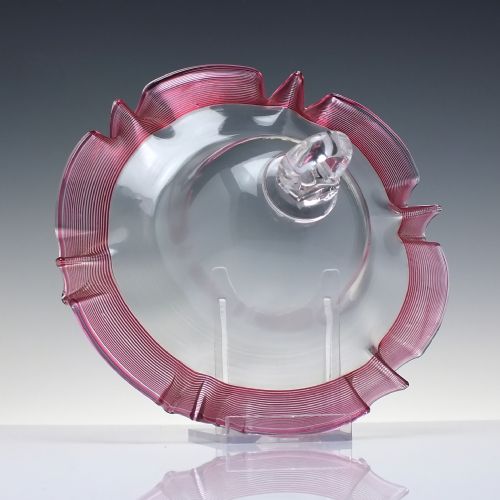
Bases take shape through glass-blowing and deep cutting, producing heavy faceted crystal, satin glass, or coloured varieties like cranberry and amber. Smiths then fashioned matching lids from sterling silver, frequently employing repousse decoration, engine-turning, or pierced silver mounts.
Surface ornamentation often incorporates vitreous enamel work, such as guilloche patterns, alongside inset panels of tortoiseshell and delicate pique wire inlay. Assay office hallmarks stamped directly onto the silver elements provide precise records of metal purity, maker marks, and city years.
Edwardian Vanity Jar Retail Price Guide 2026
Typical asking prices for edwardian vanity jar among the pieces listed under this phrase on Sellingantiques today, from the lower quarter to the upper quarter. They describe what is for sale here now, not the wider market.
What varies in quality
The weight and depth of the glass cutting separate standard receptacles from superior examples, where crisp facets catch the light without surface ripple. Heavier crystal bases demonstrate greater material substance and stability on the dressing surface.
Lid construction dictates overall refinement, distinguishing thin pressed metal from thick cast silver featuring crisp repousse work or intact enamel surfaces. The precision with which a silver mount fits the glass collar indicates the original skill of the silversmith.
Ollivant and Botsford·Henry Clifford Davis·Goldsmiths and Silversmiths Company·A. Bromet and Co·Asprey and Co·Hasset and Harper·Barnsley and Co·Omar Ramsden·R. Comyns·Henry Matthews
The Edwardian Vanity Jar Glossary
- Hallmark
- A series of official marks stamped onto precious metals indicating the maker, purity standard, assay office, and year of testing. These stamps allow accurate dating of the silver lid.
- Guilloche
- An ornamental pattern mechanically engraved into metal beneath a translucent layer of enamel. This technique creates repeating geometric waves that shimmer under light.
- Repousse
- A metalworking technique where the smith hammers the silver from the reverse side to form raised relief designs on the front. Floral and scroll motifs frequently emerge through this method.
- Pique work
- The delicate inlay of tiny gold or silver pins into a dark organic material such as tortoiseshell. Artisans arrange these metallic dots to form intricate floral or geometric patterns.
- Satin glass
- A type of glass treated with hydrofluoric acid to produce a velvety, matte surface texture. It appears across various dressing table containers from the period.
Edwardian Vanity Jar: Frequently Asked Questions
What were vanity jars used for?
These containers held loose powders, creams, pins, and cotton wool on dressing tables during the late nineteenth and early twentieth centuries.
Larger boxes stored personal trinkets and jewellery, while smaller bottles contained perfumes and colognes for daily grooming.
How do I date an edwardian vanity jar?
Dating relies primarily on the silver hallmarks stamped onto the metal lid or collar, which denote the specific assay office and year letter.
Stylistic cues such as Art Nouveau whiplash curves or geometric Art Deco lines also help place the piece within a broader decade.
Are the glass bases always crystal?
Not all bases consist of clear crystal, as makers utilised heavy cut glass, Cranberry glass, amber glass, and opaque satin glass.
Some variations incorporate ceramic bodies or coloured glass overlays depending on the prevailing style of the workshop.
How should I clean the silver lids?
Silver components require gentle cleaning with a soft cloth and a specialised silver polish, avoiding any contact with enamel or tortoiseshell.
Harsh abrasives or liquid dips can permanently damage delicate guilloche enamel, pique inlay, and organic shell panels.