







Cut Glass Powder Pot
These cut glass powder pot examples bring dressing table elegance to life through heavy crystal bodies and precious metal lids.
Cut Glass Powder Pot
A cut glass powder pot sits upon the dressing table to hold cosmetics, trinkets, or dressing table accessories. When you search this phrase, you encounter vanity jars, lidded bowls, and trinket boxes designed for the dressing table.
The pieces on this page span several decades, originating from the Edwardian era through to the Art Deco period and mid-century modern designs. You are most likely to meet silver-lidded glass containers featuring geometric cutting or colourful enamel work.
Makers and silversmiths housed their work in cities like Birmingham and London, producing lidded bowls and vanity boxes in diverse shapes including heart forms and circular vessels.
Materials and construction
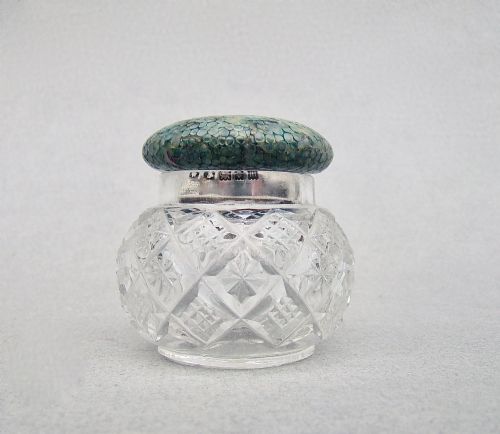
Craftsmen shaped the vessels from heavy cut glass or cut crystal, often applying deep geometric facets that catch the light. Overlay glass in amethyst or cranberry hues also appears across the selection.
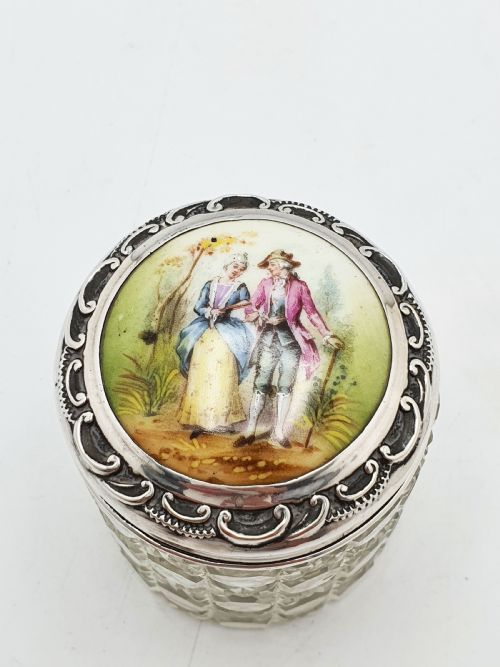
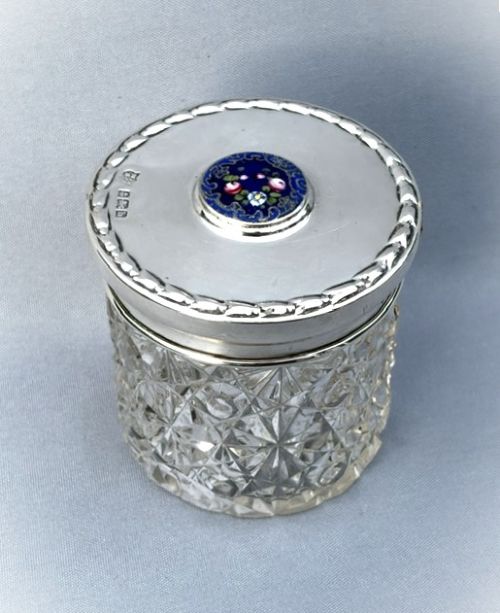
Lids utilise sterling silver mounts combined with decorative elements such as blue, pink, or white enamel, guilloché engine-turning, and polished tortoiseshell. Silversmiths stamped hallmarks onto the metal mounts to record the assay office and year.
Cut Glass Powder Pot Retail Price Guide 2026
Typical asking prices for cut glass powder pot among the pieces listed under this phrase on Sellingantiques today, from the lower quarter to the upper quarter. They describe what is for sale here now, not the wider market.
Listings feature items spanning the Edwardian period, George V reign, and the 1920s and 1930s Art Deco era.
Assessing quality and craftsmanship
Depth and crispness of the glass cutting separate standard containers from finer examples. Sharp, clean facets on heavy crystal indicate superior glass-blowing and cutting skill.
The execution of the lid sets the standard for the entire piece. Intricate guilloché patterns beneath translucent enamel and tightly fitted sterling silver mounts demonstrate higher workshop execution.
Henry Clifford Davis
The Cut Glass Powder Pot Glossary
- Guilloché
- A decorative machining technique that produces precise, intricate repeating patterns beneath a translucent layer of enamel. This method was widely utilised during the Art Deco period.
- Sterling silver
- An alloy comprising silver and other metals, standardly marked to guarantee purity. Silversmiths used this material extensively for vanity jar lids and mounts.
- Tortoiseshell
- Material derived from the shell of marine turtles, employed for decorative lidded boxes on Edwardian dressing tables. It provides a rich, mottled brown surface beneath silver piqué work.
- Crystal
- Glass containing lead oxide, which increases the weight, clarity, and refractive index of the material. Crystal allows for deeper and sharper cutting than standard glass.
Cut Glass Powder Pot: Frequently Asked Questions
How do I date a silver lidded jar?
Dating relies heavily on the hallmarks stamped into the sterling silver mounts by assay offices in cities like Birmingham or London.
Letter stamps and style markers such as enamel colours or Art Deco geometry help narrow the manufacturing period.
Can I use these pots daily?
These decorative containers sit well on modern dressing tables to hold contemporary trinkets or dry cosmetics.
Care should be taken with older enamel and tortoiseshell lids to avoid moisture damage during everyday use.
What materials are used for the lids?
Lids primarily feature sterling silver paired with colourful enamel, engine-turned guilloché patterns, or polished tortoiseshell.
Some examples also incorporate etched glass or metal overlays to match the decorated crystal base.