


Art Deco Silver Jar
These art deco silver jar examples combine sterling silver mounts and glass bodies to bring geometric elegance to dressing tables and interiors.
Art Deco Silver Jar
An art deco silver jar combines a sterling silver or silver-plated mount with a glass, cut glass, or crystal vessel, often produced as dressing table accessories, vanity jars, or powder bowls. These items date primarily from the 1920s and 1930s, reflecting the geometric lines and machine-age aesthetics of the period.
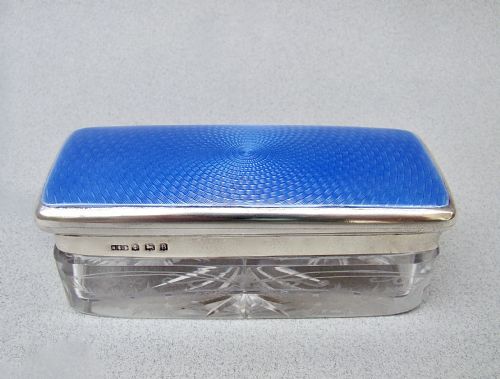
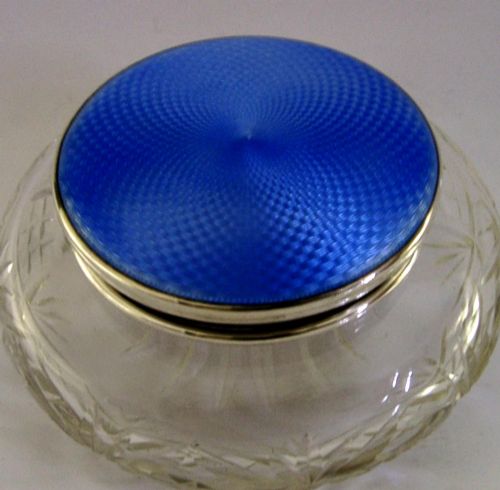
Many examples incorporate fitted lids featuring coloured enamel, guilloche enamel, or polished tortoiseshell inset into the silver mount. Alongside vanity jars, related forms include perfume bottles, scent bottles, preserve jars, and lidded boxes made by silversmiths in Birmingham, Sheffield, and London.
How They Were Made
Makers fashioned the glass bodies using mould-pressed, faceted, or cut glass techniques, producing heavy vessels designed to hold cosmetics, trinkets, or preserves. The silver mounts were typically stamped from sterling silver sheet metal, bearing hallmarks that record the assay office, city, and year of production.
Lids were frequently decorated with guilloche enamel, applying engine-turned geometric patterns beneath translucent coloured glass enamel layers in shades of blue, pink, bronze, and lilac.
Silversmiths occasionally produced novelty jars shaped like painted tin canisters, apples, and miniature pagodas for dressing table use.
What Varies In Quality
Quality rests on the crispness of the engine-turning beneath the enamel and the weight and clarity of the cut glass body. Thicker sterling silver mounts and intact, undamaged enamel surfaces distinguish finer items from standard production pieces.
The reputation of the maker also shapes the piece, with items bearing marks from established workshops demonstrating superior finishing in the hinges, bezels, and internal fitting.
Henry Clifford Davis·Adie Brothers Ltd·Charles Green And Co·William Neale And Son Ltd
The Art Deco Silver Jar Glossary
- Guilloche enamel
- A decorative technique where a mechanical lathe cuts precise geometric patterns into metal before a translucent enamel layer is applied over the top.
- Sterling silver
- An alloy containing ninety-two point five percent silver by mass, standard for British silver manufacturing during the twentieth century.
- Hallmark
- A set of official marks stamped onto precious metal items indicating the maker, assay office, standard of purity, and year of assay.
- Vanity jar
- A small lidded container designed for dressing tables to hold creams, powders, or hairpins.
- Cut glass
- Glass decorated by cutting facets or patterns into the surface using a rotating wheel.
Art Deco Silver Jar: Frequently Asked Questions
What were art deco silver jars used for?
These vessels served primarily on dressing tables as vanity jars, powder bowls, and perfume bottles to hold cosmetics, trinkets, or pins. Some larger variants functioned as tea caddies, biscuit barrels, or preserve jars in domestic settings.
Their decorative lids protected the contents while adding polished metal and bright enamel colour to bedroom and dining room interiors.
How do I date an art deco silver jar?
Dating relies heavily on the silver hallmarks stamped onto the metal mount, which identify the assay office and the specific year letter for manufacture. Stylistic indicators like guilloche enamel colours and geometric stepped motifs also point towards the 1920s and 1930s production eras.
Assay marks from Birmingham, London, and Sheffield provide the most precise chronological evidence for British pieces.
What materials are found in these jars?
The main structural components consist of blown or cut glass bodies paired with sterling silver or silver-plated mounts. Lidded tops frequently incorporate decorative elements such as tortoiseshell, faux tortoiseshell, and coloured enamel.
Interior collars and fittings are generally silver-gilt or base metal designed to secure the lid firmly to the glass rim.
How should I clean the silver and glass?
Silver mounts require gentle polishing with a specialised cloth to remove tarnish without disturbing adjacent enamel or glass surfaces. Abrasive cleaners must be kept away from guilloche enamel and tortoiseshell inserts to prevent scratching.
Glass bodies can be washed in warm soapy water once separated from any delicate lidded components that might be damaged by moisture.