






Cut Glass Vanity Jar
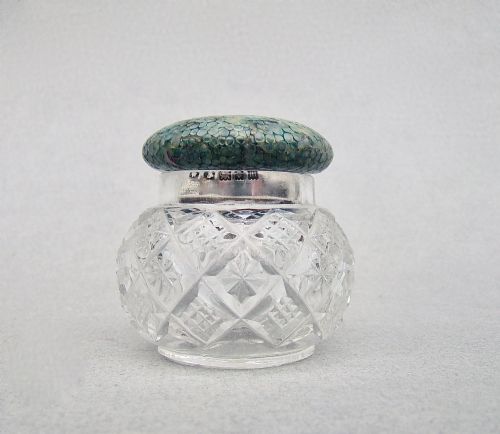
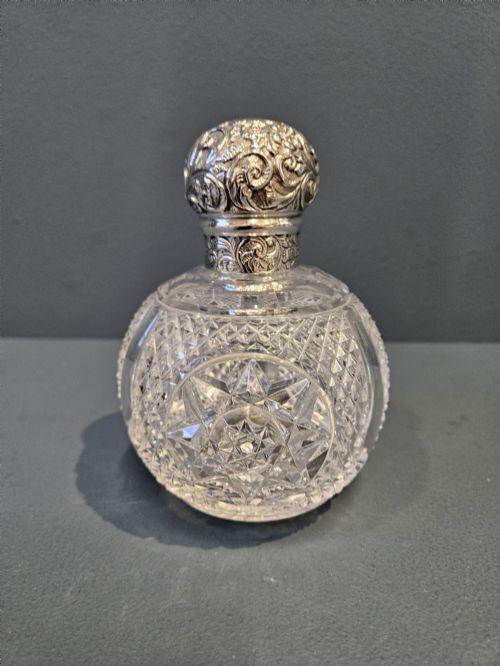
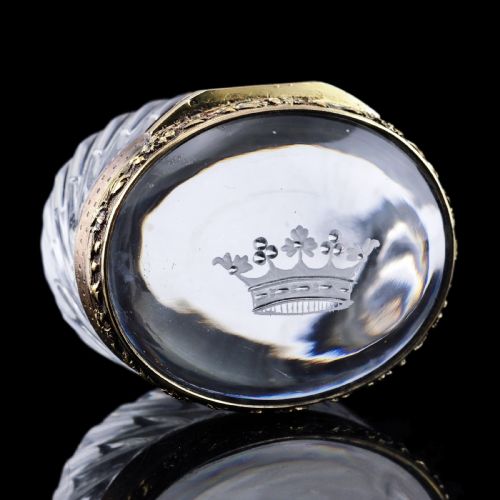
A cut glass vanity jar sits heavy on the dressing table, catching the light in its deep facets while its precious metal lid secures whatever was once tucked inside.
Cut Glass Vanity Jar
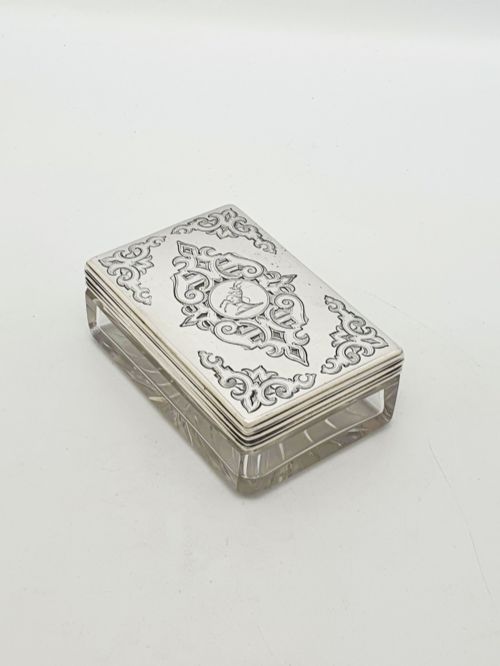
A cut glass vanity jar is a dressing table accessory designed to hold powders, creams, pins, or trinkets, typically featuring a heavy glass or crystal body beneath a fitted metal lid. These containers appear across the Victorian, Edwardian, and Art Deco periods, evolving from straightforward utility to decorative dressing table centrepieces.
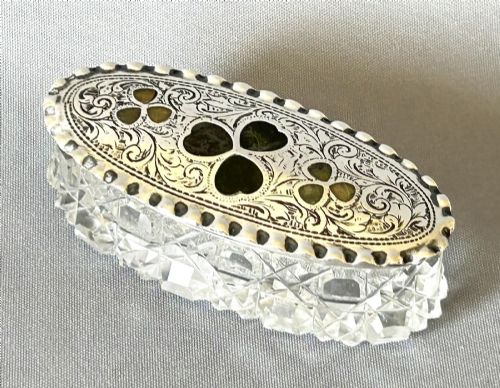
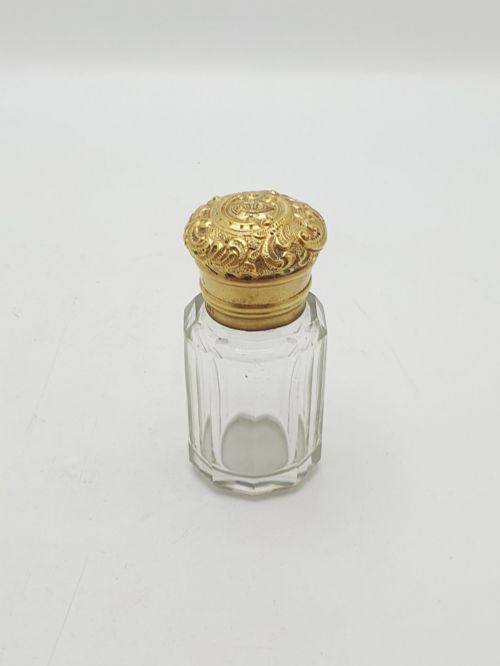
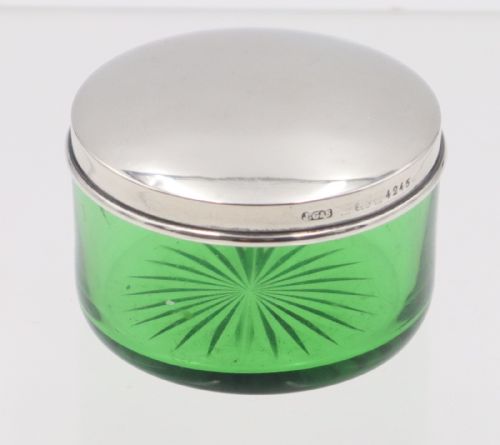
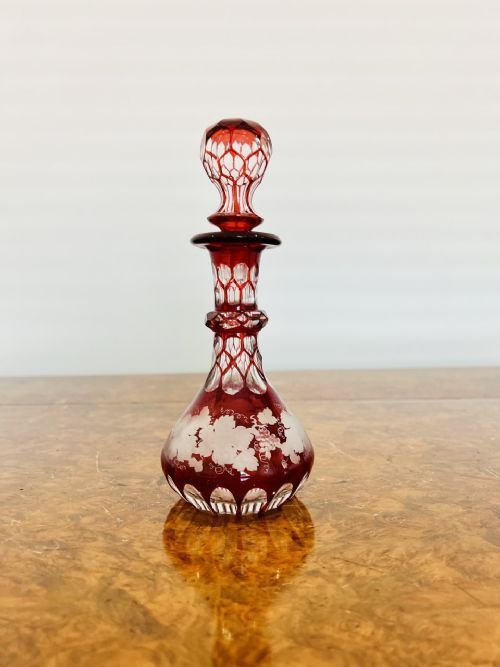
The versions most commonly met on this page combine panel-cut or wheel-cut crystal bodies with sterling silver mounts, often bearing hallmarks from Birmingham or London. Alongside lidded jars, the category encompasses scent bottles, perfume flasks, and small trinket boxes sharing the same vocabulary of cut glass and precious metals.
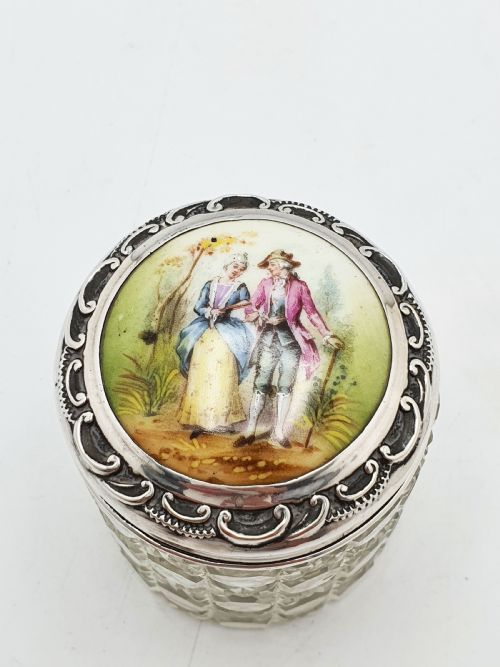
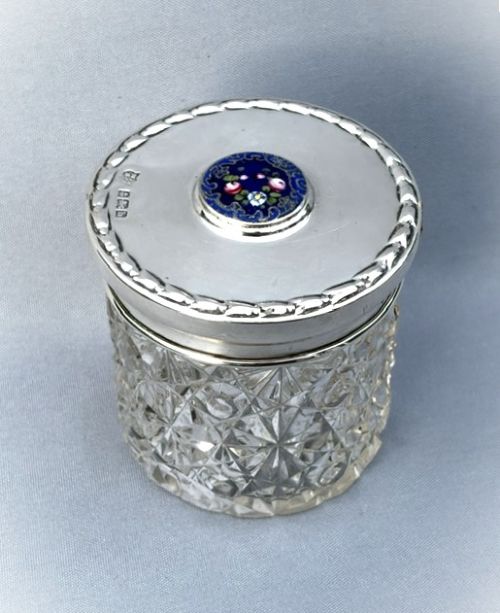
Many examples incorporate decorative lids featuring guilloche enamel, tortoiseshell, or silver-gilt highlights, reflecting the changing tastes of the nineteenth and twentieth centuries. Whether round, globular, heart-shaped, or tall, each piece represents a tangible relic of historical dressing room routines.
How they were made
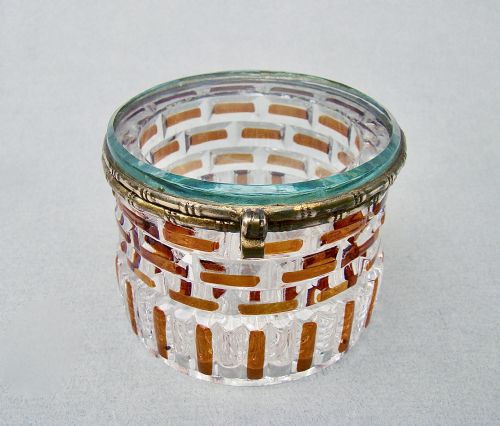
The glass bodies of these jars were shaped using traditional blowing techniques before artisans applied deep wheel cuts or geometric panel facets to the exterior. This heavy cutting created sharp refractions and a tactile weight characteristic of nineteenth- and twentieth-century crystal.
Lids and mounts were fashioned from sterling silver, sometimes finished with silver gilt, and often paired with organic materials such as tortoiseshell or translucent guilloche enamel. Silversmiths engineered hinges and screw threads to secure these precious tops directly onto the glass rims.
Hallmarks stamped into the silver components record the assay office, city, and year of manufacture, linking individual pieces to workshops in Birmingham, London, and continental centres.
Cut Glass Vanity Jar Retail Price Guide 2026
Typical asking prices for cut glass vanity jar among the pieces listed under this phrase on Sellingantiques today, from the lower quarter to the upper quarter. They describe what is for sale here now, not the wider market.
Listings feature vanity jars spanning from the nineteenth century through the Art Deco period, incorporating sterling silver, tortoiseshell, and guilloche enamel.
What varies in quality
The clarity and depth of the glass cutting distinguish standard utility containers from finer artistic examples. Crisp, sharply defined facets reflect a higher standard of hand-cutting than softer, shallower impressions.
The integration between the metal mount and the glass body reveals much about the maker's skill. Secure, well-fitted bezels and substantial sterling silver gauges denote superior production compared to thin, lightweight mounts that distort easily.
The complexity of the lid decoration introduces further distinction, particularly where hand-turned guilloche enamel or finely inlaid tortoiseshell demonstrates advanced craftsmanship.
Henry Clifford Davis·Henry Perkins·Posen Of Frankfurt·Barnsley And Co·R Comyns·Jonathan Douglas
The Cut Glass Vanity Jar Glossary
- Cut crystal
- High-clarity glass containing lead oxide, deeply carved with geometric or floral patterns to maximise brilliance and light refraction.
- Guilloche enamel
- A decorative technique where translucent enamel is layered over engine-turned metal engraving, producing a repeating wave or ray pattern.
- Hallmark
- A series of official stamps marked on precious metals indicating the standard of purity, the assay office, and the year of production.
- Panel cut
- A style of glass cutting featuring wide, flat planes that create distinct geometric reflections across the body of a jar or bottle.
- Sterling silver
- An alloy of silver containing 92.5 percent pure silver and 7.5 percent other metals, primarily copper, used extensively for vanity jar lids and mounts.
Cut Glass Vanity Jar: Frequently Asked Questions
What were cut glass vanity jars used for?
These jars served as functional containers on dressing tables and washstands, holding powders, creams, hairpins, and small personal trinkets during the Victorian and Edwardian eras. They kept daily requisites close at hand while adding a decorative gleam to the room.
Over time, matching sets became popular for dressing tables, coordinating perfume bottles, powder bowls, and hair receiver boxes into a unified display. Their sturdy glass construction ensured they could safely contain liquids, unguents, and cosmetics without staining or degrading.
How do I date a silver mounted jar?
Dating relies primarily on the hallmarks stamped into the silver lid or collar. These marks typically include a maker's mark, a standard mark indicating sterling silver, a town mark such as the Birmingham anchor or London leopard's head, and a date letter.
Comparing the date letter against official assay office tables reveals the exact year the silver mount was hallmarked. Stylistic details like the geometric shapes of the Art Deco period or the flowing lines of the Edwardian era also help confirm the production era.
How should I clean the silver and glass?
Maintenance requires separating the care of the glass body from the precious metal mount. The glass can be washed gently in warm, soapy water and dried with a soft cloth to restore the clarity of the facets.
Care must be taken to keep moisture away from delicate elements like tortoiseshell or guilloche enamel inserts on the lid. Silver polish should be applied sparingly to the metal mounts with a soft cloth, avoiding any contact with the glass or enamel surfaces.
Can I use these jars for modern cosmetics?
These containers are well suited for holding dry items like cotton balls, trinkets, or bath salts on a modern bathroom shelf. Many retain their fitted lids, making them practical for small everyday accessories.
Because historical glass and silver interiors may not meet modern food-safe standards or airtight requirements, storing moist cosmetics directly inside is generally discouraged. Dry storage helps preserve both the interior surfaces and any historic residues remaining within the vessel.