
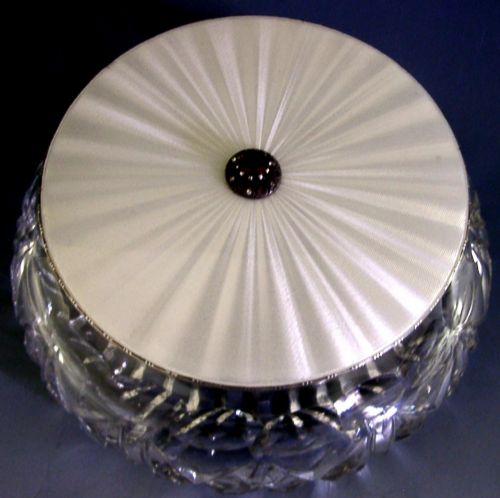


Silver Dressing Table Jar
A silver dressing table jar brings refined storage to a bedroom, combining solid silver mounts with decorative glass or enamel.
Forms and Origins
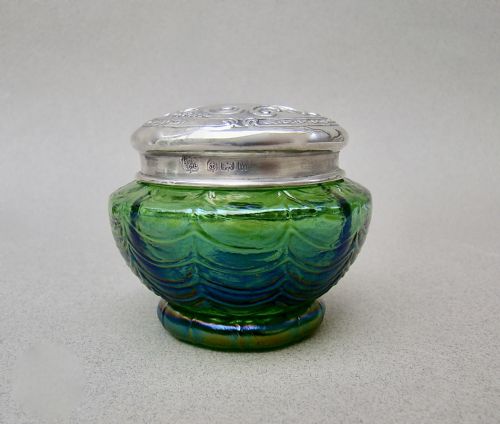
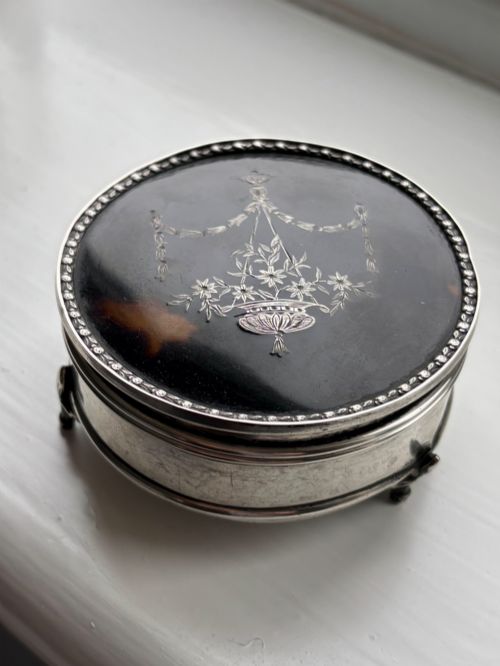
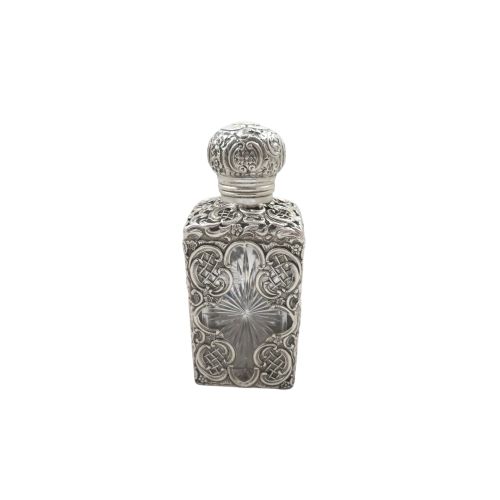
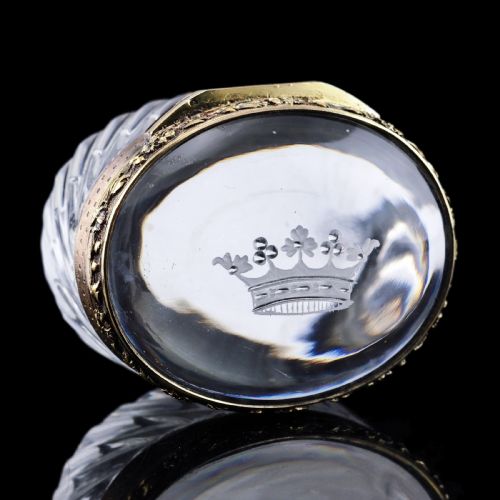
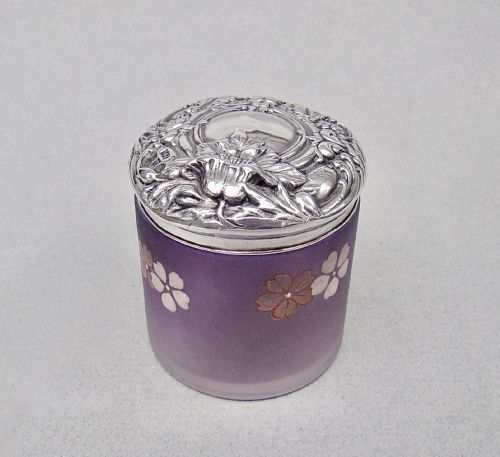
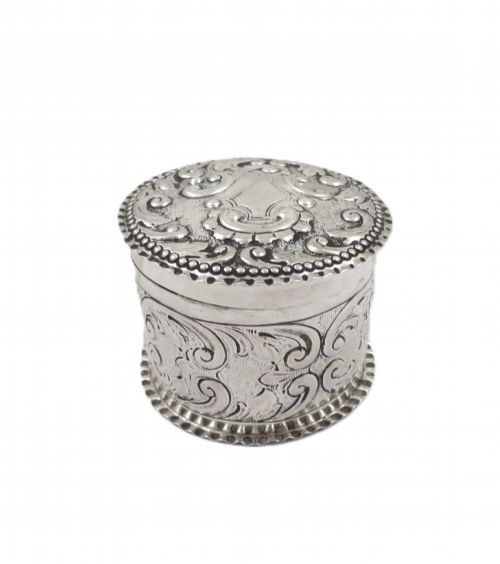
A silver dressing table jar encompasses vanity jars, trinket boxes, and scent bottles designed for nineteenth and twentieth-century dressing tables. These vessels served to hold powders, pins, and cosmetics securely.
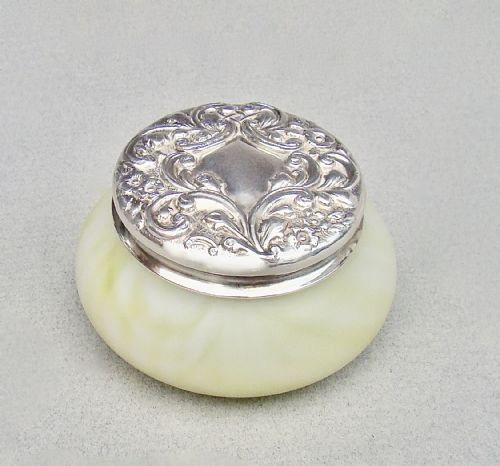
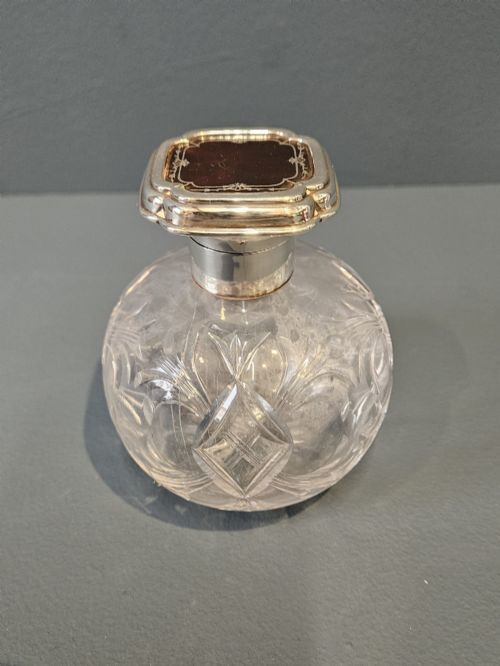
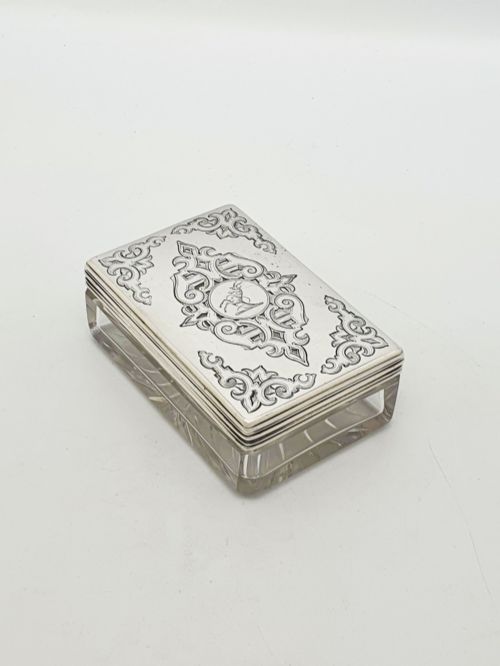
The pieces on this page stem predominantly from Edwardian and Victorian periods, alongside later Art Deco designs. Common forms include cut glass bodies with fitted sterling silver lids, heart-shaped containers, and coloured glass jars.
Origin points largely trace to British assay offices in Birmingham, London, and Chester, with occasional continental and French examples appearing in the record.
Materials and Technique
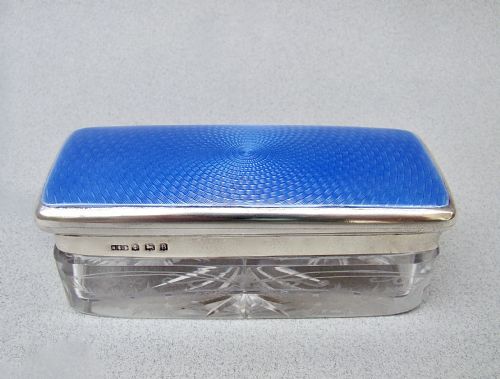
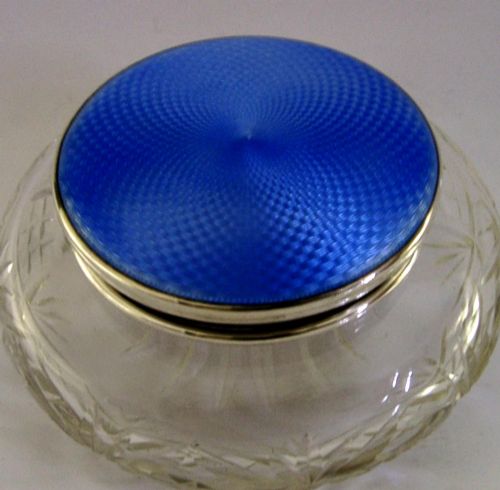
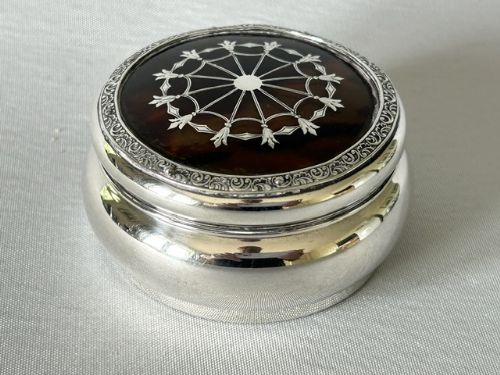
Manufacturers combined sterling silver with cut glass, cranberry glass, amber glass, and Bristol blue glass, occasionally employing tortoiseshell or guilloché enamel for the lids. Silver tops were stamped, chased, or embossed with floral and angel motifs.
Glass bodies utilised heavy cutting, slicing, and overlay techniques to catch the light on the dressing table. Enamel panels featured engine-turned geometric patterns beneath translucent coloured coatings.
Listings feature Edwardian and Victorian periods alongside Art Deco designs, utilising sterling silver, cut glass, tortoiseshell, and guilloché enamel.
The Measure of Quality
Quality rests upon the weight of the silver mount and the precision of the glass cutting. Thick, deeply faceted crystal and heavy-gauge sterling silver represent the upper tier of production.
Detail in the decorative elements separates standard items from exceptional ones. Intricate guilloché enamel work, pristine tortoiseshell insets, and distinct maker marks elevate the piece.
Henry Clifford Davis·Robert Pringle and Sons·The Adie Brothers·Mappin and Webb·Henry Matthews·James Deakin and Sons·Samuel Levi·Synyer and Beddoes·William Aitken·John Douglas·Levi and Salaman·Thomas Ingleton·Deakin and Francis·W.G. Sothers
The Silver Dressing Table Jar Glossary
- Guilloché enamel
- A decorative technique where a precise, intricate pattern is mechanically engraved into metal beneath a translucent enamel layer.
- Sterling silver
- An alloy of silver containing 92.5% pure silver and 7.5% other metals, typically copper, used for the jar lids and mounts.
- Cranberry glass
- A rich red glass created by adding gold chloride to the molten batch, frequently seen in Victorian and Edwardian vanity jars.
- Slice cut
- A style of glass cutting featuring broad, flat, polished planes that reflect light simply across the vessel body.
Frequently Asked Questions
How were silver dressing table jars used?
These vessels held powders, creams, hairpins, and small trinkets on nineteenth and twentieth-century dressing tables. They kept daily personal items neat and protected.
The matching lids prevented dust from settling on the contents while adding a decorative metallic shine to the bedroom furniture.
How do I clean the silver mounts?
Use a soft microfibre cloth and a mild silver polish designed specifically for sterling silver. Avoid getting liquid polish onto the glass or enamel inserts.
Work gently around engraved patterns or embossed motifs to remove tarnish without lifting the delicate metal surface.
How do I identify the date of a jar?
Examine the hallmarks stamped onto the silver lid or mount. These tiny marks show the assay office, standard of silver, and a date letter.
Comparing the date letter against official hallmarking tables reveals the exact year the silver component was assayed.
Can I store liquids inside these jars?
Most dressing table jars were built for dry cosmetics, powders, or trinkets rather than liquids. The lids rarely possess airtight seals.
Using them for perfumes or wet items can damage antique glass interiors or corrode the internal silver fittings over time.