


Vintage Vanity Jar
A vintage vanity jar brings dressing table elegance to the bedroom through fitted silver and glass.
Vintage Vanity Jar
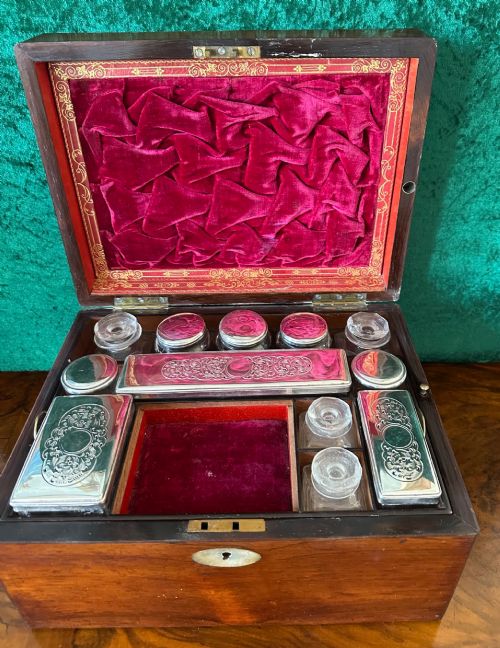
A vintage vanity jar encompasses a variety of dressing table vessels designed to hold powders, creams, scents and trinkets. These pieces span from the Victorian and Edwardian eras through to the Art Deco and Mid-Century Modern periods.
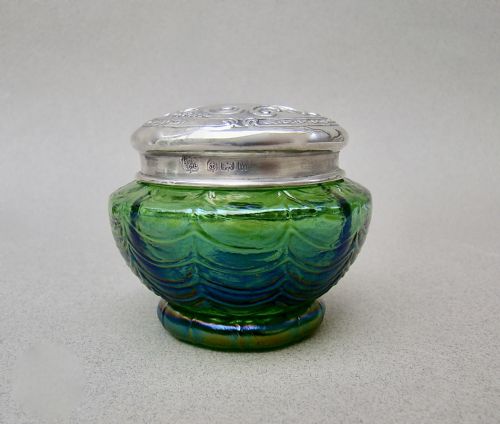
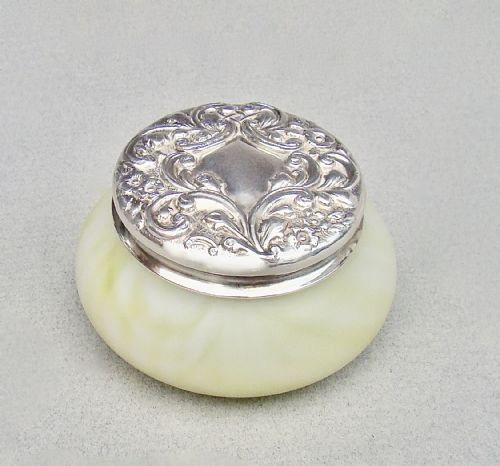
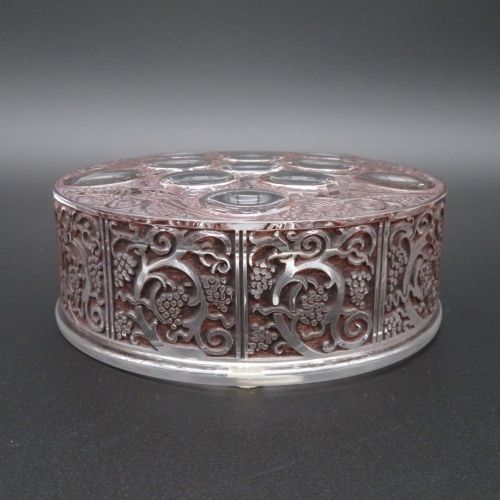
The most common examples on this page are cut glass and crystal jars fitted with sterling silver lids, alongside ceramic powder boxes and enamel-topped vessels.
Originating largely from British workshops in Birmingham and London, alongside French and German makers, these items served daily grooming routines on dressing tables.
Materials and methods
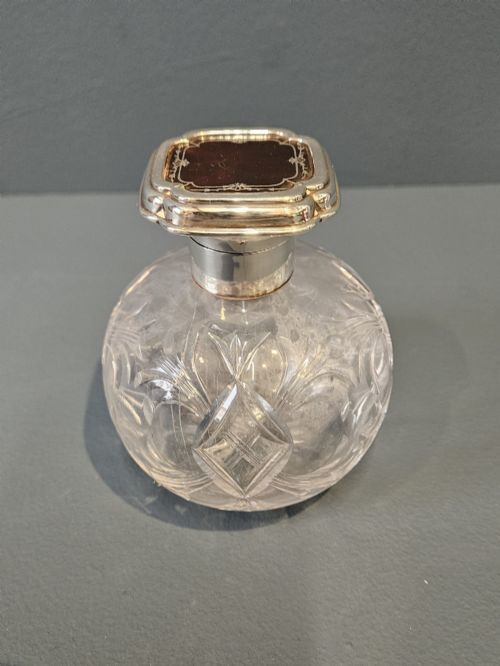
Cut glass and crystal bodies provide weight and optical clarity, frequently moulded or wheel-cut into geometric and floral patterns. These are combined with sterling silver mounts, often hallmarked for cities such as Birmingham.
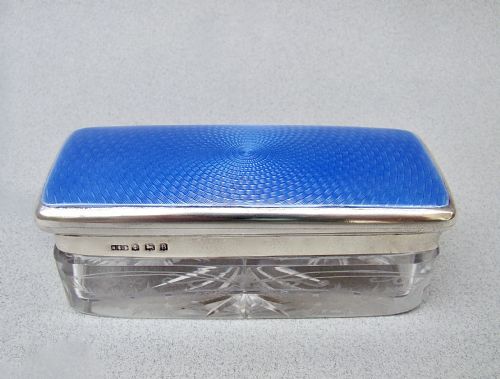
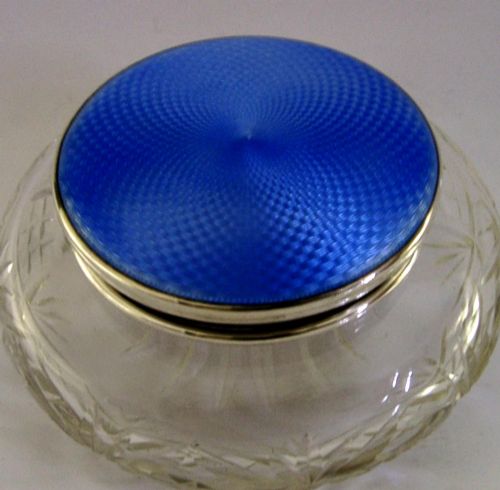
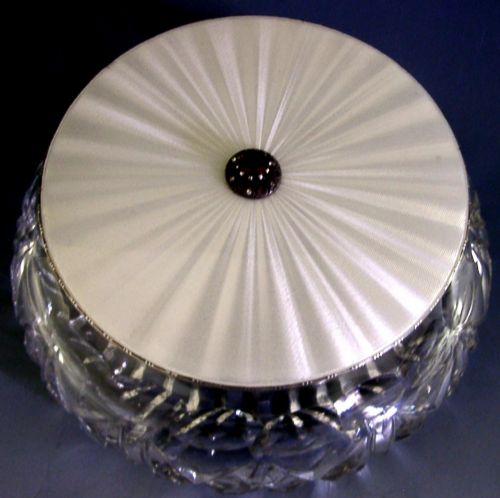
Coloured enamel, guilloche work and tortoiseshell are applied to silver lids, introducing vibrant tones like blue, pink and red to complement ceramic and porcelain bodies.
Listings feature sterling silver, cut glass, porcelain and enamel across Victorian, Edwardian and Art Deco styles.
Factors of quality
The standard of a piece depends on the depth and precision of the glass cutting, the weight of the sterling silver lid, and the complexity of any enamel or tortoiseshell work. Intricate guilloche patterns and undamaged surfaces elevate an item within its period.
Maker attribution and clarity of hallmarks also distinguish finer examples, showing the output of established silversmiths and renowned glasshouses.
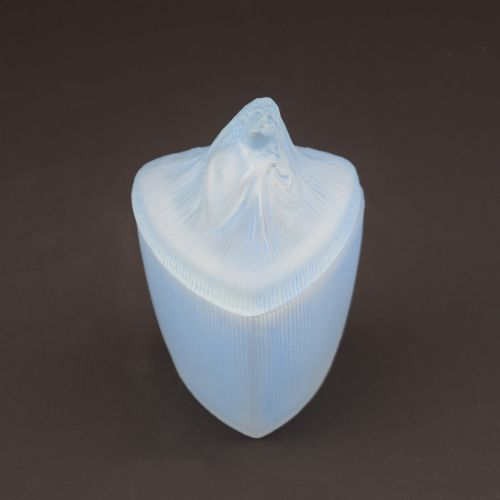
A. J. Pepper & Co·Henry Clifford Davis·A. Bromet & Co·Rene Lalique·Henry Perkins·Posen·Barnsley & Co·Adie Brothers Ltd
The Vintage Vanity Jar Glossary
- Guilloche
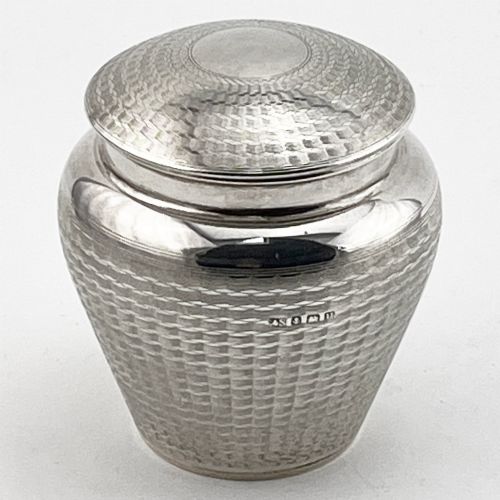
- A decorative engine-turning technique producing precise, intricate geometric patterns beneath translucent enamel. This method was widely utilised on silver vanity jar lids during the Art Deco period.
- Sterling silver
- An alloy comprising silver and other metals to ensure durability for functional items. Hallmarks stamped upon the metal indicate the assay office, maker and year of manufacture.
- Satin glass
- Glass treated to achieve a velvety, frosted texture rather than a high gloss finish. It frequently appears on Edwardian trinket boxes.
- Half doll
- A ceramic upper figure attached to a fabric skirt or directly surmounting a powder box lid. These figures are characteristic of 1930s dressing table wares.
- Hallmark
- A series of official marks stamped on precious metals indicating standard of purity, origin and date. They allow collectors to date silver-lidded jars precisely.
Vintage Vanity Jar: Frequently Asked Questions
What were vanity jars used for?
These vessels held loose powder, creams, trinkets and perfumes on nineteenth and twentieth-century dressing tables. They kept daily cosmetic preparations tidy and accessible.
Their decorative lids protected contents from dust while adding colour and texture to the bedroom or dressing room.
How do I date a silver-topped jar?
Examine the hallmarks stamped onto the silver mount or lid. These usually include a date letter, a maker's mark and an assay office symbol.
Matching the letter to historical assay tables reveals the exact year the silver component was assayed.
Are glass and ceramic lids interchangeable?
Lids were individually fitted to their specific glass or ceramic bases during manufacture due to slight variations in hand-finishing. Swapping lids between jars is generally unsuccessful.
Keeping original components together preserves the integrity and historical pairing of the piece.
How should I clean silver lids?
Use a soft microfibre cloth to remove dust and light tarnish from sterling silver surfaces. Avoid harsh chemical dips, especially near enamel, glass or tortoiseshell inserts.
Gentle polishing maintains the metal without harming adjacent decorative materials.