
Cut Glass Box
A cut glass box brings heavy faceted weight and reflected light to a dressing table or a desk.
Cut Glass Box
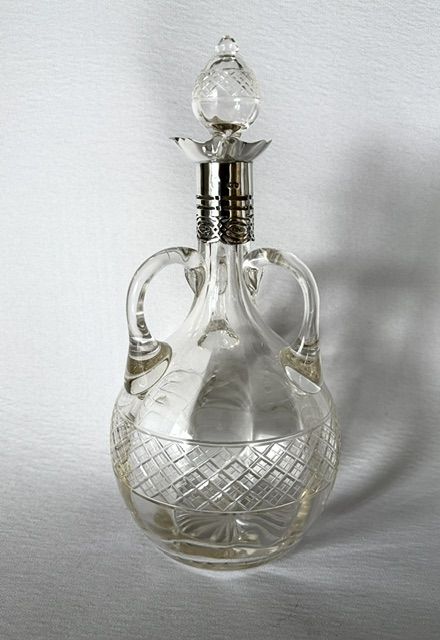
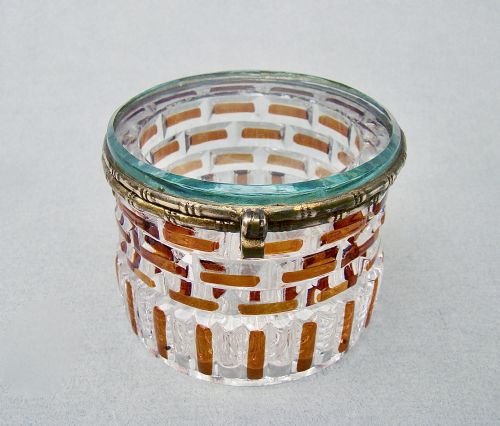
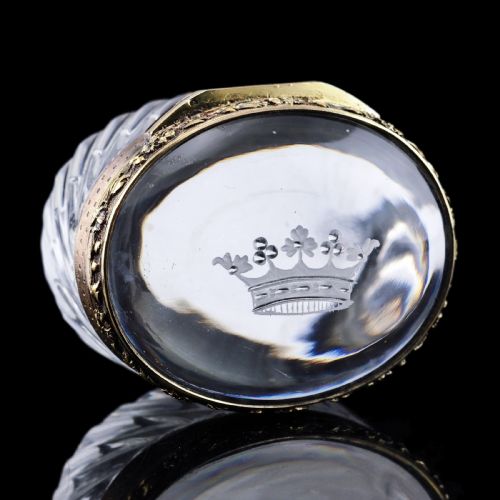
A cut glass box spans several distinct domestic categories found on this page, including lidded trinket pots, biscuit barrels, tea caddies, and vanity jars.
Victorian and Edwardian examples dominate the selection, frequently combining heavy moulded crystal bodies with hallmarked sterling silver or plated mounts.
Earlier Georgian pieces appear alongside Art Deco items featuring geometric cutting and coloured enamel lids.
Materials and Technique
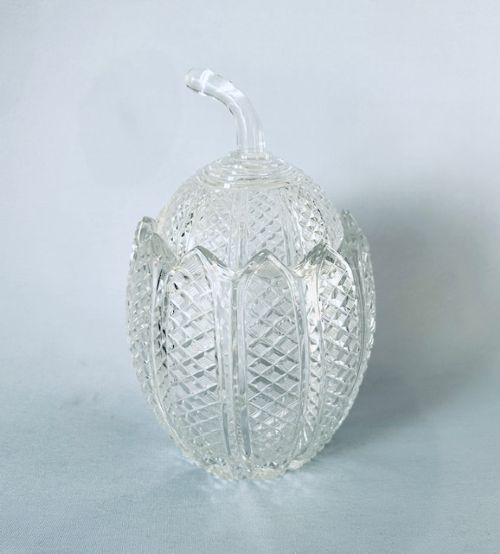
The body of a cut glass box starts as heavy flint glass or crystal, shaped in a mould before artisans cut deep facets, fans, or hobnail patterns into the surface by hand on a revolving wheel.
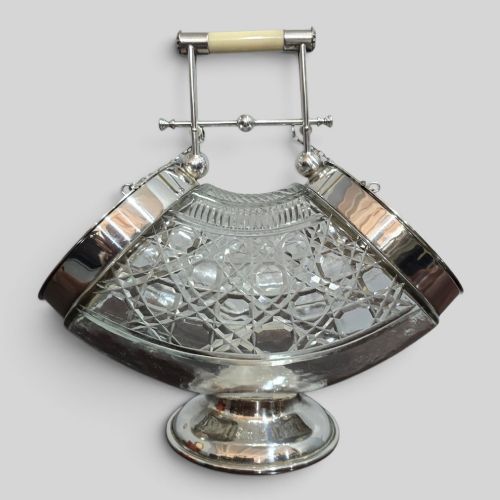
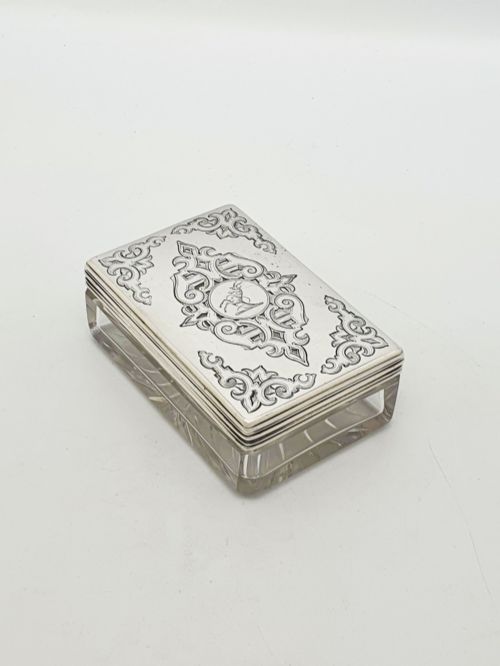
Mounts, rims, and hinges utilise sterling silver, silver plate, or brass, often secured to the glass body with precise collar fittings.
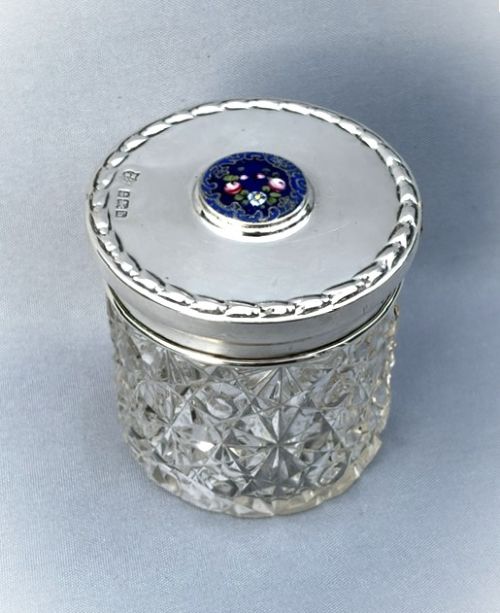
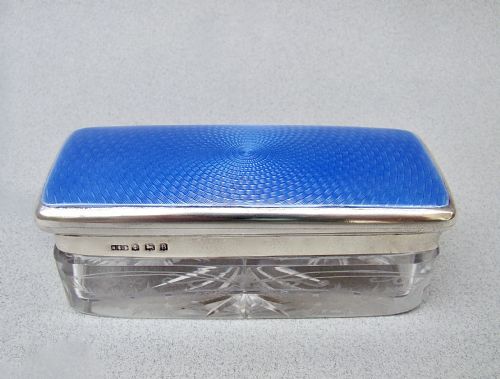
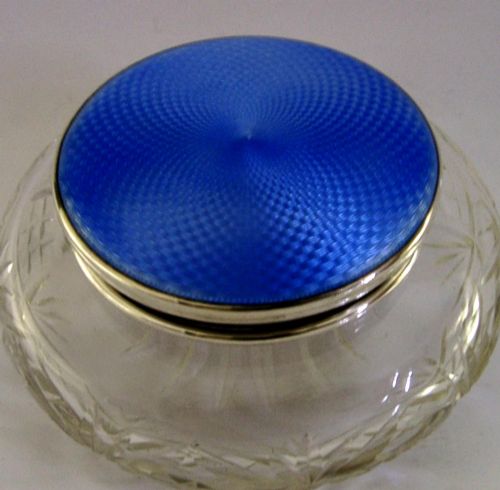
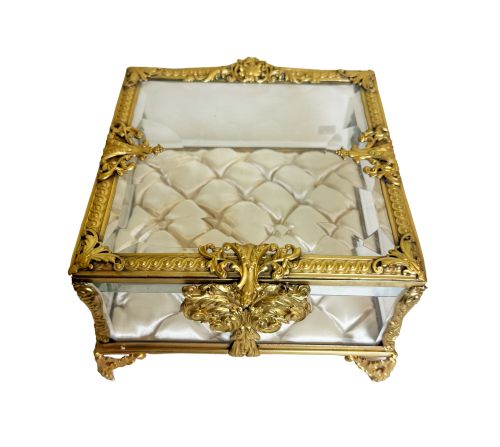
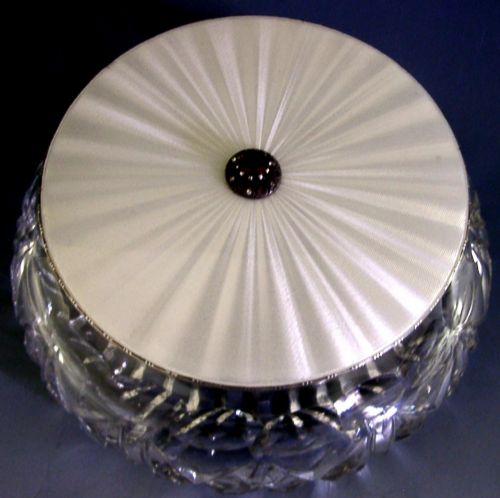
Finer dressing table variants incorporate guilloché enamel panels or gilt bronze frames alongside the primary glass and metal elements.
Some Victorian biscuit barrels feature heraldic dragon finials guarding the snacks within.
Evaluating Quality
The clarity and weight of the glass dictate the baseline standard, with heavier lead crystal producing sharper refraction and crisper edges along the cut facets.
The integration between the glass body and the metal mount reveals the maker's hand, seen in flush hinges and tightly sealed lids that align without play.
Finer examples distinguish themselves through intricate hand-chased silverwork, undamaged enamel panels, and complex hobnail or fan cutting rather than shallow machine pressing.
Henry Clifford Davis·Elkington·WMF·William Rudkins·Posen of Frankfurt and Berlin·Cooper Bros of Sheffield·Karl Palda·W Coulthard Ltd·Grinsell & Sons·William Hutton·Robert Pringle & Sons·Thos Johnson·Henry Matthews
The Cut Glass Box Glossary
- Hobnail cut
- A decorative pattern of intersecting bevels that creates rows of sharp, pyramidal points across the glass surface. This technique provides exceptional tactile grip and intense light refraction.
- Guilloché
- A mechanical engraving technique that etches precise, intricate geometric patterns into a metal substrate. It is frequently seen beneath translucent enamel on Edwardian and Art Deco lids.
- Biscuit barrel
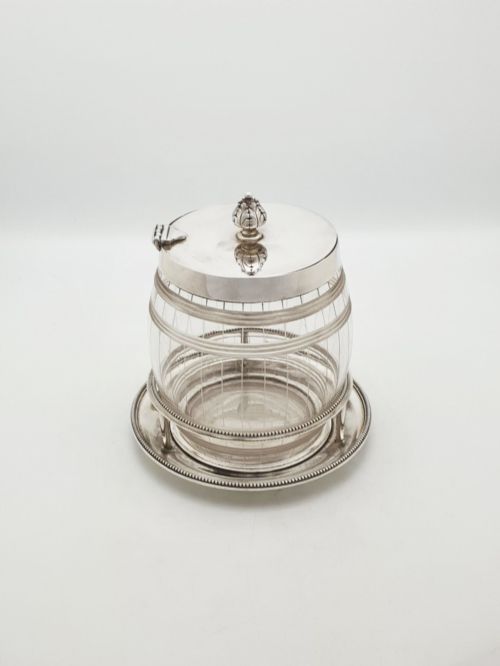
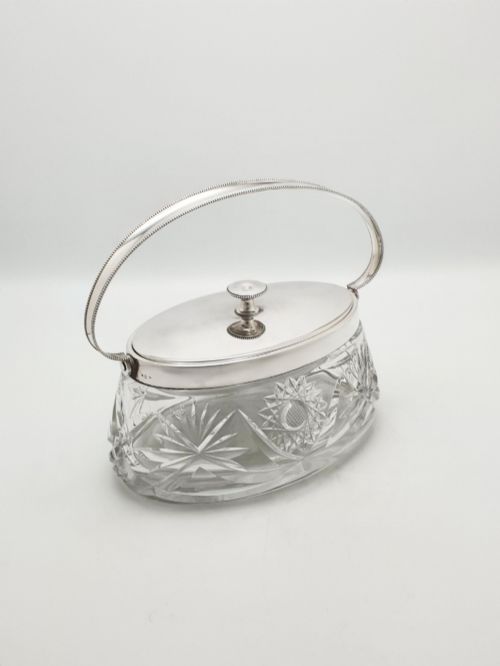
- A cylindrical lidded container designed for storing dry baked goods in the Victorian parlour. These vessels almost invariably pair a heavy cut glass body with a silver-plated swing handle and rim.
- Tantalus
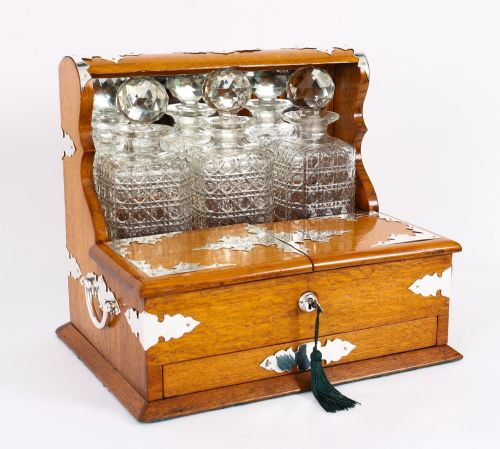
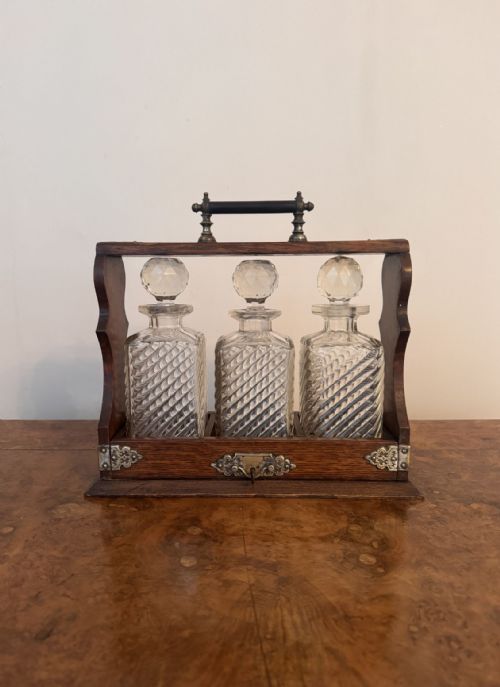
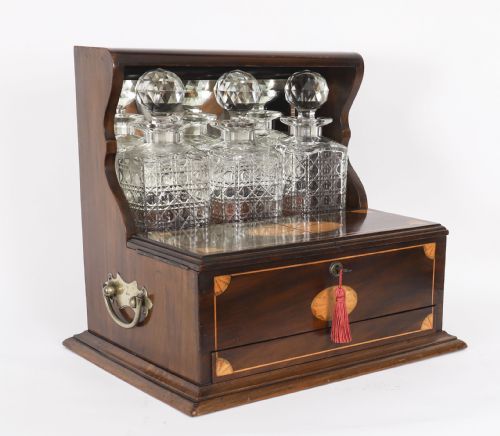
- A locking wooden frame holding decanters or glass boxes to restrict access to their contents. They typically deploy polished oak, mahogany, or coromandel fitted with brass or ormolu hardware.
- Sterling silver
- An alloy consisting of 92.5 percent silver by mass, with the remainder usually copper. British pieces feature hallmark stamps indicating the assay office, standard, and date letter.
Cut Glass Box: Frequently Asked Questions
What were cut glass boxes used for?
These vessels served various domestic functions depending on their scale, ranging from holding visiting cards and jewellery on dressing tables to storing biscuits in the dining room.
Smaller lidded pots secured pins, trinkets, and cosmetics, while larger lidded barrels and caddies preserved dry foodstuffs or tea leaves away from household moisture.
How do I date a cut glass box?
Metal mounts provide the most reliable dating evidence through stamped silver hallmarks, maker's marks, and registry numbers that indicate the exact year of production.
Stylistic shifts also help establish age, moving from heavy Georgian hand-cutting and deep Victorian hobnail patterns to the streamlined geometric enamels of the Art Deco period.
How should I clean my cut glass box?
Warm water and mild soap safely remove dust and residue from the glass body without risking the surrounding metal mounts or delicate enamel panels.
Submerging pieces with hinged wooden bases or old adhesives should be avoided to prevent moisture damage to internal linings and structural joints.
What is the difference between cut glass and cut crystal?
Crystal contains lead oxide, which increases the density and refractive index of the material, making the cut facets appear much brighter and sharper than standard glass.
Lead crystal also allows for deeper, more intricate cutting without fracturing the material during the wheel-cutting process.