


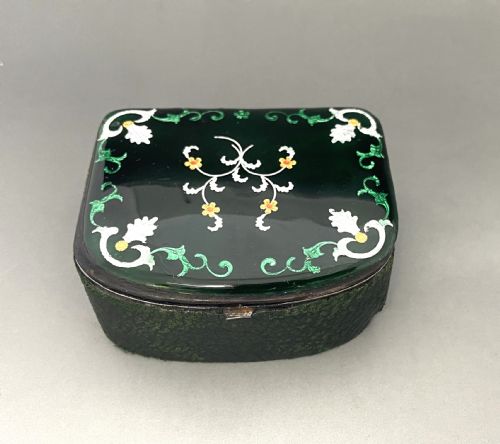

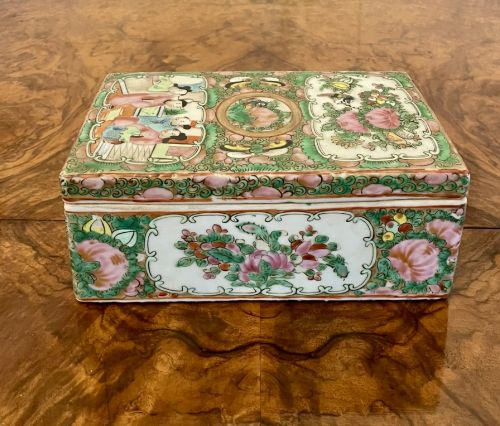
Green Enamel Trinket Box
A green enamel trinket box brings vibrant colour and meticulous miniature craft to a dressing table.
Green Enamel Trinket Box
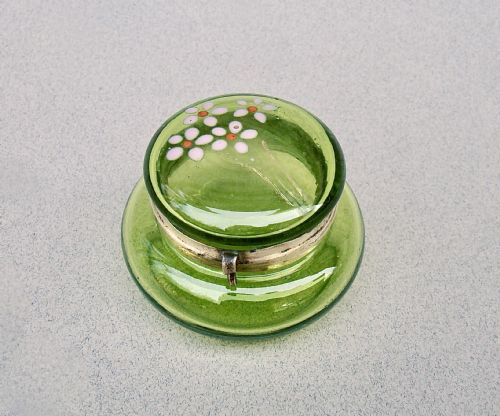
A green enamel trinket box encompasses small lidded containers designed to hold small valuables, pins, or pills. The green enamel trinket box appears frequently as nineteenth century glass vessels decorated with surface painting, alongside twentieth century silver and guilloche enamel works.
The selection spans periods from the Georgian era through the Victorian period, Edwardian years, and into the Art Deco and Art Nouveau movements. Forms range from simple pill boxes to larger vanity jars, card boxes, and lidded bowls originating from Britain, continental Europe, and beyond.
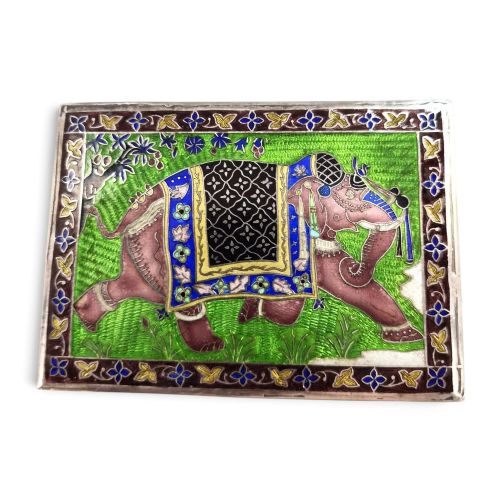
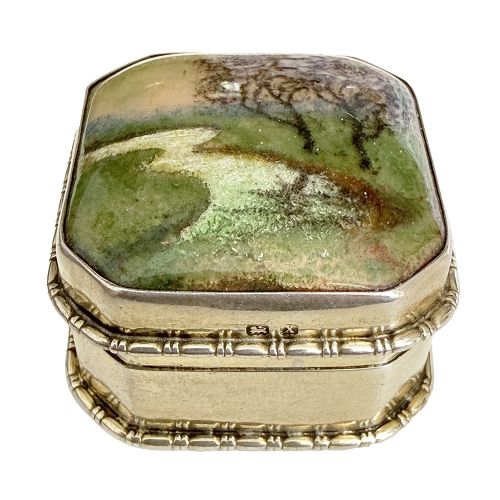
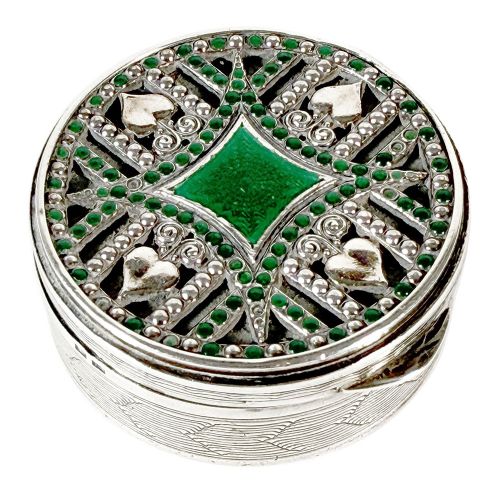
Makers and workshops across different countries applied enamel to metal, glass, and porcelain bases. Buyers encounter both delicate glass jars with painted floral motifs and robust sterling silver pieces featuring translucent engine turned guilloche patterns.
How they were made
Craftsmen built these objects using combinations of sterling silver, brass, porcelain, and glass, applying fused vitreous enamel to the surfaces. Enamelling requires finely ground glass powder fired at high temperatures to bond permanently with the metal or ceramic substrate.
Guilloche pieces involve mechanical engraving on a metal base beneath translucent enamel, creating geometric patterns that catch the light. Glass versions often employ surface enamelling and gilding applied by hand before a secondary low temperature firing.
Listings feature items from the Georgian, Victorian, Edwardian, Art Nouveau, and Art Deco periods, utilising glass, sterling silver, porcelain, and brass.
What varies in quality
Quality rests upon the crispness of the metalwork, the depth and clarity of the enamel, and the precision of any hand painted details. Superior examples display smooth, evenly fused glass coatings without bubbling or cloudiness.
The integration between metal mounts, hinges, and the main body demonstrates the standard of workshop execution. Finer pieces maintain tight lid closures and retain original gilding or polish across the silver and brass elements.
Fleetwood Varley·George Adam Scheid·Moser
The Green Enamel Trinket Box Glossary
- Guilloche enamel
- A decorative technique where metal is engraved with repetitive geometric patterns beneath a translucent layer of enamel. This method allows light to reflect through the coloured glass layer to create depth.
- Cloisonne
- An ancient metalwork method where fine wires are soldered to a metal base to create compartments filled with enamel paste. The piece is then fired and polished to a smooth finish.
- Sterling silver
- An alloy consisting of silver and other metals, typically copper, standardising at a high purity level for durability. This material frequently forms the structural mounts and bases of Edwardian and Art Deco boxes.
- Famille rose
- A Chinese ceramic palette featuring an opaque pink enamel alongside greens and other colours. It appears on porcelain boxes imported during the nineteenth century.
Green Enamel Trinket Box: Frequently Asked Questions
How were these boxes originally used?
These containers served practical functions on dressing tables, desks, and boudoirs to store small personal items. Owners kept pins, stamps, trinkets, cosmetics, or medicinal pills inside them.
Wealthy households utilised silver and porcelain boxes as decorative accessories that displayed personal taste. Their portable size also made them suitable for carrying small daily necessities.
How do I date a green enamel box?
Dating relies upon hallmarks on silver components, stylistic indicators of the mount design, and manufacturing methods. Victorian and Edwardian pieces often feature city assay office stamps and date letters.
Art Nouveau and Art Deco items display distinct linear motifs, floral curves, or geometric guilloche patterns characteristic of those twentieth century decades. Glass substrate styles and enamel colours also align with specific nineteenth century production periods.
Are these boxes fragile?
The enamel surface consists of fused glass, meaning it can chip or crack if subjected to sharp impacts or drops. Metal mounts and glass bodies require gentle handling during cleaning and daily use.
Storing them away from abrasive materials and extreme temperature changes preserves the integrity of the finish. Soft cloths suit routine dusting without scratching the glaze.
What is guilloche enamel?
Guilloche is a decorative technique involving mechanical engraving on a metal substrate using a lathe. This process cuts precise repetitive patterns into the silver or brass.
Translucent enamel is then applied over the engraved metal so the underlying pattern remains visible through the coloured glass. The method became particularly popular during the early twentieth century.