


Silver Glass Dressing Jar
Choosing a silver glass dressing jar brings home the functional elegance of the Victorian, Edwardian, and Art Deco dressing table.
Silver Glass Dressing Jar
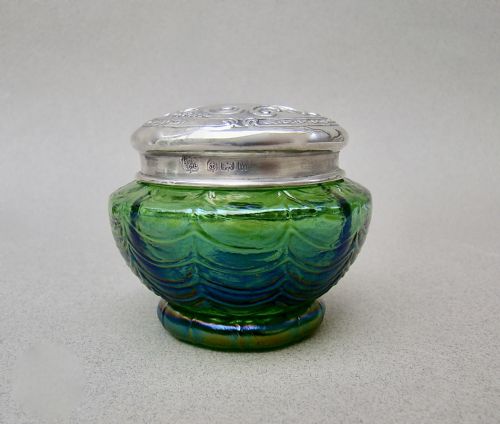
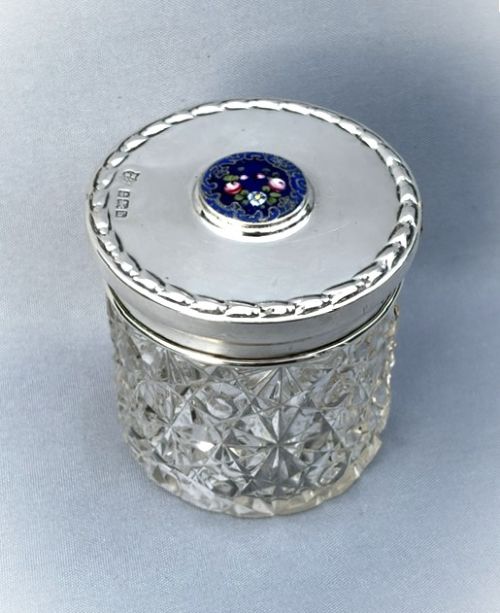
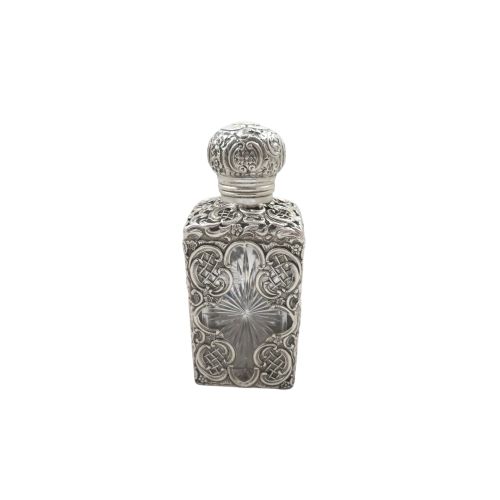
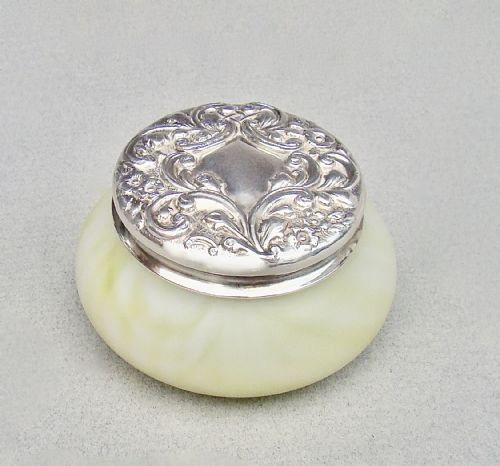
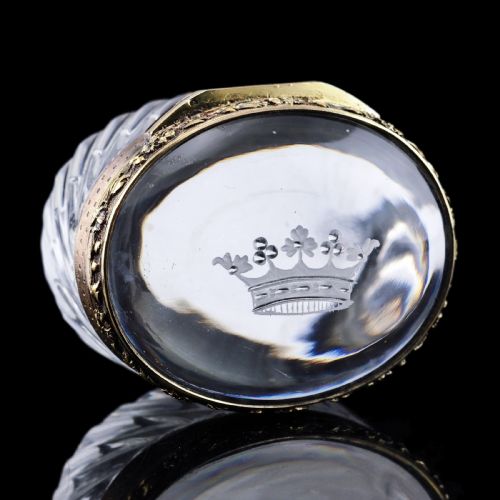
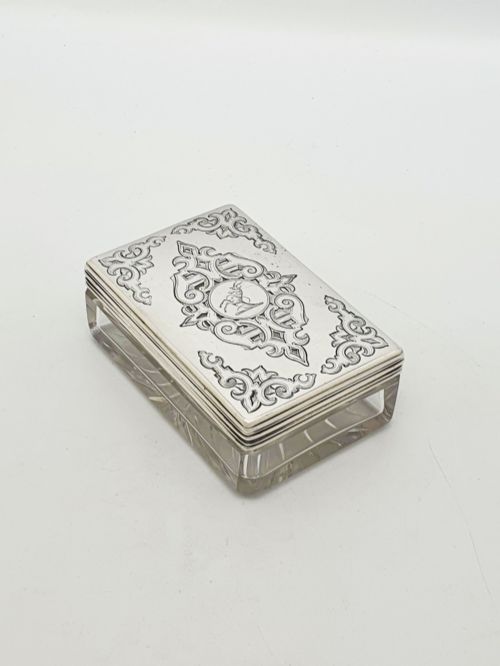
A silver glass dressing jar unites a heavy glass body with a solid silver lid, serving to hold perfumes, powders, and pins on a dressing table. These items span the nineteenth and twentieth centuries, originating from British assay offices as well as continental workshops.
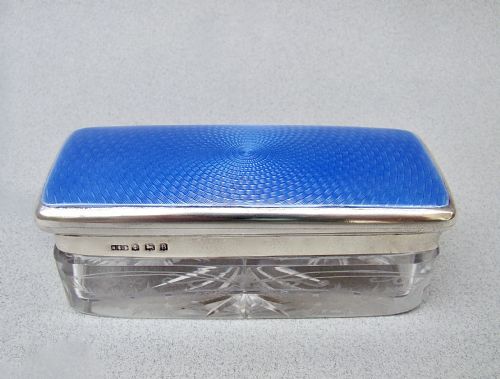
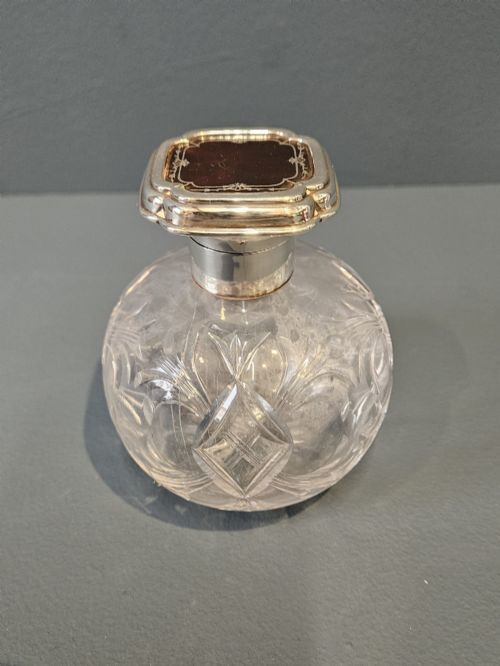
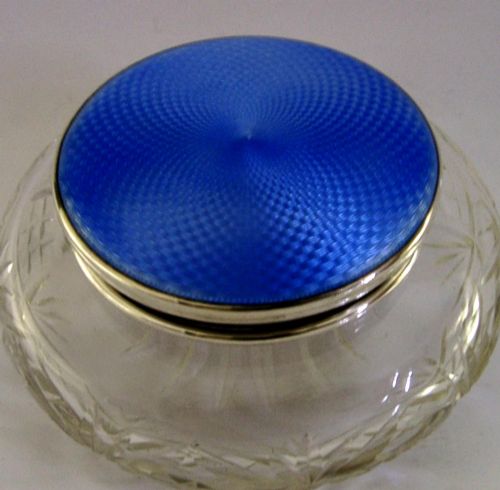
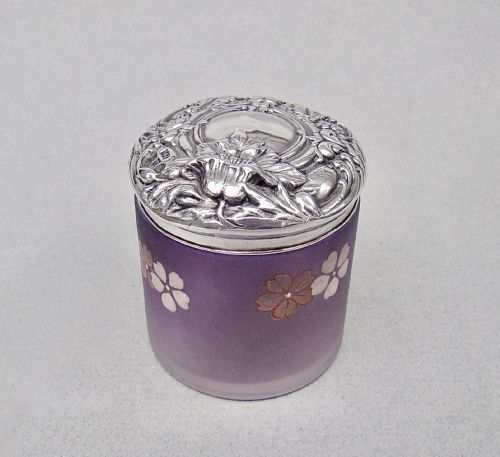
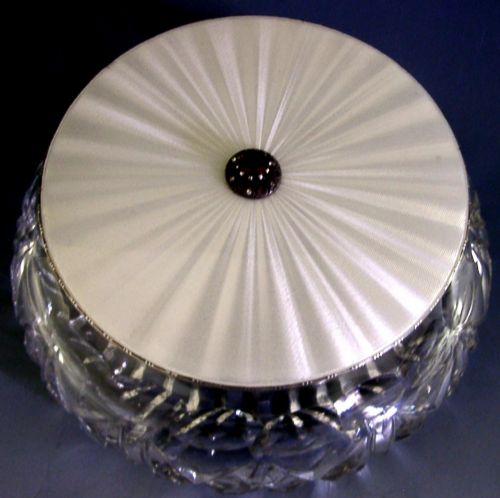
The most common examples on this page are Edwardian and Art Deco pieces featuring cut crystal or coloured glass bodies paired with embossed or enamelled silver tops. Alongside jars, buyers encounter related vanity items such as scent bottles and trinket boxes from the same periods.
How they were made
Glass bodies were produced using techniques such as heavy cutting, moulding, or overlay, utilising clear crystal alongside coloured glass like cranberry, blue, and amethyst. Silversmiths then fashioned matching lids from sterling silver, frequently adding decorative elements like guilloché enamel, tortoiseshell, or repoussé floral motifs.
Lids were shaped to fit securely over the glass rim, sometimes operating on hinges or threaded collars. Birmingham and London assay offices stamped these silver mounts with hallmarks indicating the year of production and the maker's mark.
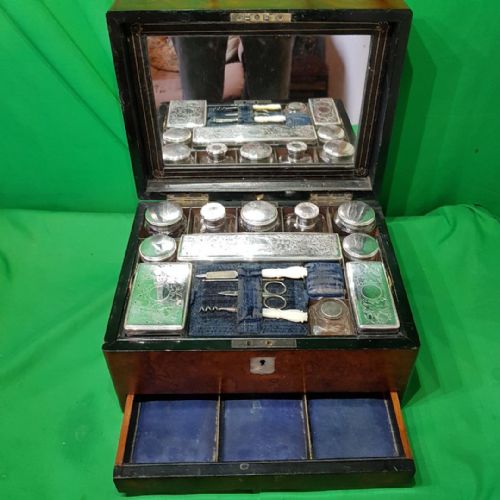
Some gentleman's travelling sets included hidden compartments alongside the usual silver jars for secret storage of small valuables.
What varies in quality
Quality rests on the depth and precision of the glass cutting, the weight of the silver mount, and the preservation of delicate decorative details like enamel or tortoiseshell. Superior examples display crisp faceting on the crystal and substantial metal gauge on the lid rather than thin plate.
Design complexity also separates standard containers from exceptional ones, particularly when makers incorporate special glass colours, overlay techniques, or intricate engine-turned patterns onto the silver.
A. J. Pepper & Co·Henry Clifford Davis·A. Bromet & Co·Henry Perkins·Hasset & Harper·Adie Brothers Ltd·Robert Pringle & Sons·Mappin & Webb·Henry Matthews·W.C. Griffiths·Synyer & Beddoes·William Aitken·John Douglas·Thomas Ingleton·Baccarat
The Silver Glass Dressing Jar Glossary
- Guilloché enamel
- Decorative technique where a precise geometric pattern is機械-engraved into metal and covered with translucent coloured enamel. This method was widely used on Art Deco silver dressing table sets.
- Repoussé
- Metalworking technique where the silversmith hammers a design from the reverse side to form raised floral or scroll patterns on the lid. It is commonly found on Edwardian pieces.
- Sterling silver
- Alloy of silver containing 92.5 percent pure silver and 7.5 percent other metals, usually copper, to ensure durability. British pieces carry standard assay office hallmarks to verify this standard.
- Cut glass
- Glass shaped and patterned by holding the vessel against a rotating abrasive wheel to produce deep facets and geometric designs. This catches the light on dressing tables.
- Overlay
- Layer of coloured glass applied over a clear or contrasting glass body before being cut through to reveal the base colour. This creates striking contrast on nineteenth-century jars.
Silver Glass Dressing Jar: Frequently Asked Questions
How do I read the silver hallmarks?
British silver hallmarks typically include a maker's mark, a standard mark for sterling silver, an assay office city mark, and a date letter. These stamps reveal exactly where and when the silver lid was made.
Matching the date letter against assay office tables confirms the year of production, though the glass body may occasionally be older than the mount.
What are the different glass colours available?
Glass bodies appear in clear cut crystal as well as saturated hues like cranberry, Bristol blue, amethyst, and amber. Overlay techniques were also used to layer contrasting colours.
Coloured glass often indicates specific periods, with vibrant cranberry and rich blues favoured during the Victorian and Edwardian decades.
How do I care for my dressing jar?
Keep the glass clean using warm soapy water while taking care to protect any enamel, tortoiseshell, or delicate inserts from excess moisture. Polish the silver lid gently with a soft cloth to avoid abrasive contact with the glass.
Store the jar on a stable surface away from direct sunlight to preserve the condition of coloured glass and organic lid materials.