



Guilloche Enamel Silver Pot
A guilloche enamel silver pot brings mechanical precision to precious metal, offering a vibrant focal point for any dressing table.
Guilloche Enamel Silver Pot
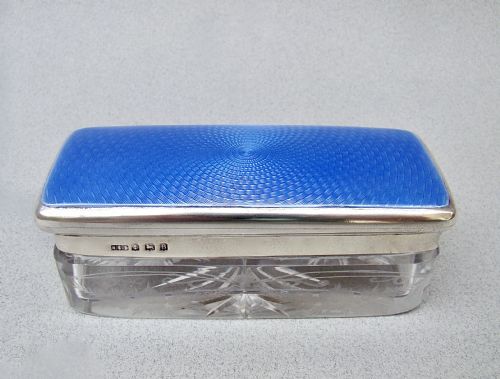
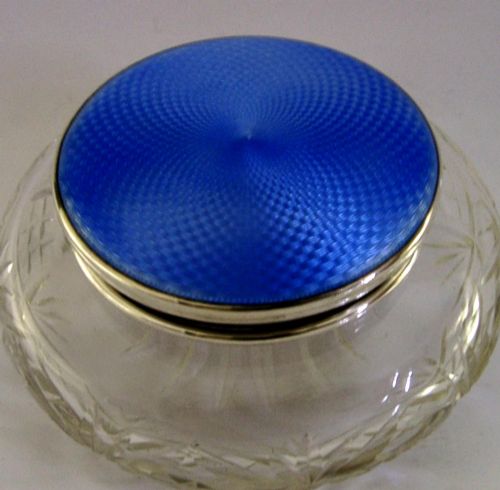
A guilloche enamel silver pot combines sterling silver mounts with a geometric machine-engraved pattern beneath translucent coloured enamel. These pieces serve primarily as dressing table jars, vanity jars, inkwells, trinket boxes, and lidded bowls.
The objects span multiple decades from the Victorian era through the Edwardian period and the Art Deco years up to mid-century modern designs. Most examples encountered here originate from English workshops, frequently bearing Birmingham hallmarks.
Forms range from small rouge pots and pill boxes to larger cut glass vanity jars with heavy silver and enamel lids. Buyers encounter both single containers and matched pairs designed for coordinated dressing table displays.
How they were made
Craftsmen utilised a rose engine lathe to cut precise, repeating geometric patterns into a metal disc before applying vitreous enamel. Sterling silver frames and collars secure the glass or metal bodies of the jars and boxes.
Glass bodies often feature cut crystal or etched patterns that complement the reflective quality of the coloured enamel top. Enamel colours span shades of blue, pink, yellow, green, and purple, sometimes incorporating dual colour schemes.
Guilloche Enamel Silver Pot Retail Price Guide 2026
Typical asking prices for guilloche enamel silver pot among the pieces listed under this phrase on Sellingantiques today, from the lower quarter to the upper quarter. They describe what is for sale here now, not the wider market.
Materials recorded on this page include sterling silver, cut glass, cut crystal, agate, and multiple shades of guilloche enamel.
What varies in quality
Quality rests in the complexity of the underlying machine-engraved pattern and the clarity of the translucent vitreous enamel layer above it. Finer pieces display crisp, deep geometric cutting that interacts dynamically with the light.
The weight and gauge of the sterling silver mountings also distinguish finer examples from standard production pieces. Makers who executed careful hallmarks and robust structural joints elevate the status of the finished jar.
Henry Clifford Davis·Levi and Salaman
The Guilloche Enamel Silver Pot Glossary
- Guilloche
- A decorative technique where a mechanical lathe engraves precise, intricate geometric patterns into metal. This engine-turned base creates the shimmering foundation visible beneath translucent enamel.
- Vitreous enamel
- Glass powder fused to metal through high-temperature firing. This material provides the brilliant, lasting colour found on the lids of these pots.
- Sterling silver
- An alloy consisting of silver and other metals, typically copper, standardised for purity. British pieces of this standard carry the lion passant hallmark.
- Dressing table jar
- A small lidded container used for holding cosmetics, pins, or hair accessories. These items formed part of matching vanity sets popular in past centuries.
- Hallmark
- An official stamp applied by an assay office indicating metal purity, origin city, and date letter. Birmingham and London offices feature prominently on these items.
Guilloche Enamel Silver Pot: Frequently Asked Questions
How were these pots used?
These vessels served practical functions on dressing tables and desks, holding cosmetics, rouge, pins, salve, or ink.
Ladies utilised them daily as part of their grooming routines, keeping small personal items neatly contained beneath decorative lids.
How do I identify the date?
British pieces carry assay office marks and date letters stamped into the silver mounts. Comparing these hallmarks against standard tables reveals the exact year of manufacture.
Stylistic cues such as geometric Art Deco motifs or Edwardian proportions also help narrow down the production era.
What materials are common?
Sterling silver and vitreous enamel form the decorative lids that define these objects. The container portions frequently consist of cut glass, crystal, or matching silver.
Some unusual variants incorporate carved agate alongside the standard glass and metal components.
How do I care for them?
Gentle cleaning of the silver with appropriate polish maintains the metal without touching the fragile enamel surface. Warm soapy water and a soft cloth suffice for cleaning glass bodies and enamel lids.
Keeping the pieces away from direct sunlight and harsh chemicals preserves the vibrant colour of the vitreous enamel.