


Art Deco Glass Jar
An art deco glass jar brings geometric polish and coloured enamel to the dressing table or cabinet, pairing heavy moulded or cut crystal with precious metal mounts.
Art Deco Glass Jar
When you search for an art deco glass jar, you encounter a variety of dressing table accessories, vanity jars, powder boxes, and lidded containers designed during the early twentieth century. These vessels combine functional storage for cosmetics or preserves with the clean lines and striking ornamentation characteristic of the period.
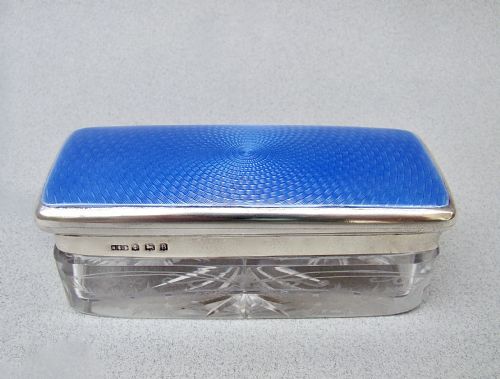
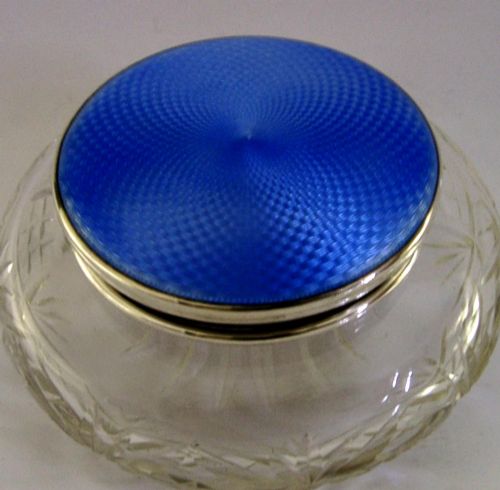
The pieces most frequently met on this page combine cut or moulded glass bodies with sterling silver lids, often enhanced by coloured enamel or tortoiseshell panels. Ranging from compact powder pots to tall scent bottles and biscuit barrels, these containers reflect the domestic elegance of the nineteen-twenties and nineteen-thirties.
Materials and construction
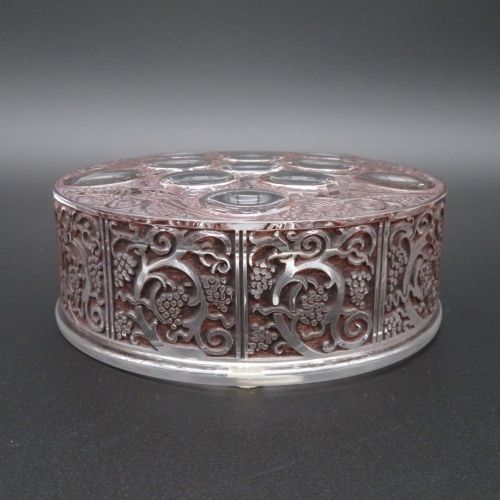
Makers formed the glass bodies of these jars through heavy cutting, moulding, or pressing, producing faceted surfaces, frosted finishes, or deep amethyst and blue hues. These robust glass containers were then paired with fitted sterling silver mounts or silver-plated collars.
Lids frequently feature intricate guilloché enamel work, real or faux tortoiseshell, and engraved patterns set within silver frames. Birmingham silversmiths and continental manufacturers utilised these contrasting textures to create the signature look of the style.
Early competitive sailing presentations occasionally took the form of lidded crystal boxes, bringing maritime triumph directly to the dressing table.
Assessing quality
Quality in these jars rests on the crispness of the glass cutting and the weight of the silver mounts. Finer examples display deep, sharp facets on the crystal and substantial sterling silver content rather than thin plating.
The execution of the enamel work dictates the upper tier of the range, where complex guilloché patterns remain intact without chipping or heavy scratching. Superior pieces also retain clear hallmarks confirming the maker and assay office.
Henry Clifford Davis·Henry Perkins·Adie Brothers Ltd·Wilson and Gill·Mappin and Webb
The Art Deco Glass Jar Glossary
- Guilloché enamel
- Enamel applied over engine-turned metalwork to create a repeating geometric pattern beneath a translucent coloured layer. This technique was widely used on vanity jar lids during the nineteen-twenties.
- Cut glass
- Glass shaped and patterned by holding it against a rotating abrasive wheel to produce deep facets and geometric designs. It provides weight and sparkle to dressing table containers.
- Vanity jar
- A small lidded container designed for holding cosmetics, powder, or pins on a dressing table. These often feature decorative silver or enamel tops.
- Frosted glass
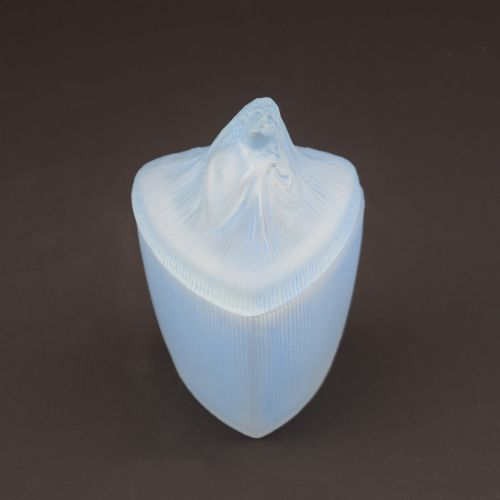
- Glass treated to have a matte, non-reflective surface, frequently utilised for sculptural lids and figures during the art deco period.
Art Deco Glass Jar: Frequently Asked Questions
What were art deco glass jars used for originally?
These vessels served primarily on dressing tables to hold face powder, trinkets, pins, rouge, and perfumes. Larger versions functioned as biscuit barrels or preserve jars for the dining table.
Their decorative lids protected the contents while adding a touch of geometric elegance to daily routines and household hospitality.
How can I identify the date of a silver-topped jar?
British pieces typically feature hallmarks stamped on the silver mount, including a maker's mark, an assay office symbol, and a specific date letter. These marks allow you to pinpoint the exact year of manufacture.
Unmarked pieces rely on stylistic indicators such as the glass moulding technique and the specific shade of enamel used.
Are the lids interchangeable between different jars?
Lids were custom-fitted to individual glass bases during manufacture, meaning they are rarely interchangeable. The collar of the silver mount matches the exact contours of the glass rim.
Attempting to pair a lid with a different base often results in an insecure fit or potential damage to the glass.
How should I clean a jar with enamel and tortoiseshell?
Care requires gentle wiping with a soft, dry cloth to remove dust from the glass and silver mounts. Moisture should be kept away from tortoiseshell and enamel surfaces to prevent lifting or discolouration.
Harsh metal polishes must be avoided near decorative enamel panels to protect the coloured layers.