


Guilloche Enamel Vanity Jar
A guilloche enamel vanity jar brings coloured geometric precision to the dressing table through translucent enamel laid over engine-turned metal.
Guilloche Enamel Vanity Jar
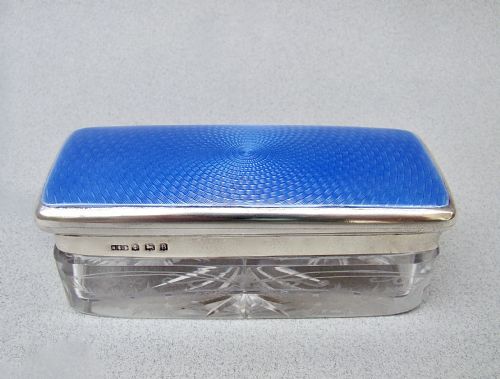
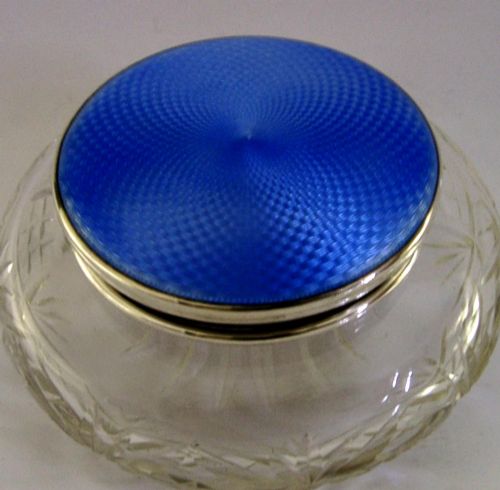
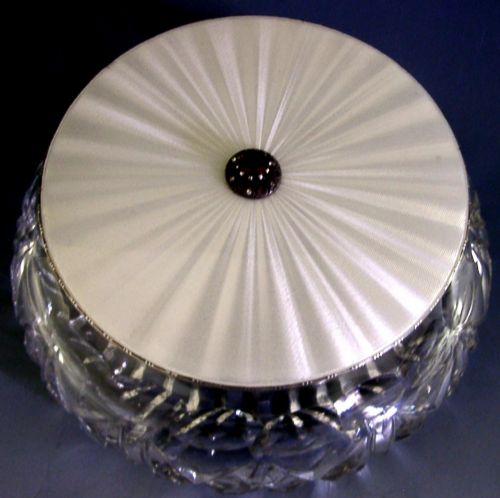
A guilloche enamel vanity jar is a dressing table container combining a glass or cut crystal body with a decorated metal lid. The pieces seen here span the Edwardian period, George V reign, Art Deco era, and Mid-Century Modern years.
Most examples take the form of vanity jars, dressing table jars, or lidded bowls, alongside scent and perfume bottles. These items served functional roles holding cosmetics or toiletries while displaying decorative metalwork.
The dominant aesthetic draws heavily from Art Deco design, prioritising symmetrical patterns and clean lines on the metal tops. Pieces originate largely from English makers working in assay offices such as Birmingham and London, with occasional continental examples appearing.
Materials and technique
Craftsmen built the bodies from heavy cut glass or crystal, often etched or moulded to catch the light beneath the lid. The removable tops pair sterling silver, silver gilt, or standard silver with applied vitreous enamel.
The distinct guilloche pattern relies on mechanical engraving engines to cut precise, repeating geometric lines into the metal base before enamelling. Translucent coloured enamel is then fused over the engraved metal so the machined texture shines through the surface.
Listings feature sterling silver, cut glass, agate, and guilloche enamel across Edwardian, George V, and Art Deco styles.
What varies in quality
Quality depends on the intricacy of the underlying engine-turned engraving and the clarity of the translucent enamel layer above it. Deeper, sharper machining creates more complex light refraction beneath the coloured glass coating.
The weight and thickness of the sterling silver or silver gilt mounts also separate standard production from finer workshop output. Heavier glass bodies with crisply cut facets and well-balanced lidded tops represent the upper tier of surviving examples.
Henry Clifford Davis·Henry Perkins·Goldsmith's and Silversmith's Co.·Albert Carter
The Guilloche Enamel Vanity Jar Glossary
- Guilloche enamel
- A decorative technique where a mechanical lathe engraves a precise geometric pattern onto metal before a translucent enamel coating is applied.
- Sterling silver
- A silver alloy containing 92.5 percent pure silver and 7.5 percent other metals, commonly marked on vanity jar lids.
- Silver gilt
- Silver that has been coated with a thin layer of gold on its exterior surface.
- Cut glass
- Glass decorated by cutting facets into the surface using a rotating wheel, creating reflective patterns on the jar body.
Guilloche Enamel Vanity Jar: Frequently Asked Questions
What were vanity jars used for?
These jars held powders, creams, pins, or cosmetics on a Victorian, Edwardian, or Art Deco dressing table. They kept personal items tidy while adding a decorative flash of colour to the room.
Over time, changing habits shifted them from daily toiletry use to display pieces and collections. Their durable glass and metal construction ensured they survived decades of domestic handling.
How do I date a guilloche enamel jar?
Dating relies heavily on the hallmarks stamped into the silver mounts on the lid or rim. Assay office marks, date letters, and maker's stamps pinpoint the exact year and city of manufacture.
Stylistic cues also help narrow down the era. Bold geometric motifs point to the 1920s and 1930s, while softer floral tones often indicate earlier Edwardian production.
How should I clean the enamel and silver?
Silver mounts require gentle polishing with a soft cloth to avoid touching the surrounding enamel. Proprietary silver dips can ruin glass and enamel if allowed to seep underneath.
Warm soapy water and a soft brush clean the glass body safely. Enamel is essentially glass fused to metal, so harsh abrasives and soaking must be avoided.
Are these jars always made of silver?
Most high-quality lids utilise sterling silver or silver gilt, though continental makers occasionally used lower purity silver or base metals. The base of the container is almost universally cut glass or crystal.
Hallmarks on the metal rim or lid interior confirm the exact standard of the silver used. Unmarked lids usually indicate continental origin or plated metal.