




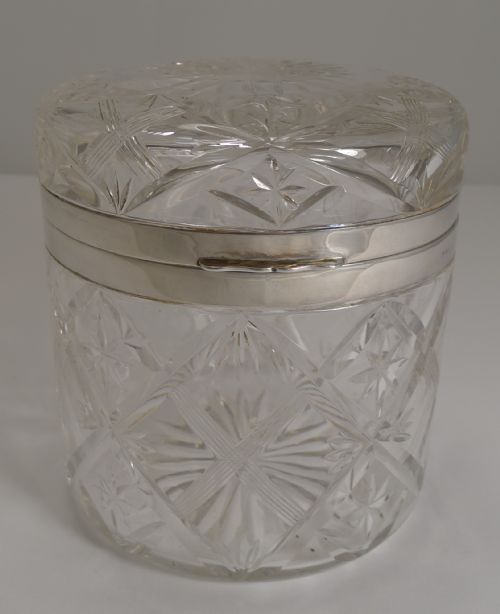
Art Deco Dressing Pot
An art deco dressing pot sits on the dressing table to hold powders, creams and pins, bringing geometric polish to daily routines.
Art Deco Dressing Pot
When searching for an art deco dressing pot, collectors encounter varied vessels designed for the vanity table, including powder jars, trinket boxes and rouge pots. These pieces emerge chiefly from the 1920s and 1930s, reflecting the clean lines and modernist impulses of the era alongside occasional Edwardian precursors.
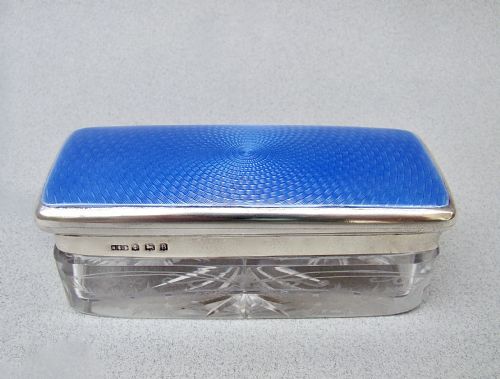
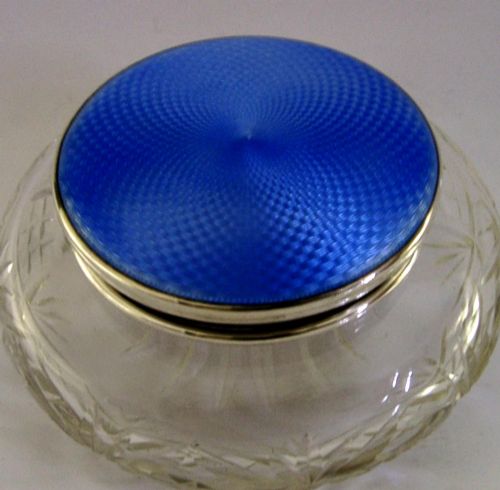
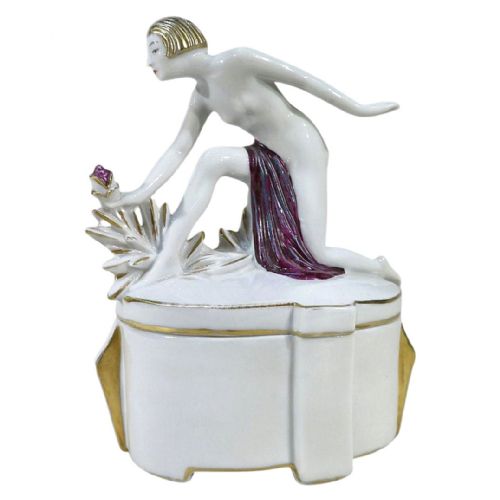
The most common formats on this page pair cut glass or crystal bases with fitted sterling silver lids, frequently enhanced by coloured enamel. Alongside silver-mounted glass, ceramic and porcelain novelty bowls shaped as bathing belles, half doll flapper girls and Pierrots appear.
Origins span British workshops in Birmingham and London alongside continental European makers in France, Germany and Austria. Buyers also find dressing table sets and vanity jars that served similar functions in boudoirs of the period.
Markers of Quality
Quality rests upon the crispness of the glass cutting, the weight of the sterling silver mount and the precision of the engine-turning beneath translucent enamel. Intact enamel surfaces free from chipping or heavy scratching elevate a piece significantly.
Figural ceramics gain distinction through hand-painted facial details and well-preserved glazes on novelty figures like flapper girls and bathing belles. Maker attributions and clear hallmarks identifying specific silversmiths add weight to the physical build.
Ceramic bathing belles and Pierrots watch over vanity tables with permanent glazed grins, guarding face powder.
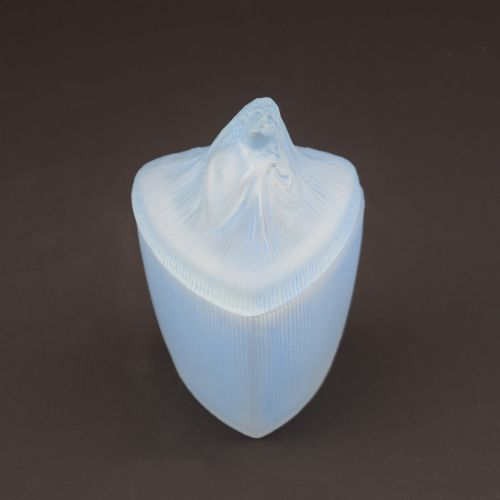
Henry Clifford Davis·Rene Lalique·Hasset and Harper
The Art Deco Dressing Pot Glossary
- Guilloche enamel
- A decorative technique where metal is engraved with an intricate geometric pattern and covered with translucent enamel. This method allows the underlying engraved design to show through the glossy coloured surface.
- Sterling silver
- An alloy containing ninety-two point five percent silver and seven point five percent other metals, typically copper. Most British pieces on this page carry silver hallmarks indicating this standard.
- Vanity jar
- A small lidded container used on a dressing table to hold cosmetics, trinkets or hairpins. These objects were manufactured from glass, porcelain and silver.
- Half doll
- A ceramic torso without legs, commonly manufactured in Germany or Austria during the early twentieth century. They were utilised as decorative lids for powder bowls and tea cosies.
- Overlay
- A technique where a metal layer, usually silver, is applied over a glass or crystal body to create decorative motifs. The metal adheres directly to the vessel surface.
Art Deco Dressing Pot: Frequently Asked Questions
What were art deco dressing pots used for?
These vessels held loose face powder, rouge, pins and small jewellery items on dressing tables.
Ladies utilised them during their daily grooming routines in the boudoir before the widespread adoption of modern cosmetic packaging.
How do I date a silver dressing pot?
British pieces feature hallmarks stamped into the metal mount, including a date letter that corresponds to a specific assay office year.
Matching the letter against official hallmarking charts reveals the exact year of manufacture.
What is guilloche enamel?
Guilloché is a decorative metalworking technique involving precise mechanical engraving beneath translucent coloured enamel.
The resulting surface displays repeating geometric patterns that catch the light through the glossy finish.
Are figural powder bowls marked?
Ceramic figural pieces, such as flapper girls or bathing belles, often bear painted or impressed country of origin marks like Austria or Germany.
Many carry model numbers rather than specific maker signatures.
How should I clean silver and glass jars?
Glass bodies wash safely in warm soapy water, keeping moisture away from glued tortoiseshell or enamel inserts.
Silver mounts require gentle polishing with a soft cloth to preserve the hallmarks and avoid wearing down thin plating or metal.