




Blue Guilloche Silver Box
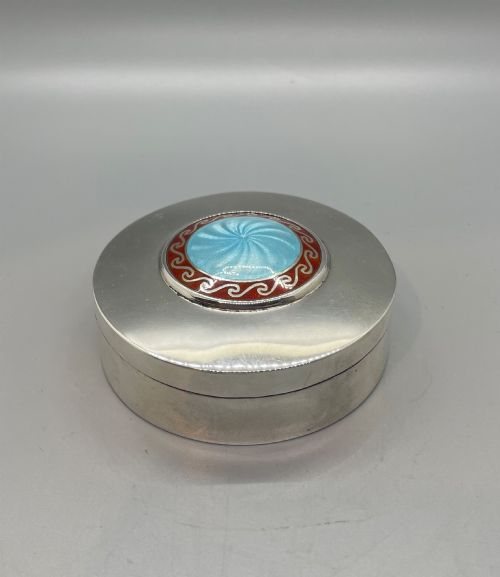
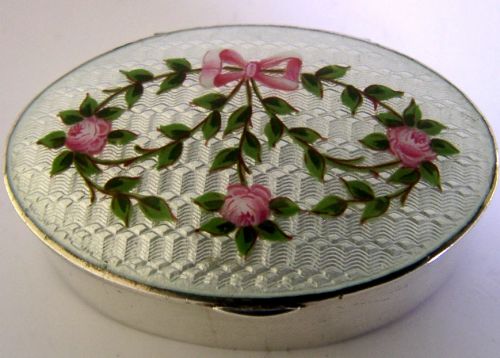
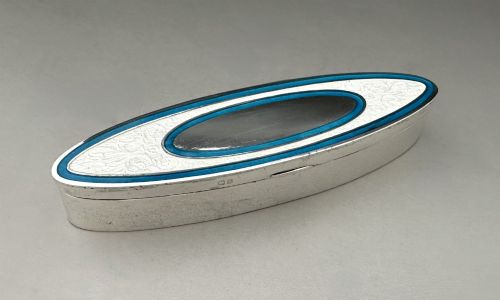
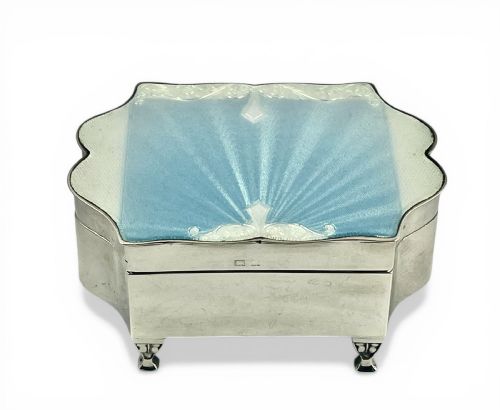
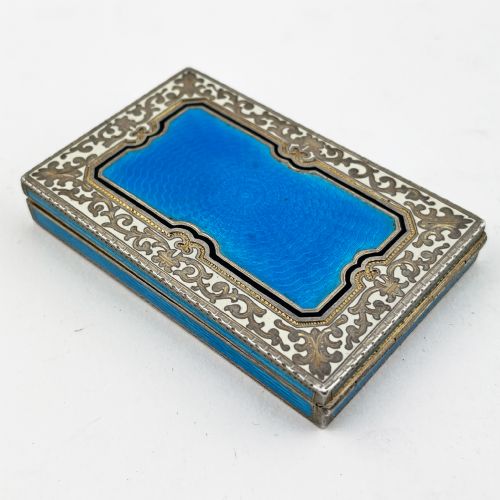
A blue guilloche silver box brings together precision engine-turning and translucent enamel, offering a tactile piece of dressing table history.
Blue Guilloche Silver Box
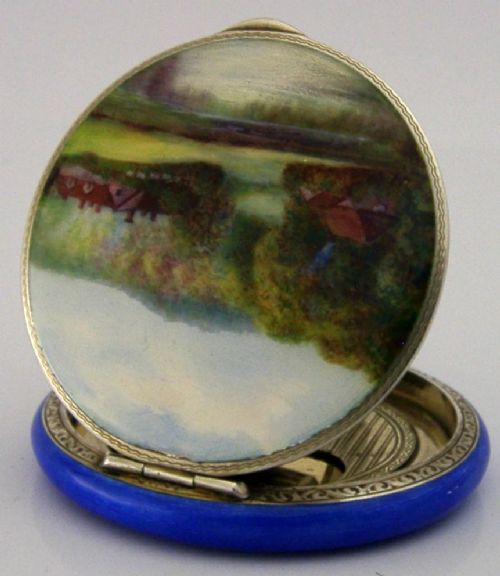
A blue guilloche silver box is a small container designed for dressing tables, vanity sets, or pockets, appearing in forms such as pill boxes, powder compacts, trinket boxes, and dressing table jars. These pieces emerge predominantly from the Edwardian period and the Art Deco era, reflecting the shifting tastes of the early twentieth century.
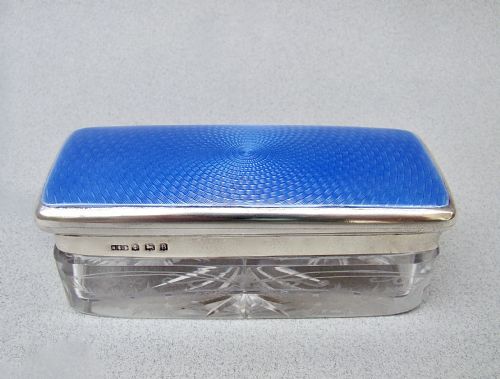
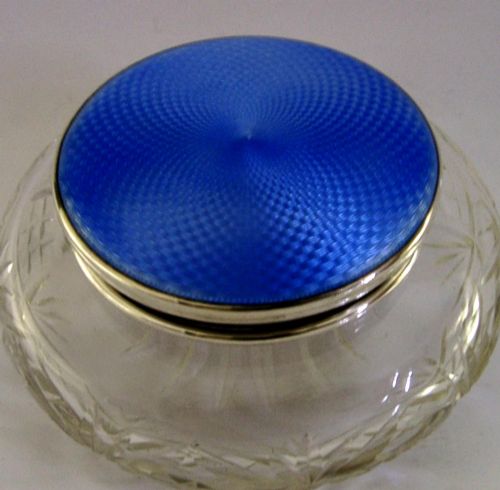
The objects combine sterling silver mounts with enamelled lids, often pairing metalwork with cut glass or crystal bodies in the case of jars and powder bowls. English makers from Birmingham feature heavily alongside continental workshops, producing items that served both practical daily grooming functions and decorative roles.
How they were made
Craftsmen utilised mechanical lathes to engrave precise geometric patterns onto a silver base, creating the engine-turned guilloche effect that catches the light through translucent layers of blue enamel. Vitreous enamel was then applied by hand and fired in a kiln to achieve the glossy, coloured surface visible on the lids.
Sterling silver formed the structural frame, hinges, and bezels, whilst cut glass or moulded crystal provided the bodies for larger jars and powder boxes. Makers stamped their pieces with hallmarks indicating the city of assay, year, and silver standard.
Listings feature items from the Edwardian period through the 1940s, executed in sterling silver, vitreous enamel, and cut glass.
What varies in quality
The crispness and depth of the underlying engine-turned pattern dictate the visual impact of the lid, with sharper mechanical engraving producing a more luminous refraction through the vitreous enamel. Simpler geometric lathe work contrasts with more intricate radial designs.
The weight of the sterling silver mounting and the clarity of the cut glass bodies differentiate standard production items from finer workshop pieces. Enamel condition and the tightness of the hinged closure also establish the overall standard of survival.
Henry Clifford Davis·Henry Matthews·Evans
The Blue Guilloche Silver Box Glossary
- Guilloche enamel
- A decorative technique where a metal surface is mechanically engraved with repetitive patterns under translucent enamel. This allows the underlying pattern to show through the colour.
- Vitreous enamel
- Glass powder fused to a metal surface at high temperatures. It creates a durable, glossy coloured coating.
- Sterling silver
- An alloy of silver containing ninety-two point five percent silver and seven point five percent other metals, usually copper. It provides the primary metal framework for these boxes.
- Assay mark
- A stamp indicating the purity of the metal and the office that tested it. English pieces commonly display Birmingham or London marks.
- Bezel
- The rim of metal that holds the lid or glass insert in place. A tight fit ensures the lid closes flush against the body.
Blue Guilloche Silver Box: Frequently Asked Questions
What were these small boxes used for?
These containers served practical grooming purposes on dressing tables, holding cosmetics, loose powder, rouge, or pills. Compacts and small jars accompanied individuals for touch-ups during the day.
Larger versions held trinkets or jewellery, combining utility with ornamental appeal in domestic settings.
How can I tell the date of a piece?
English silver items carry hallmarks that indicate the assay office and a specific date letter corresponding to the year of manufacture. Examining these stamps provides a reliable chronology.
Stylistic indicators, such as Edwardian floral motifs or Art Deco geometric layouts, further help narrow down the period of production.
Are the bodies always made of silver?
While the lids consistently feature sterling silver mounts and enamelled panels, the lower bodies frequently employ cut glass or moulded crystal, particularly in jars and powder boxes.
Some smaller pill boxes and compacts utilise silver throughout, while occasional pieces incorporate gilt metal or card cases.
How do I care for antique enamel?
Enamel is a form of glass and requires gentle handling to prevent chipping or scratching against hard surfaces. Cleaning should involve soft, dry cloths rather than abrasive metal polishes.
Keeping pieces away from extreme temperature changes protects the bond between the vitreous surface and the silver base.