
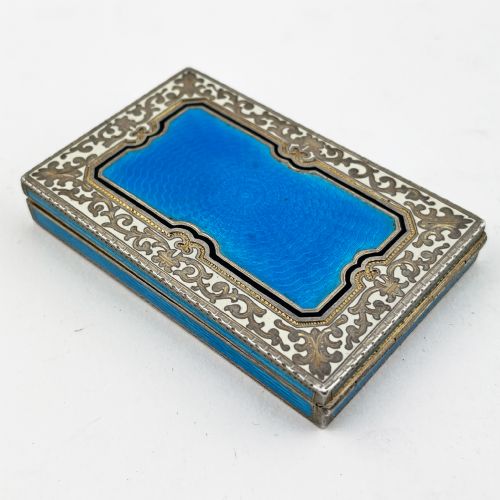


Silver Enamel Cigarette Case
When searching for a silver enamel cigarette case, you explore a portable canvas of miniature metalwork and coloured glass fused by heat.
Silver Enamel Cigarette Case
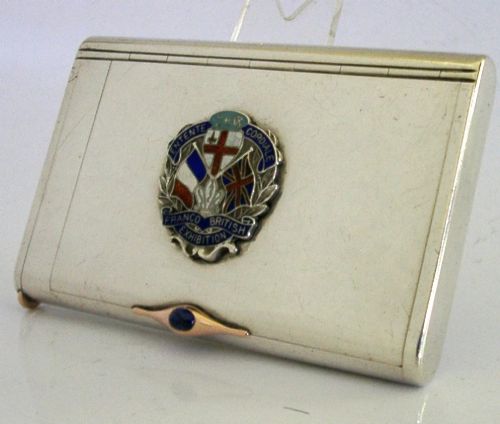
A silver enamel cigarette case serves as a pocket-sized container for tobacco, constructed from precious metal and decorated with vitreous glass coatings. The examples found here span the nineteenth century through the 1940s, with a strong representation of the Art Deco period and Edwardian designs.
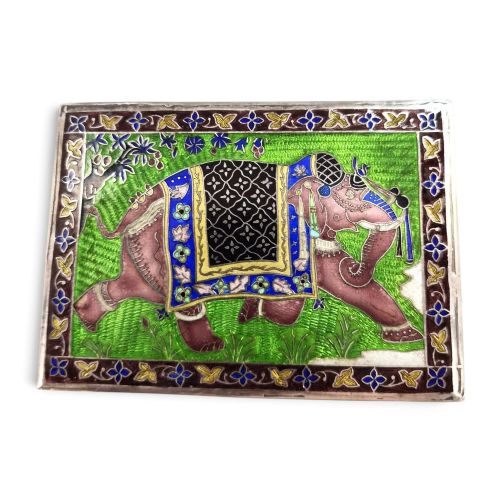
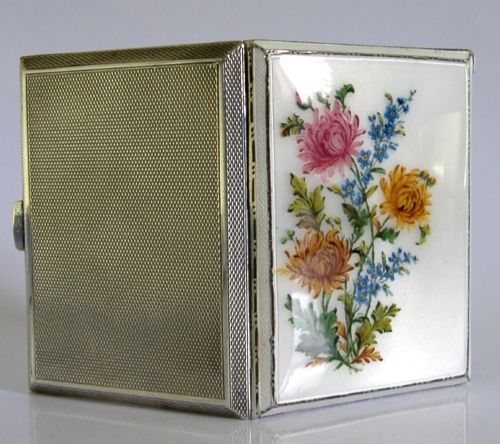
The items take the form of flat rectangular boxes, sometimes doubling as card cases, compacts or cheroot holders. Buyers meet British, continental European and Russian items, often displaying intricate floral hand-painting or geometric engine-turned patterns.
How they were made
Craftsmen built the foundations of these objects from sterling silver or silver-gilt, shaping the metal body and applying hinges and clasps by hand. Artisans then fused powdered glass, known as vitreous enamel, onto the metal surface at high temperatures.
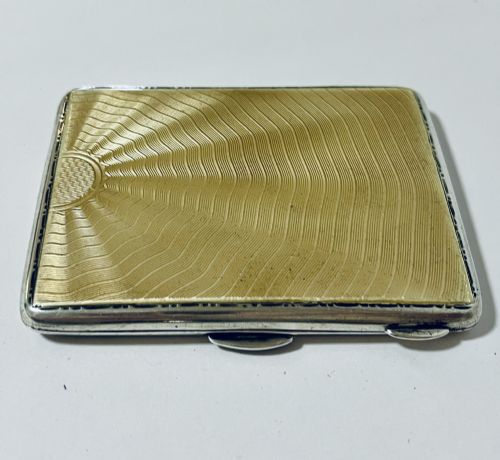
Techniques included guilloche, where a lathe engraved geometric patterns beneath translucent enamel to create sunburst rays, alongside cloisonné and hand-painted floral motifs. Gilding was frequently applied to the interior metal surfaces to prevent tarnishing from tobacco.
Listings feature sterling silver, gold, and vitreous enamel across Edwardian, Art Deco, and nineteenth-century periods.
What varies in quality
The standard of a piece depends on the depth and complexity of the enamel work and the precision of the underlying metal engraving. Pieces featuring hand-painted floral studies or figural scenes demand greater artisan skill than plain coloured grounds.
The integrity of the enamel surface dictates the overall grade, alongside the crispness of the maker marks and the mechanical fit of the lid and catch. Heavier gauges of silver and intricate gilt interiors separate standard production items from master workshops.
LIBERTY & CO·DEAKIN & FRANCIS·William Neale & Son Ltd·Joseph Gloster·Walker & Hall·Louis Kuppenheim·Asprey
The Silver Enamel Cigarette Case Glossary
- Guilloche
- A decorative technique where a mechanical lathe engraves a precise repeating pattern into metal before translucent enamel is applied. This creates shimmering wave or ray effects beneath the glass.
- Vitreous Enamel
- A material made by fusing powdered glass to a metal substrate at high temperatures in a kiln. The resulting glossy coating resists wear and retains its vibrant colour for centuries.
- Cloisonne
- An ancient enamelling method where thin metal wires are soldered to the metal base to create compartments, which are then filled with coloured glass pastes. The grid of wires remains visible in the finished surface.
- Silver-Gilt
- Silver that has been coated with a thin layer of gold on its surface. This finish is commonly found on the interior chambers of tobacco containers.
- Cheroot Case
- A slender variation of the standard box designed specifically to hold thin, open-ended cigars rather than paper cigarettes.
Silver Enamel Cigarette Case: Frequently Asked Questions
What were silver enamel cigarette cases used for?
These accessories served to hold and protect delicate paper cigarettes or cheroots in a gentleman or lady's pocket or handbag.
They also functioned as social statements, displaying the owner's taste through miniature artworks and precious materials.
How do I date a silver enamel cigarette case?
Dating relies heavily on hallmarks stamped into the silver body, which indicate the assay office, standard of metal and year of production.
Stylistic cues such as geometric Art Deco sunbursts or Edwardian floral motifs also point toward specific decades of manufacture.
How should I clean my silver enamel cigarette case?
Maintenance requires gentle wiping with a soft, dry cloth to remove dust and finger oils without scratching the fragile glass surface.
Harsh metal polishes and chemical dips must be avoided entirely, as abrasive substances can permanently damage or dull the vitreous enamel.
Did women use these cigarette cases?
Manufacturers produced numerous smaller, brightly coloured examples specifically for female smokers during the Edwardian and Art Deco eras.
These items were frequently paired with matching compacts or vanity accessories designed to fit evening bags.