



Sterling Silver Powder Box
Sterling silver powder box designs combine precious metal mounts with glass, crystal or enamel, forming elegant dressing table accessories from the Georgian era through the mid-twentieth century.
Sterling Silver Powder Box
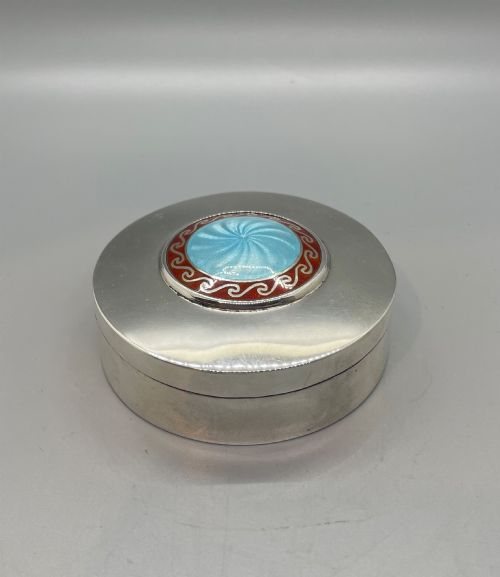
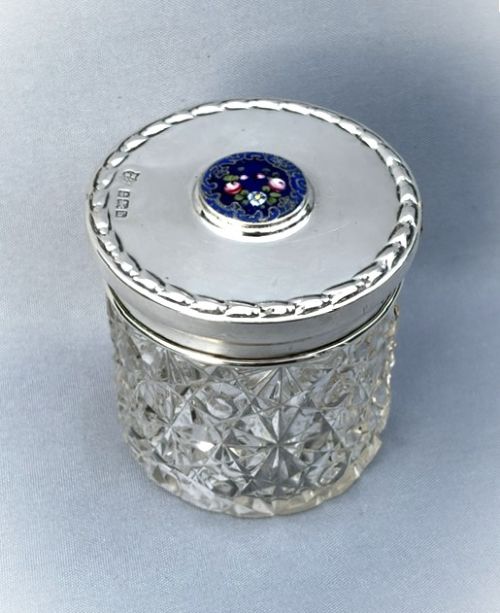
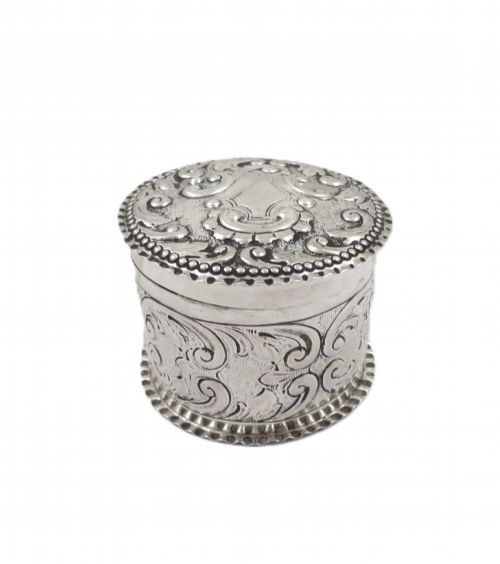
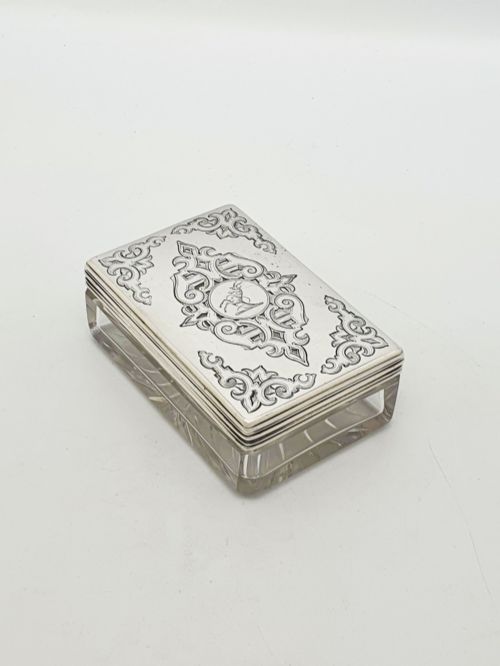
A sterling silver powder box serves as a dressing table container for cosmetics, smelling salts or small trinkets, appearing in various circular, square and heart shapes. Buyers encounter containers formed entirely of silver alongside lidded jars featuring crystal, glass or ceramic bases.
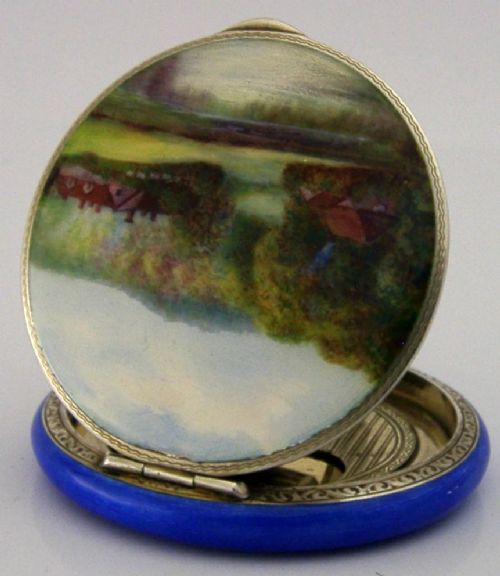
The selection ranges from early Georgian soap and tooth powder cases to robust Victorian vanity pots and geometric Art Deco dressing table jars. Twentieth-century examples frequently incorporate mechanical compacts and colourful guilloche enamel lids produced by regional silversmiths.
How they were made
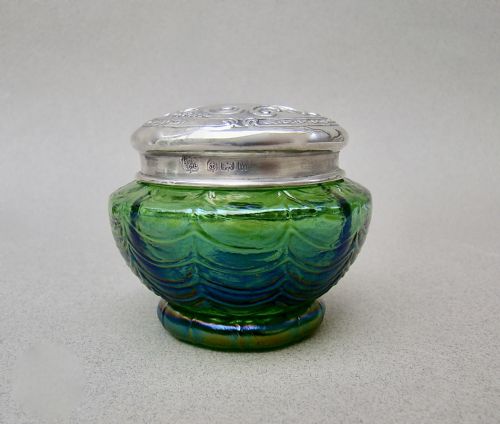
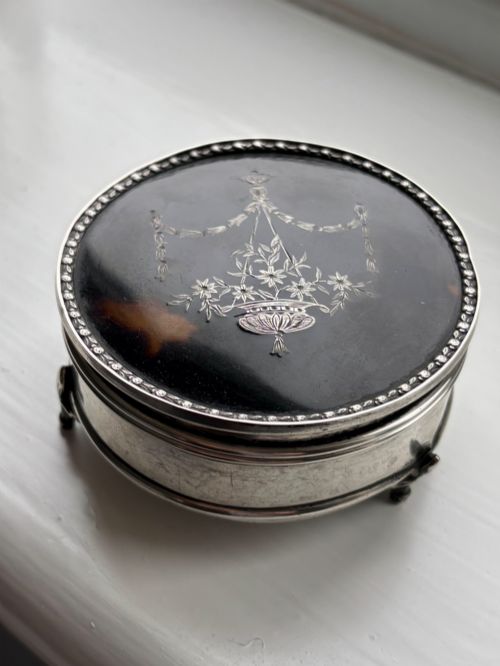
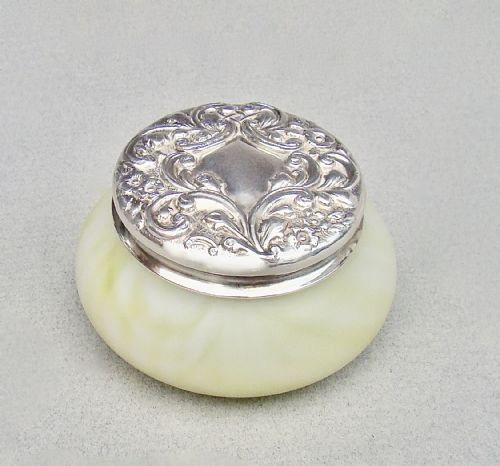
Silversmiths constructed the metal mounts using sterling silver, applying techniques such as repousse decoration, engine turning and casting to ornament the bodies and lids. Bases utilise heavy cut crystal, satin glass, Kralik glass or tortoiseshell secured with silver rims.
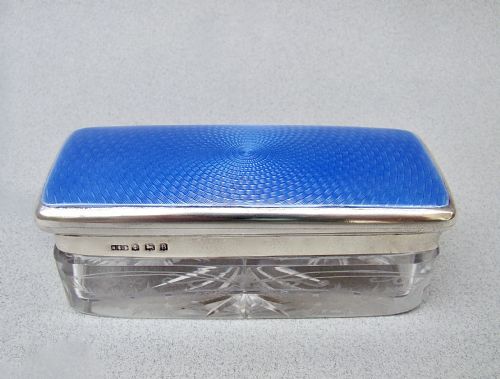
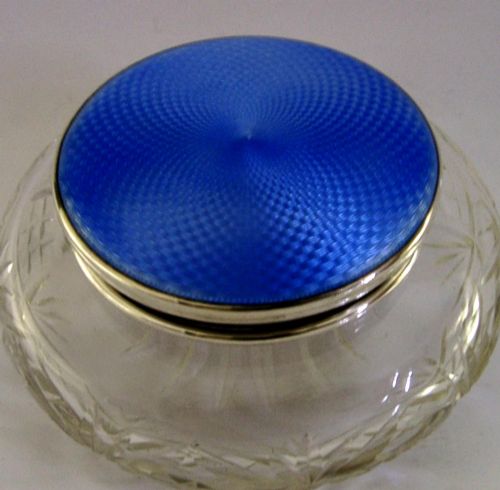
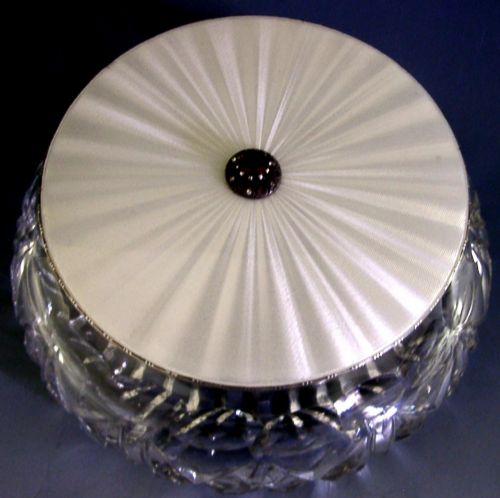
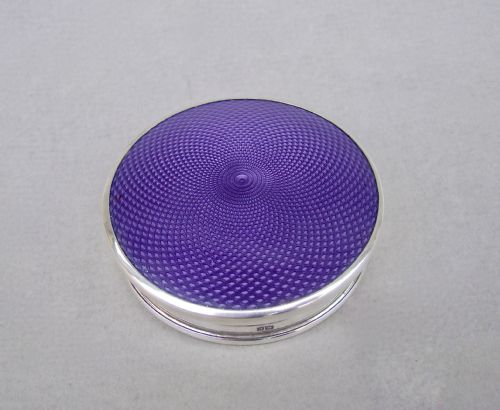
Enamelling techniques involve vitreous enamel and machine-turned guilloche patterns applied beneath translucent colour coats, occasionally featuring hand-painted details. Makers stamped hallmarks onto the silver components to record the assay office, date letter and maker's mark.
Listings feature sterling silver powder boxes spanning Georgian, Victorian, Edwardian, Art Nouveau, Art Deco and Mid-Century Modern periods.
What varies in quality
Quality depends upon the weight of the sterling silver mount and the precision of any engine-turned engraving or mechanical hinge. Thicker gauge metal resists denting and maintains structural integrity over decades of use.
The crispness of cut crystal facets, the absence of chips in glass bodies, and the preservation of enamel without hairline fractures distinguish superior specimens. Maker attribution and documented assay details also elevate the standing of individual pieces.
A. J. Pepper & Co·Ollivant & Botsford·Henry Clifford Davis·Goldsmiths and Silversmiths Company·A. Bromet & Co·Paul Storr·Henry Matthews·The Daniel Manufacturing Co·Henry Williamson Ltd·John Thornton
The Sterling Silver Powder Box Glossary
- Guilloche enamel
- Decorative metalwork covered with translucent enamel over an intricate machine-engraved geometric pattern. This technique gained immense popularity during the Art Deco and Edwardian periods.
- Repousse
- Metalworking technique where the silversmith hammers metal from the reverse side to form a raised design in relief. It creates textured, ornamental surfaces on silver boxes.
- Hallmark
- Official stamp applied by an assay office indicating the metal standard, the maker and the year of manufacture. British pieces typically show a lion passant for sterling silver.
- Kralik glass
- Art glass produced by the Bohemian manufacturer Wilhelm Kralik Sohn, often paired with silver lids. These bodies display distinctive iridescent or coloured art glass effects.
- Vitreous enamel
- Glass powder fused to a metal surface through high-temperature firing to produce a durable, glossy coloured finish. It provides vibrant decoration on compacts and vanity jars.
Sterling Silver Powder Box: Frequently Asked Questions
How do I date my powder box?
Dating relies upon the hallmarks stamped onto the sterling silver rim, mount or lid. These marks typically include a letter code for the year and symbols indicating the assay office.
Stylistic indicators such as enamel colours, glass types and maker marks provide additional chronological context when official stamps are rubbed or absent.
Are glass bases original to the silver lids?
Original pieces maintain a precise fit between the silver mount and the cut crystal, glass or tortoiseshell base. The collar securing the lid aligns flush with the upper rim of the container.
Matching hallmarks on internal bezels or lids frequently confirm the factory pairing of silver mounts with their original glass vessels.
How should I clean silver and enamel?
Cleaning requires a soft microfiber cloth applied gently to the sterling silver surfaces while avoiding abrasive polishes near enamel panels. Enamel and glass components tolerate mild soapy water but must remain unsoaked.
Preventing moisture from reaching internal mirrors or glued foil linings preserves the structural condition of vintage compacts and vanity jars.