


Dressing Table Powder Pot
A dressing table powder pot holds the refined clutter of a dressing room, bringing together silver, glass, and enamel from the Victorian era to the mid-twentieth century.
Dressing Table Powder Pot
A dressing table powder pot is a receptacle designed for cosmetics, perfume, and dressing room accessories, appearing in forms such as trinket boxes, vanity jars, and powder bowls. These vessels range from Victorian sterling silver designs to Art Deco ceramic figures and glass jars.
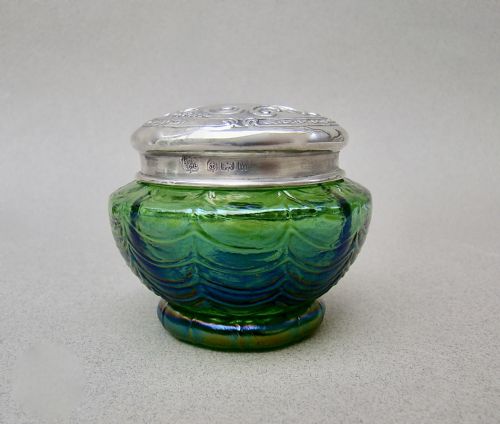
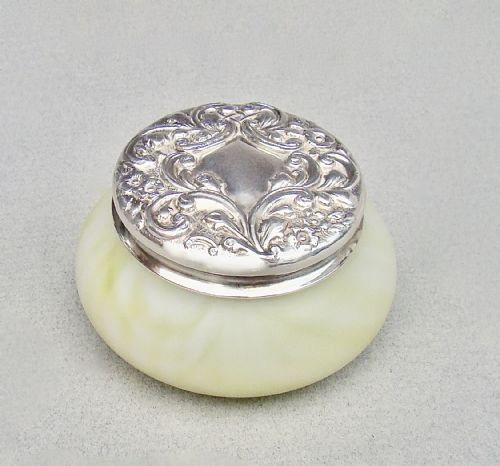
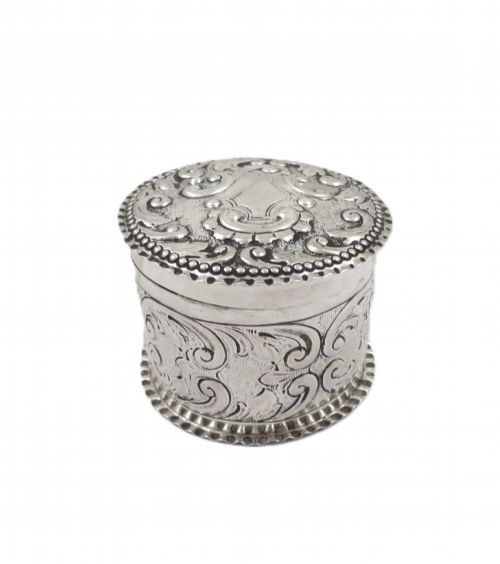
The pieces on this page span the nineteenth century through to the mid-twentieth century, encompassing Edwardian, Art Nouveau, and George V periods alongside Art Deco creations. Buyers frequently encounter glass bases fitted with hallmarked silver lids, as well as ceramic novelty bowls featuring figural lids.
Origins stretch across English workshops in Birmingham, Chester, and London, alongside continental European pieces from France, Germany, and Austria. Forms vary from simple cut crystal jars to elaborate enamel and tortoiseshell boxes meant for daily vanity use.
How they were made
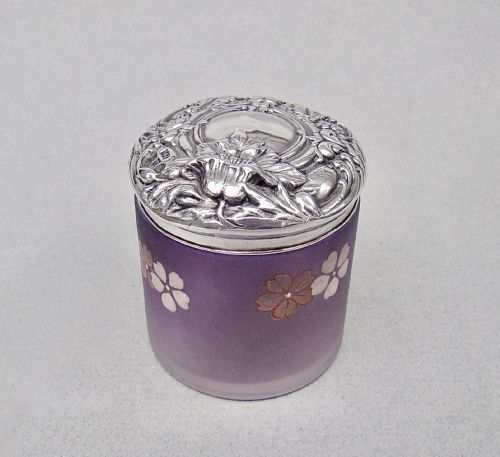
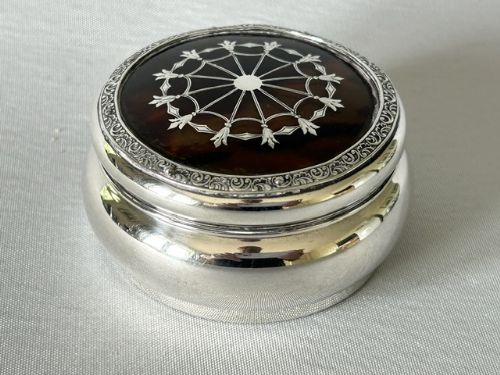
Maker workshops combined sterling silver mounts and hallmarked lids with heavy cut glass, crystal, or coloured glass bodies including cranberry, Bristol blue, satin, and Kralik glass. Metalwork involved silver smithing and assay office marking, often paired with delicate pique work.
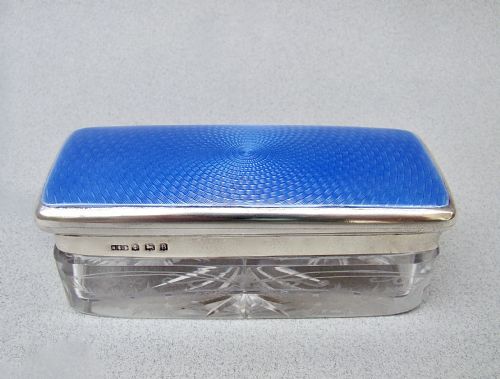
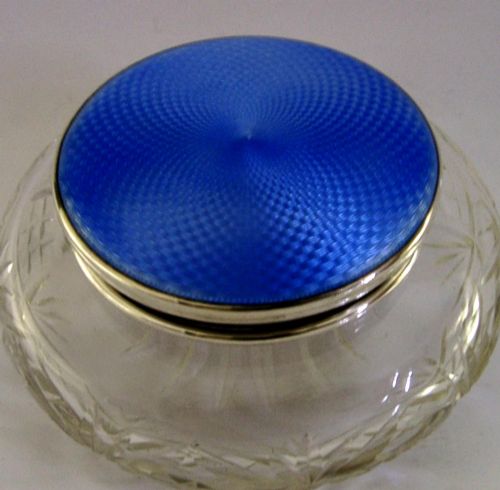
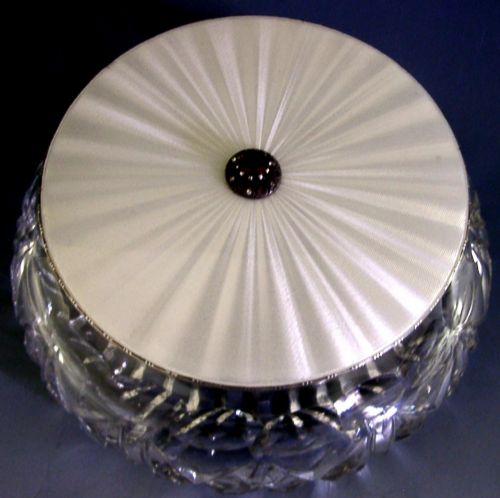
Enamel work appears as guilloché enamel applied to silver lids, while ceramic and porcelain powder bowls utilise moulded earthenware, often hand-painted with figures such as bathing belles, flappers, and pierrots.
What varies in quality
Quality rests upon the weight and clarity of the glass or crystal, the intricacy of the cut patterns, and the substance of the silver mounts. Heavy cut crystal and thick-walled glass denote superior manufacture compared to lighter moulded alternatives.
Surface decoration dictates distinction, separating plain silver lids from those featuring complex guilloché enamel, tortoiseshell inlay, or fine ceramic figural modelling. The precision of the hallmarks and the integration between lid and base determine the finish of the piece.
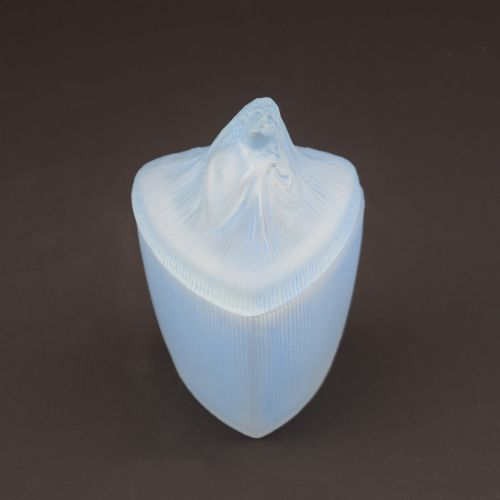
A. J. Pepper & Co·Ollivant & Botsford·Henry Clifford Davis·A. Bromet & Co·Rene Lalique·Asprey & Co·Hasset & Harper·Henry Williamson Ltd
The Dressing Table Powder Pot Glossary
- Guilloché enamel
- A decorative technique where a geometric pattern is engraved beneath a translucent enamel layer. This method creates a shimmering effect frequently seen on twentieth-century silver lids.
- Pique work
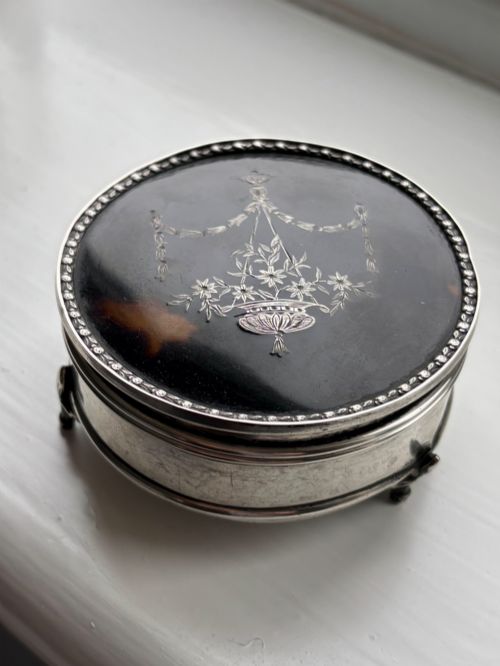
- An inlay technique using tiny pins of gold or silver set into tortoiseshell or ivory. It demands high precision and appears on Edwardian trinket boxes.
- Cranberry glass
- A rich red glass produced by adding gold chloride to the molten batch. It gained popularity during the Victorian and Edwardian eras for dressing table wares.
- Half doll
- A ceramic upper torso without legs, manufactured to sit on top of powder bowls and tea cosies. They are characteristic of Art Deco boudoir accessories.
- Sterling silver
- An alloy containing ninety-two point five percent silver and seven point five percent other metals, chiefly copper. British pieces carry official assay office hallmarks for city and year.
Dressing Table Powder Pot: Frequently Asked Questions
What are dressing table powder pots made of?
These pieces combine sterling silver, glass, porcelain, enamel, and tortoiseshell. Bases are frequently fashioned from cut crystal or coloured glass, while lids utilise hallmarked silver and painted ceramic.
Faux tortoiseshell and pique work also appear on select Edwardian and George V containers.
How do I identify the date of a silver-lidded jar?
British silver lids carry hallmarks that indicate the assay office, the standard of silver, and the year of manufacture through a designated date letter. Birmingham and Chester are common assay locations found on these pieces.
Stylistic cues such as Art Deco geometric enamel or Edwardian floral motifs also point to the period of production.
Were these pots used only for powder?
While many served as powder bowls and rouge pots, others functioned as general trinket boxes, vanity jars, and hair receiver containers. Their varied sizes accommodated different cosmetics and small personal items on a dressing table.
Figural ceramic bowls were often designed specifically to hold loose powder puffs.
How should I clean a silver and glass jar?
Glass and crystal bodies can be washed gently in warm soapy water, taking care to keep moisture away from any interior linings or glued mounts. Silver lids require a soft cloth and silver polish applied away from enamel or tortoiseshell sections.
Enamelled surfaces should be wiped gently with a damp cloth without soaking.