



Birmingham Silver Dressing Jar
A birmingham silver dressing jar brings vanity and dressing table accessories from the late Victorian period through the Art Deco era into daily use.
Birmingham Silver Dressing Jar
A birmingham silver dressing jar combines a sterling silver lid or mount with a glass body, functioning as a vanity jar, trinket box, or scent bottle. These vessels sat upon dressing tables to hold powders, creams, pins, and perfumes.
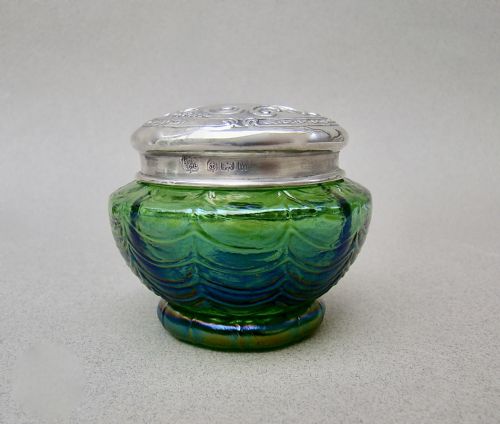
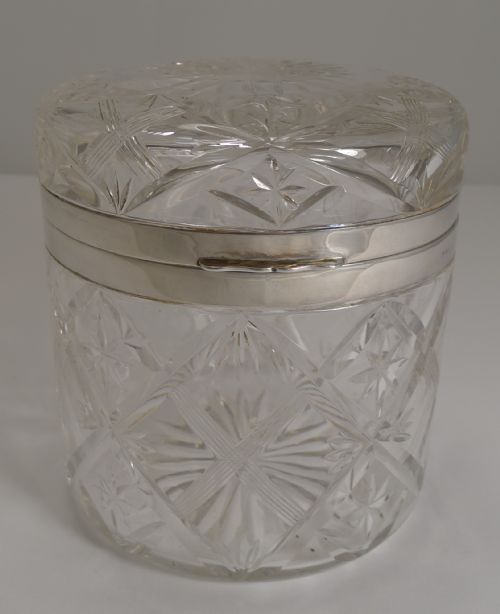
The selections span Victorian, Edwardian, Art Nouveau, and Art Deco designs. Bodies range from heavy cut glass and crystal to coloured glass including cranberry, amethyst, satin, and Kralik types.
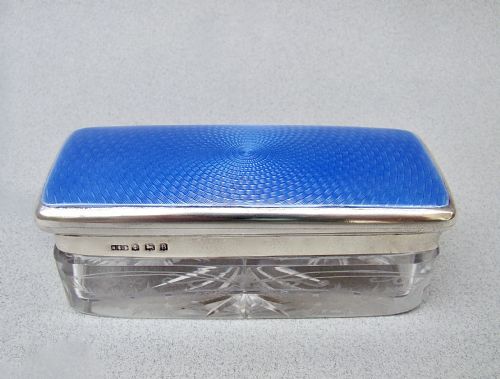
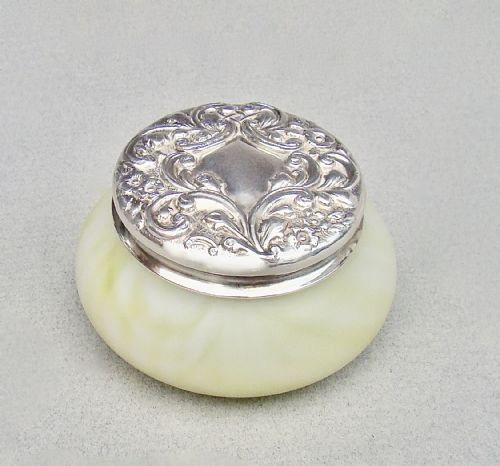
Lids frequently feature intricate guilloche enamel, tortoiseshell, or embossed silver detailing. Makers based in Birmingham produced these items in large quantities during the early twentieth century.
Materials and construction
Silversmiths stamped and chased sterling silver mounts and lids, hallmarking them in Birmingham with date letters and maker marks. These metal tops paired with blown, moulded, or panel-cut glass bodies.
Enamellers applied translucent guilloche enamel over engine-turned metal grounds on the silver lids. Coloured glass varieties utilised specialised batch tinting to achieve cranberry, amethyst, and opaque satin effects.
Some Victorian dressing jars include embossed depictions of cherubs known as Reynolds Angels, watching over the vanity.
Distinguishing craftsmanship
Quality rests on the depth of the glass cutting and the complexity of the silver work. Heavy, deeply faceted crystal bodies and thick sterling mounts represent superior output.
The condition and execution of the guilloche enamel differentiate standard examples from finer ones. Intricate engine-turning beneath unblemished enamel demands greater technical skill than plain silver lids.
A. J. Pepper & Co·Henry Clifford Davis·A. Bromet & Co·Hasset & Harper·Barnsley & Co·Adie Brothers Ltd·Henry Matthews·James Deakin & Sons·Samuel Levi·W. Neale·W.C. Griffiths·Synyer & Beddoes·William Aitken·Levi & Salaman·Deakin & Francis·W.G. Sothers·Thomas Hayes
The Birmingham Silver Dressing Jar Glossary
- Guilloche enamel
- Decorative technique where a metal surface is mechanically engraved with repetitive patterns under translucent enamel. This method creates shimmering geometric effects on dressing jar lids.
- Hallmark
- Official stamp applied to precious metals indicating purity, assay office, and date of manufacture. Birmingham pieces bear the anchor mark.
- Cranberry glass
- Red-pink glass coloured by the addition of gold chloride into the molten batch. It appears frequently in Victorian and Edwardian vanity vessels.
- Kralik glass
- Bohemian art glass produced by the Kralik factory featuring distinctive iridescent surfaces. Some examples paired with Birmingham silver lids.
Birmingham Silver Dressing Jar: Frequently Asked Questions
What are birmingham silver dressing jars?
These items are small glass containers featuring hallmarked sterling silver lids or mounts manufactured in Birmingham. They served as functional accessories on dressing tables for holding cosmetics, pins, and perfumes.
The category encompasses vanity jars, scent bottles, rouge pots, and trinket boxes. They reflect changing design movements from Victorian opulence to geometric Art Deco styles.
How do I date a silver dressing jar?
Dating relies on the Birmingham assay office anchor hallmark alongside the specific date letter stamped into the silver mount. Stylistic clues such as enamel colours and glass shapes also point to particular decades.
Victorian pieces often feature heavy cut glass and embossed floral motifs, while Art Deco examples display clean geometric lines and colourful guilloche enamel.
What glass types are used in these jars?
Makers utilised clear cut crystal alongside various coloured glass types including cranberry, amethyst, and satin glass. Some vessels incorporate imported Bohemian or French glass bodies fitted with local silver mounts.
The thickness and weight of the glass vary according to the period and intended use of the container. Panel-cut and slice-cut designs are common among earlier examples.
How can I care for enamel and silver?
Silver components require gentle polishing with a soft cloth to avoid touching adjacent enamel surfaces. Enamel is sensitive to harsh chemicals and abrasive cleaning agents.
Storing the jars away from direct sunlight preserves the vibrancy of coloured enamels and tortoiseshell inserts. Regular dusting keeps the cut glass facets clear.