



Birmingham Silver Vanity Jar
A birmingham silver vanity jar brings the precision of Midland silversmiths to the dressing table with sterling lids fitted to glass bodies.
Birmingham Silver Vanity Jar
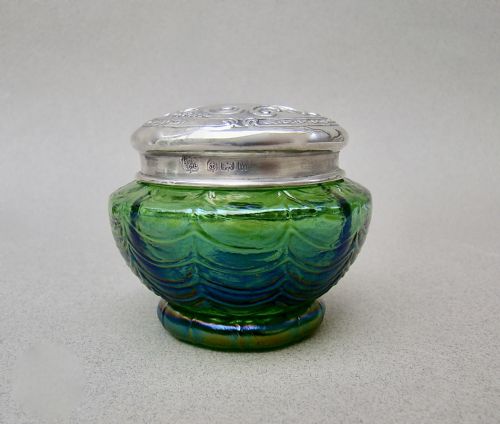
A birmingham silver vanity jar combines a hallmarked sterling silver mount with a glass vessel designed for the dressing table. These containers hold powders, creams, salts, or scents, and they survive from the late Victorian period through the Art Deco era.
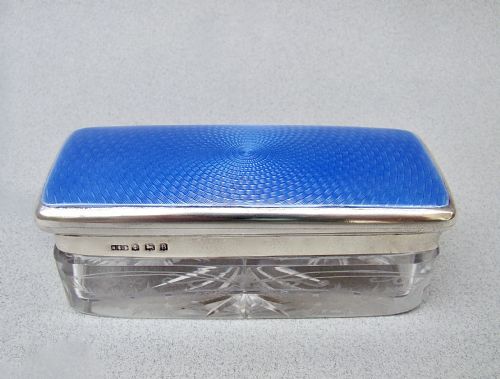
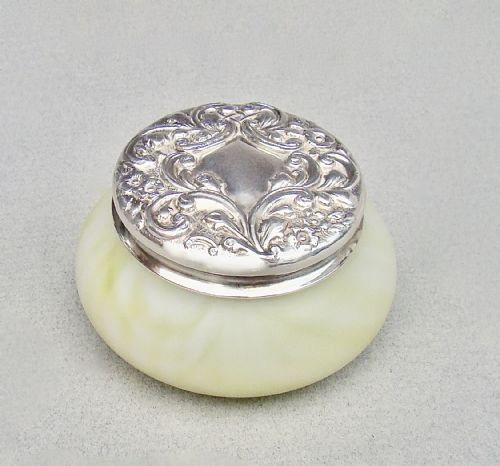
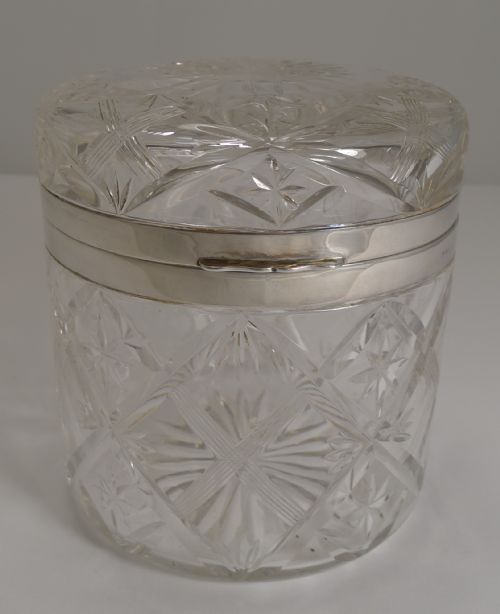
The version most commonly encountered on this page pairs a cut or moulded glass base with a matching silver lid, often bearing hallmarks from the Birmingham assay office. Forms range from cylindrical jars and rotund pots to tall scent bottles and rectangular trinket boxes.
The aesthetic shifts across these decades from Victorian elaboration to Edwardian elegance and onward to geometric Art Deco styling. Makers utilise clear, cranberry, satin, and amethyst glass alongside decorated enamel and tortoiseshell panels.
How they were made
Silversmiths created the lids and mounts from sterling silver, stamping or spinning the metal before applying engine-turning, embossing, or hand-chasing. These silver components received assay office marks indicating Birmingham as the place of testing alongside date letters and maker's initials.
The glass bodies were produced through blowing, cutting, or moulding to achieve various forms, including panel-cut crystal, overlay glass, and iridescent finishes. Coloured variants relied on added minerals during the glassmaking process to create deep amethyst, rich cranberry, or opaque satin effects.
Enamelling techniques involved fusing powdered glass to the silver surface, particularly with guilloche patterns that revealed machine-engraved designs underneath translucent colour. Some pieces integrated tortoiseshell with pique work or applied opal crusts directly onto the glass.
The inventory spans Victorian, Edwardian, Art Nouveau, and Art Deco styles bearing Birmingham assay marks.
What varies in quality
Quality rests upon the crispness of the Birmingham hallmarks, the depth of any hand-engraving or guilloche work on the silver, and the weight of the metal itself. Thicker silver resists denting and maintains a sharper definition in its chased or stamped decoration over decades of handling.
The nature of the glass vessel dictates much of the visual appeal, with hand-cut crystal and specialised art glass wares holding greater distinction than simple moulded containers. The precision with which the silver collar fits the glass neck demonstrates the skill of the original assembly.
Surface decoration such as flawless enamel without chipping or well-preserved tortoiseshell elevates a piece significantly. The harmony between the silver lid and the glass body remains paramount in determining the overall success of the design.
A. J. Pepper & Co·Henry Clifford Davis·A. Bromet & Co·Barnsley & Co·Adie Brothers Ltd·A&J Zimmerman·Levi & Salaman·E. S. Barnsley·Mappin & Webb·W J Myatt & Co·Albert Carter
The Birmingham Silver Vanity Jar Glossary
- Guilloche
- An ornamental pattern produced by a mechanical engine that etches precise geometric designs into metal before translucent enamel is applied. This technique was widely utilised during the Art Deco period.
- Hallmark
- An official stamp applied by an assay office, such as Birmingham, to indicate the standard of silver purity alongside the date letter and maker's mark. It provides the primary evidence for dating an item.
- Cranberry glass
- A rich red glass produced by adding gold chloride to the molten mixture during manufacture. It frequently appears on dressing table accessories from the late Victorian and Edwardian eras.
- Pique
- A decorative technique involving the embedding of tiny gold or silver pins and strips into tortoiseshell or ivory. It appears on select high-end vanity lids from the early twentieth century.
- Satin glass
- Glass treated with an acid dip to produce a velvety, matte finish rather than a bright polish. This texture diffuses light softly on dressing table trays.
Birmingham Silver Vanity Jar: Frequently Asked Questions
How do I clean the silver lid without damaging the glass?
Remove the lid from the glass body entirely before applying any silver cleaning cream with a soft cloth. Keep moisture away from the interior lining and any delicate enamel or tortoiseshell panels.
Polish gently around the hallmarks to preserve the stamped details, then wipe the metal clean with a dry microfibre cloth before reassembling the jar.
What were vanity jars originally used for on dressing tables?
These containers held loose face powder, pomades, smelling salts, or pins as part of a lady's daily grooming routine. Sets often sat alongside matching hairbrushes and hand mirrors on dressing trays.
Smaller versions functioned as scent bottles or rouge pots, while larger boxes stored trinkets and jewellery overnight.
How can I tell an Art Deco jar from an Edwardian one?
Art Deco pieces display clean geometric lines, stylised motifs, and often coloured guilloche enamel. They tend to feature in listings from the nineteen-twenties and nineteen-thirties.
Edwardian examples lean towards softer floral embossing, ribbon motifs, and heavier cut crystal, reflecting the aesthetic preferences of the opening decade of the century.
Are Birmingham hallmarks different from other British assay marks?
The Birmingham assay office symbol is an anchor, which distinguishes its stamps from the leopard's head of London or the crown of Sheffield. This anchor stamp appears alongside the lion passant indicating sterling silver.
Additional letters in the hallmark sequence denote the specific year the piece was tested and entered for sale.