


Sterling Silver Enamel Jar
When you handle a sterling silver enamel jar, you hold a tangible piece of twentieth-century dressing table elegance designed to catch the morning light.
Sterling Silver Enamel Jar
A sterling silver enamel jar combines functional dressing table storage with vibrant decorative artistry, appearing primarily as lidded vanity pots, powder bowls, and perfume bottles. These items serve to hold cosmetics and trinkets while adding colour to Edwardian and Art Deco interiors.
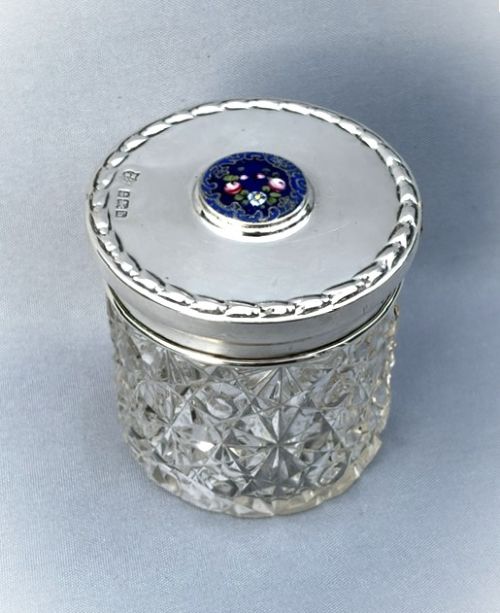
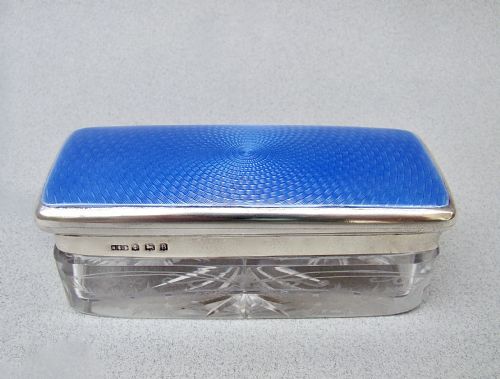
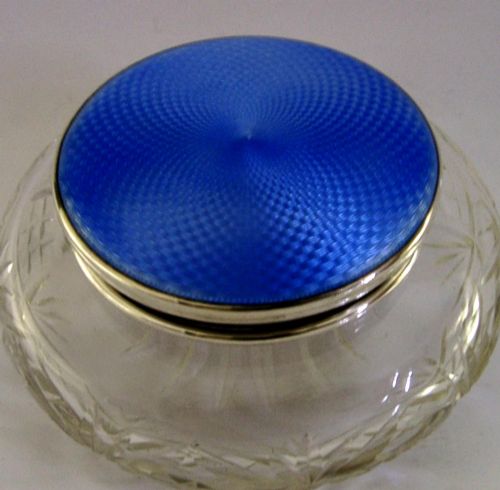
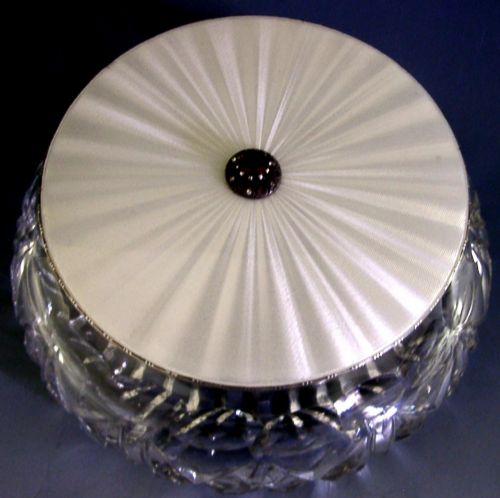
The version most commonly met on this page is the British Art Deco piece dating from the 1920s and 1930s, often pairing sterling silver mounts with translucent guilloche enamel over a machine-turned metal background. Makers across Birmingham and London produced these containers in circular and cylindrical forms alongside cut glass bodies.
Beyond purely solid silver boxes, many examples utilise glass, cut crystal, cranberry glass, or agate bodies topped with a matching silver and enamel lid. The combination of reflective glass and coloured vitreous enamel defines the standard appearance of these vanity accessories.
Materials and Technique
Silversmiths formed the mounts and lids from sterling silver, frequently sending the components to specialist enamellers who applied powdered glass to the metal surface. Firing the piece in a kiln fused the vitreous enamel into a smooth, glossy layer.
Guilloche enamel required an engine-turning lathe to engrave precise geometric patterns into the silver before the translucent enamel was laid down, allowing the pattern to show through the colour. Artisans also hand-painted decorative motifs such as blossom, bees, and bluebells directly onto the enamel surface.
Glasscutters shaped the heavy crystal and glass bodies of the jars, adding flutes and star-cut bases to match the brilliance of the silver tops. Hallmarks stamped into the silver collars record the assay office, year, and maker.
Listings feature items spanning the Edwardian era through the 1960s, with a strong concentration of Art Deco pieces from the 1920s and 1930s.
Factors of Quality
The fineness of the engine-turning beneath the translucent enamel dictates the visual depth of the lid, where complex geometric patterns create superior light refraction compared to plain coloured surfaces. Intricate hand-painted details like naturalistic flowers or insects demand a higher level of artisan skill than flat monochrome treatments.
The weight and thickness of the sterling silver mount influence the durability and balance of the jar, especially when paired with heavy cut glass bodies. Crisp, legible hallmarks and intact, undamaged vitreous enamel without hairline fractures distinguish finer examples from standard production pieces.
Henry Clifford Davis·Goldsmith's and Silversmith's Co.·Asprey and Co·Walker and Hall·Finnigans
The Sterling Silver Enamel Jar Glossary
- Guilloche Enamel
- A decorative technique where metal is engine-turned with an intricate repeating pattern before translucent enamel is applied over it. This method lets the underlying mechanical engraving create shimmering light effects beneath the coloured glass surface.
- Sterling Silver
- An alloy consisting of pure silver and other metals, traditionally copper, standardised by weight to ensure durability. Hallmarks stamped onto the metal confirm its specific purity standard.
- Vitreous Enamel
- A material made by fusing powdered glass to a substrate through firing at high temperatures. The resulting smooth and durable coating resists chemical wear and retains its vibrant hue.
- Vanity Jar
- A small lidded container designed to hold cosmetics, pins, or powder on a dressing table. These vessels combine practical storage with decorative display.
- Assay Office
- An official body that tests the purity of precious metals and stamps them with designated hallmarks. Towns like Birmingham and London maintained prominent offices for marking silver.
Sterling Silver Enamel Jar: Frequently Asked Questions
What were sterling silver enamel jars used for?
These jars held face powder, trinkets, pins, and cosmetics on dressing tables during the early twentieth century. They kept personal items contained while adding bright decorative colour to bedroom furnishings.
Perfume bottles and scent jars served a similar function for holding volatile fragrances, utilising tight silver collars and stoppers to prevent evaporation.
How do I date a silver and enamel jar?
Dating relies primarily on the legible hallmarks stamped into the sterling silver mounts, which indicate the specific assay office and year letter. Stylistic markers such as Edwardian floral motifs or geometric Art Deco guilloche patterns also help assign a decade.
Examining the construction methods and the specific form of the glass or crystal body provides further context for the period of manufacture.
How do I clean the enamel and silver?
Cleaning requires gentle care to protect the delicate vitreous enamel surface from harsh abrasives and chemical dips. Warm soapy water and a soft cloth suffice for removing dust without scratching the glass coating.
Silver polish should be kept away from the enamel edges to prevent dulling or loosening the fused glass layer over time.
Are these jars French or English?
Both origins appear frequently, with English pieces usually bearing distinct Birmingham or London hallmarks and date letters stamped into the silver mounts. French items often utilise different silver purity marks such as the boar's head.
Stylistic cues and maker marks help separate British production from continental European work.