
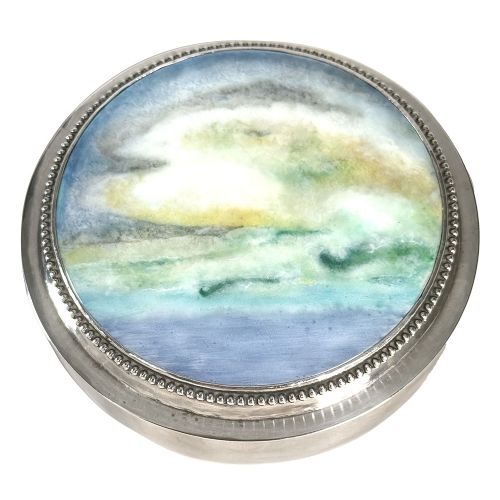
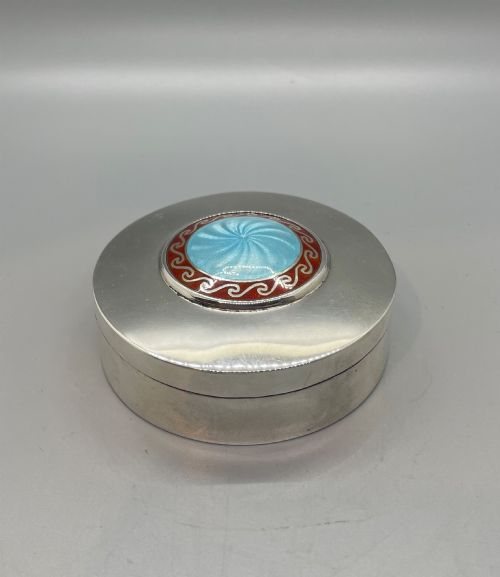
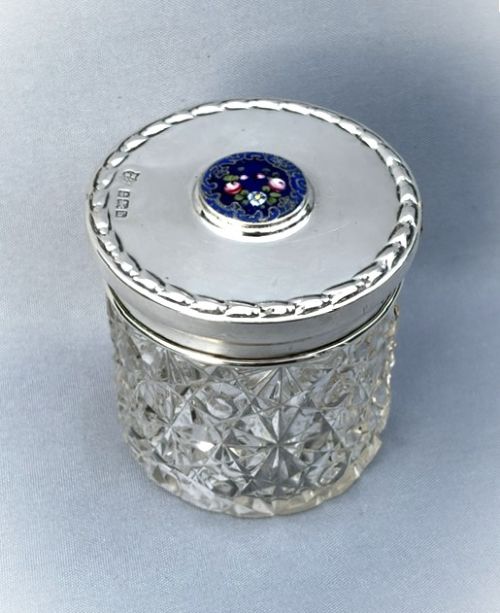
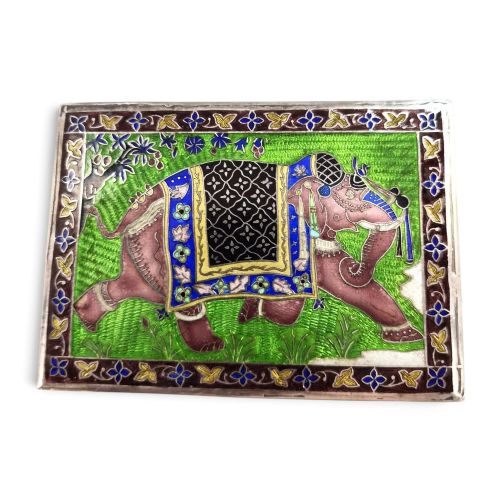

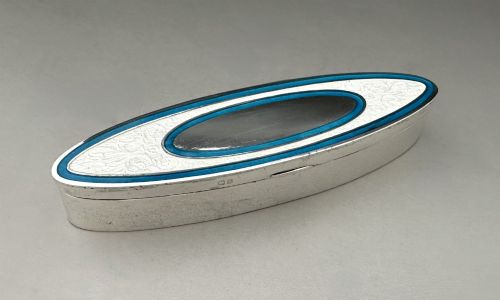
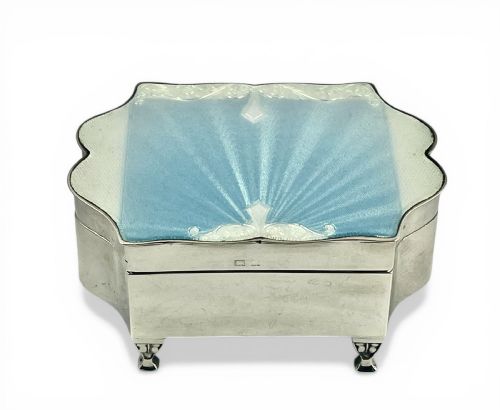

Silver Enamel Trinket Box
When you handle a silver enamel trinket box, you are holding a miniature canvas of metalwork and vitreous colour.
Silver Enamel Trinket Box
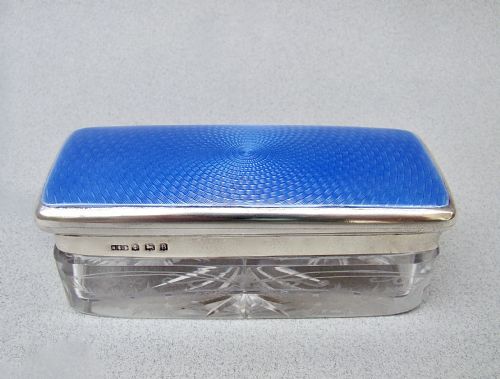
A silver enamel trinket box brings together precious metal and fused glass work to hold small personal items on a dressing table or desk. These pieces emerge in various forms, including lidded pots, vanity jars, pill boxes, and compacts.
The selection ranges widely across the twentieth century, with strong representation from the Edwardian era and the 1920s and 1930s Art Deco period. Pieces also appear from the nineteenth century, alongside Imperial Russian and continental European workshops.
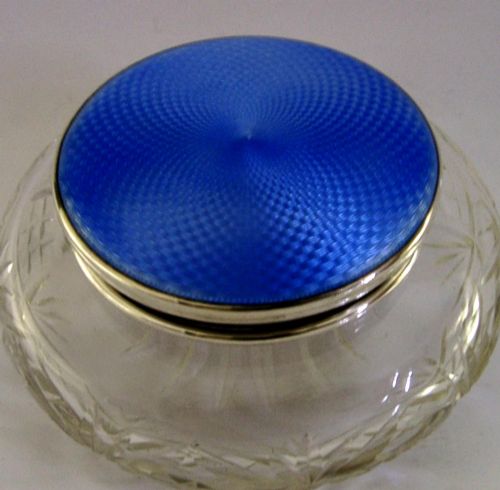
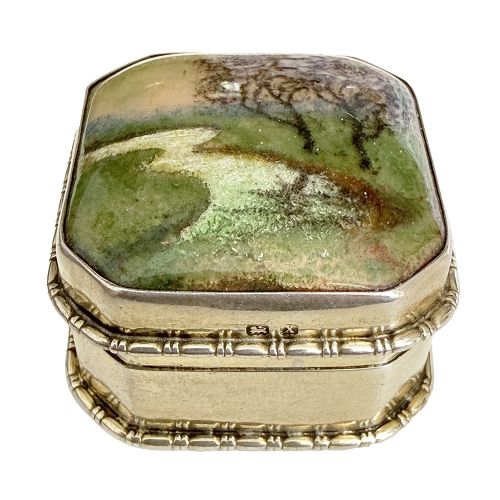
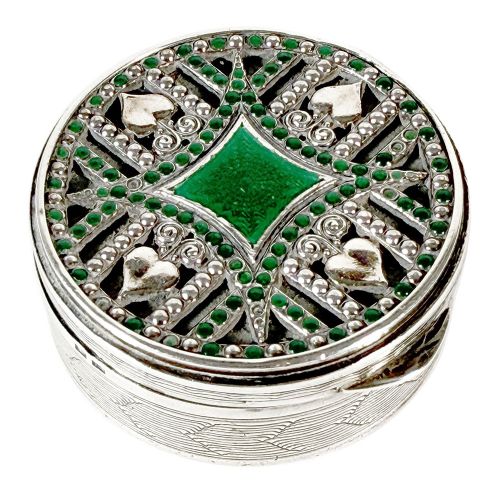
Buyers will encounter items where silver frames an enamel panel lid, as well as glass or cut glass bodies topped with silver and enamel covers. Smaller pill and waistcoat pocket boxes sit alongside larger dressing table jars.
Materials and Technique
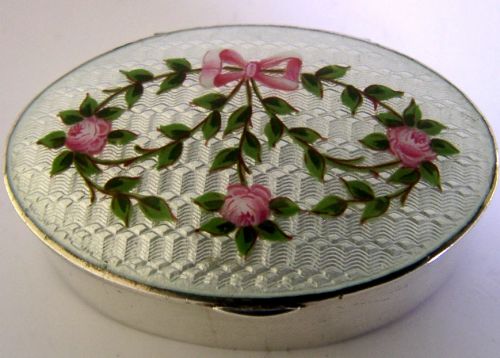
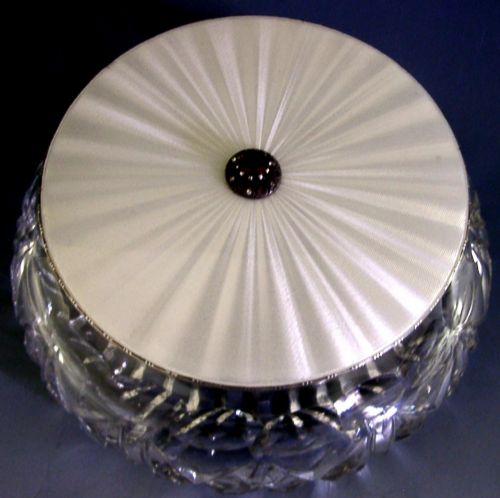
Makers combine sterling silver or silver-gilt with vitreous enamel, applying powdered glass to metal and firing it in a kiln to achieve a permanent coloured surface. Many examples utilise guilloche techniques, where the silver base is engine-turned with geometric patterns beneath translucent enamel.
Construction methods extend beyond simple metal sheet folding, incorporating bezel settings, riveted elements, and cast appliques. Certain Arts and Crafts examples employ beaten and riveted steel or pewter alongside enamel panels.
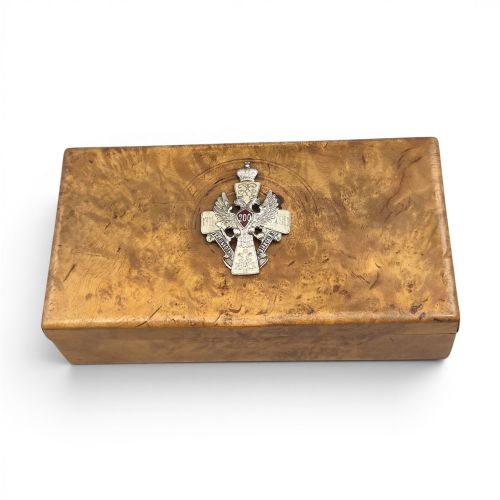
Glass bodies, including cranberry and cut glass varieties, pair with fitted silver collars and hinged enamel lids. Wood, Karelian birch, and black lacquer also form the structural bodies of specific continental and regional pieces.
Listings feature items from the Edwardian period, 1900, 1910, 1920, 1930, 1940, and 1960, utilising sterling silver, glass, wood, and guilloche enamel.
Assessing the Workmanship
The fineness of the engine-turning beneath translucent enamel dictates much of the visual depth in guilloche pieces. Crisp, precise machine engraving creates light play that coarser patterns fail to achieve.
Hinges and closures reveal the standard of original manufacture, requiring a snug fit and a secure snap when shut. Heavier gauge silver bodies maintain their structural integrity better over decades of handling.
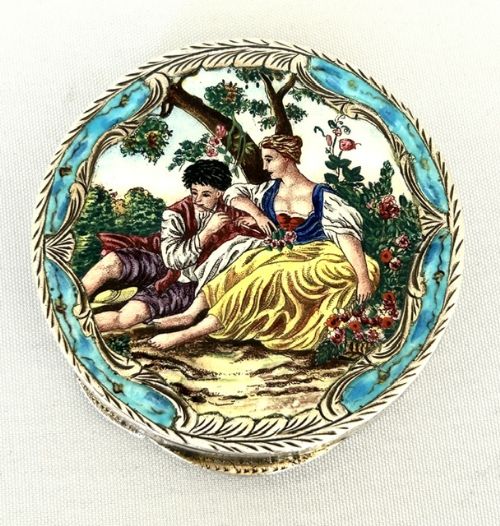
The application of the enamel itself marks the division between standard production and superior craftsmanship, visible in the evenness of the surface and the complexity of shaded or cloisonne work.
Henry Clifford Davis·Fleetwood Varley·George Adam Scheid·Saunders & Shepherd·Khlebnikov
The Silver Enamel Trinket Box Glossary
- Guilloche Enamel
- A decorative technique where metal is engraved with an intricate repeating pattern before translucent enamel is applied over it. This allows the underlying geometric design to show through the coloured glass layer.
- Vitreous Enamel
- A material made by fusing powdered glass to a substrate by firing, usually between seven hundred and nine hundred degrees Celsius. The powder melts, flows, and hardens to a smooth, durable coating.
- Silver-Gilt
- Silver that has been coated with a thin layer of gold on its surface. This treatment provides the appearance of solid gold while utilising a silver base structure.
- Cloisonne
- An ancient technique for decorating metalwork objects, in which wires are applied to the metal base to form compartments that are filled with enamel paste. The piece is then fired and polished.
- Dressing Table Jar
- A container designed to hold cosmetics, pins, or small accessories, typically featuring a glass or ceramic body with a decorative metal lid.
Silver Enamel Trinket Box: Frequently Asked Questions
How do I date an antique silver box?
Dating relies heavily on hallmarks stamped into the silver, which indicate the assay office, standard of metal, and year of production. Stylistic markers such as Art Deco geometry or Edwardian floral motifs also provide chronological clues.
Maker marks help narrow down the decade of creation when compared against historical records of silversmiths and manufacturing firms.
Were these boxes used for jewellery?
Many smaller containers served as pill boxes, snuff boxes, or patch boxes for waistcoat pockets, while larger lidded jars held trinkets, rings, and dressing table accessories. Interiors often featured plain silver or gilt washes rather than fitted velvet.
Their robust construction allowed owners to carry small personal items securely throughout the day.
What is the difference between sterling and silver?
Sterling silver denotes an alloy containing ninety-two point five percent pure silver and seven point five percent other metals, usually copper, to add strength. Generic silver descriptions may apply to continental or imported pieces with different purity standards.
British hallmarked items generally carry the lion passant stamp to confirm the sterling standard.