






Edwardian Silver Enamel Box
An edwardian silver enamel box brings together precious metal and glass paste to create small containers designed for vanity and personal use.
Edwardian Silver Enamel Box
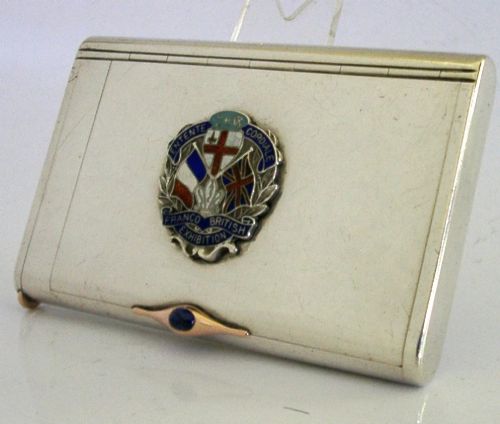
When you search for an edwardian silver enamel box, you encounter small personal containers intended for dressing tables, waistcoats and purses. These include trinket pots, pill boxes, powder compacts, cigarette cases and small vanity jars.
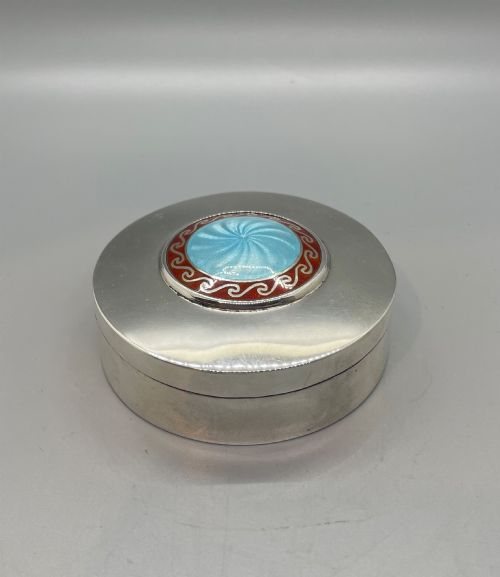
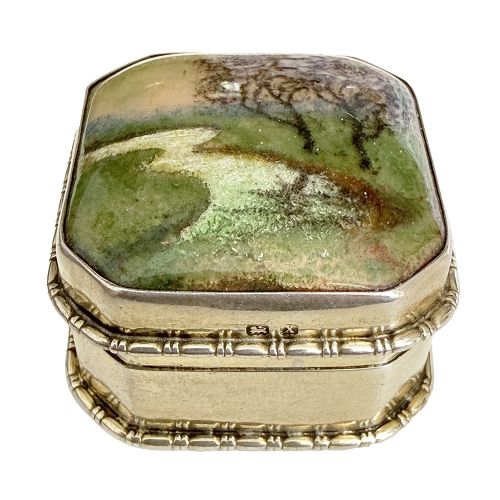
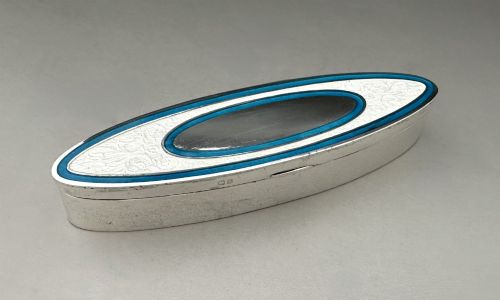
The version you are most likely to meet on this page is an English trinket or pill box made of sterling silver with a coloured lid. Birmingham and Chester hallmarks from the nineteen-hundreds dominate the selection.
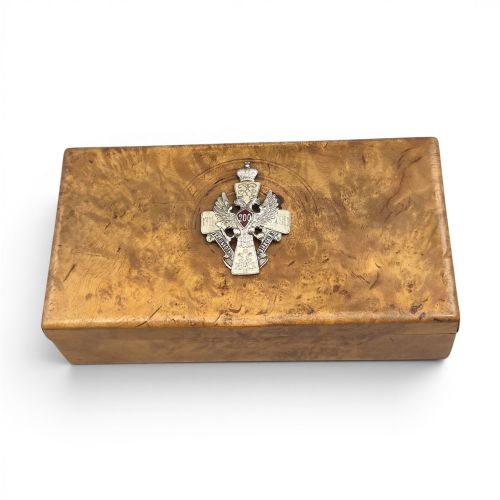
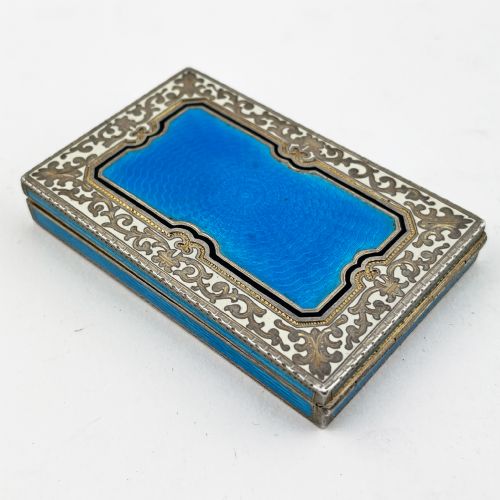
Alongside purely domestic English pieces, you find continental European work, including guilloche compacts and Russian items incorporating birch or regimental badges.
Materials and Construction
Makers formed the body of each container from sterling silver, silver-gilt or sometimes pewter, shaping them through stamping, casting or hand-raising. Lids frequently incorporate glass-based vitreous enamel fused to the metal by heat.
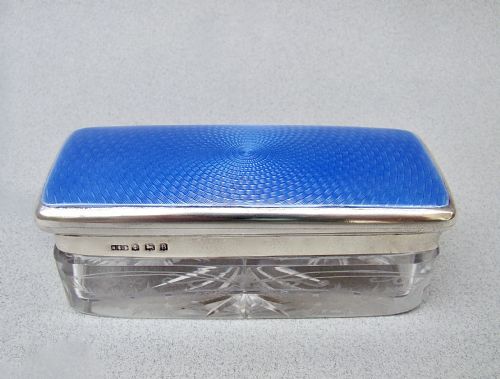
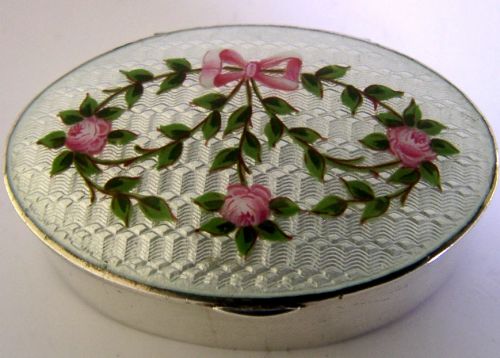
Guilloche decoration involves machining a geometric pattern into the silver base before applying translucent enamel, allowing light to reflect through the coloured layer. Alternatively, opaque enamel, porcelain enamel or painted floral details adorn the surface.
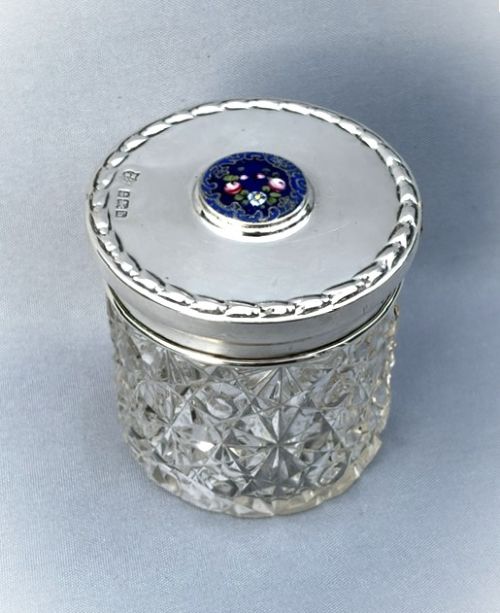
Many boxes line their interiors with velvet, silk or gilt metal, while glass bodies utilise silver screw-on or hinged lids.
Listings feature sterling silver, guilloche enamel, cut glass and velvet across various vanity jars and pill boxes.
Quality and Craftsmanship
The distinction between standard commercial pieces and finer work lies in the execution of the enamel and the weight of the silver. Superior items display smooth, even vitreous surfaces without pitting, cracking or excessive thinning.
Makers who registered specific hallmarked marks or worked for prominent retailers like Liberty & Co often produced items with more intricate engine-turning and refined hinged mechanics. The clarity of the assay office stamps and maker's punches also indicates the original standard of production.
Henry Clifford Davis·Henry Matthews·Sampson Mordan·James Fenton·C E Turner
The Edwardian Silver Enamel Box Glossary
- Guilloche enamel
- A decorative technique where an intricate geometric pattern is machine-engraved into metal and covered with translucent enamel. This allows the underlying pattern to show through the coloured glass layer.
- Vitreous enamel
- A material made by fusing powdered glass to a substrate by firing, usually between seven hundred and nine hundred degrees Celsius. The resulting compound is smooth, durable and chemically resistant.
- Vesta case
- A small pocket box designed to hold wax matches and keep them dry. Many examples feature silver bodies with enamel crests or figural designs applied to the front.
- Sterling silver
- An alloy of silver containing ninety-two point five percent by mass of silver and seven point five percent by mass of other metals, usually copper. British pieces carry the lion passant hallmark to designate this standard.
- Hallmark
- A series of official marks stamped on precious metal items in the United Kingdom. These symbols indicate the maker, the metal purity, the assay office and the year of testing.
Edwardian Silver Enamel Box: Frequently Asked Questions
What were small silver enamel boxes used for?
These containers served practical daily functions in the early twentieth century. People carried pills, stamps, snuff or cigarettes in pocket-sized versions, while dressing table variants held trinkets, rings and cosmetics.
Their compact size made them suitable for travel or for keeping on a bedside table or vanity desk.
How do I care for antique silver and enamel?
Keep these items away from direct sunlight, harsh chemicals and moisture to protect the glass enamel and any internal fabric lining. Clean the silver portions gently with a soft cloth designed for precious metals.
Avoid submerging pieces in liquid cleaning solutions, as moisture can seep beneath hinged bezels or damage aged adhesives.
Are all these boxes from the Edwardian period?
While the primary aesthetic aligns with the Edwardian era, surviving examples span from the late nineteenth century through the nineteen-twenties and nineteen-thirties. Arts and Crafts and Art Deco styles frequently overlap with or follow the Edwardian period.
Assay office date letters stamped on the silver provide the precise year of manufacture for English items.
How can I tell British boxes from continental ones?
British pieces universally display standardised assay office hallmarks, including a date letter, a lion passant for sterling standard, and a maker's mark. Continental items often rely on different purity marks, such as numbers like eight hundred or nine hundred.
Stylistic cues, such as the specific guilloche patterns and enamel colours, also point toward Austrian, French or Russian workshops.