

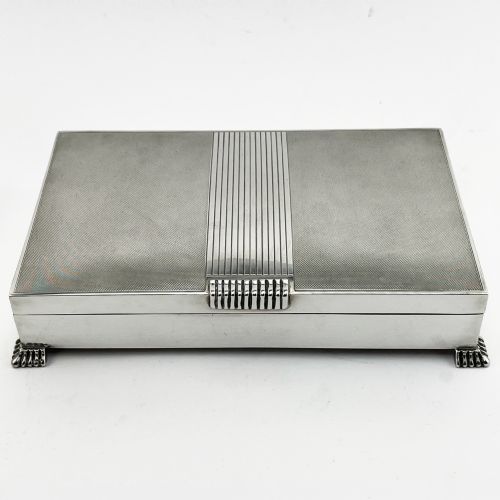


Silver Guilloche Trinket Box
A silver guilloche trinket box brings precision machine-turned metalwork paired with vitreous enamel to dressing tables.
Silver Guilloche Trinket Box
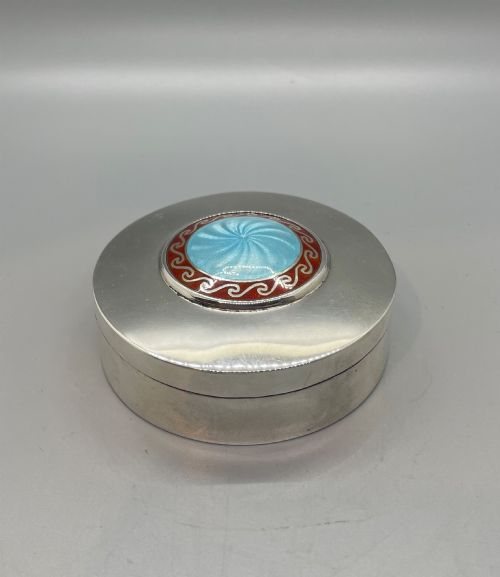
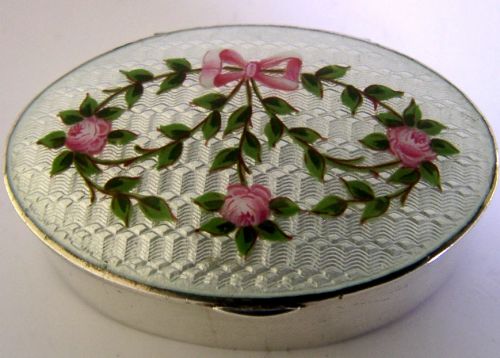
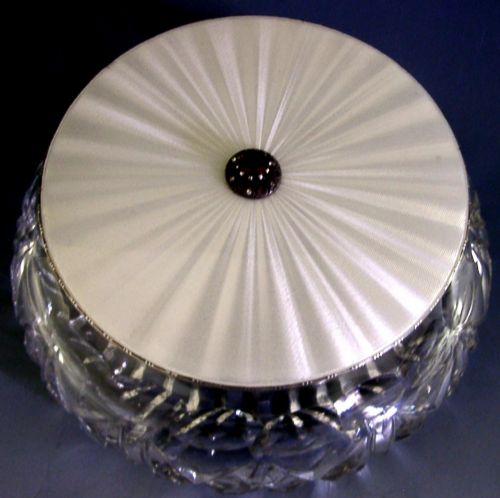
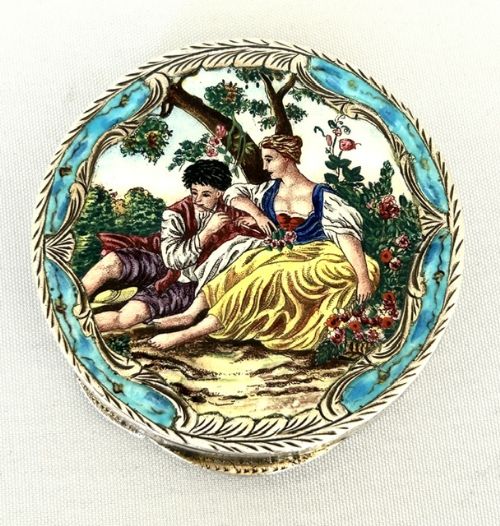
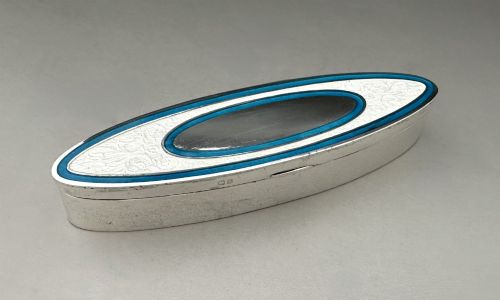
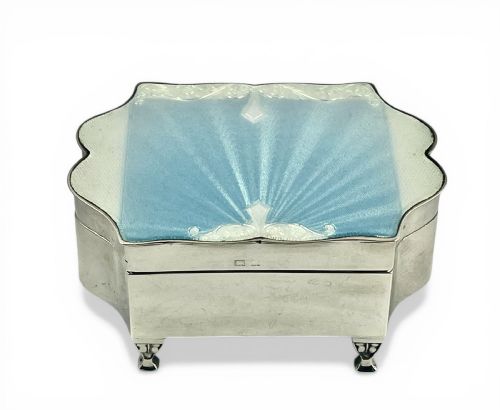
A silver guilloche trinket box combines solid sterling silver mounts with precise, engine-turned geometric patterns beneath translucent or opaque enamel. You will most frequently meet dressing table jars, pill boxes, and small trinket containers dating from the Edwardian period through to the mid-twentieth century.
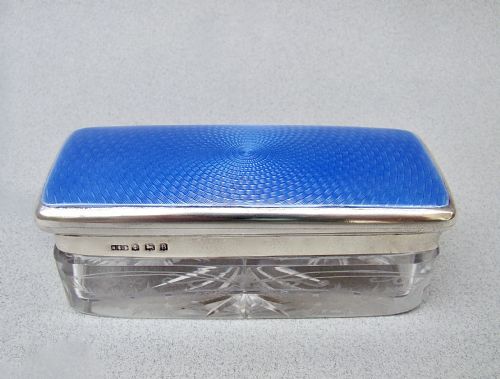
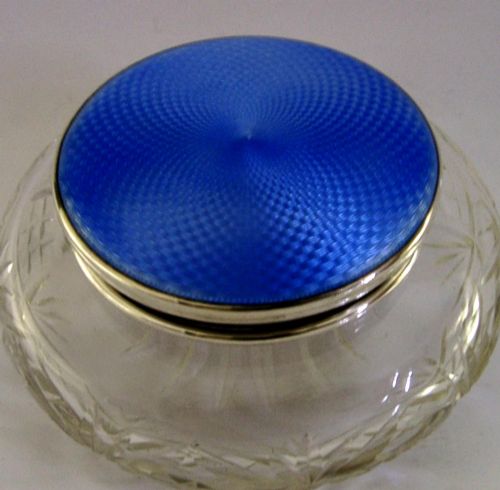
The forms span compact cylindrical etuis, square jewellery boxes, and cut-glass jars with silver and enamel lids. Pieces originate from English makers in Birmingham and London, alongside continental workshops in France and Austria.
Makers utilised various enamel colours, ranging from deep blue and pink to amethyst and bi-colour designs. These containers served to hold powder, rouge, and small personal valuables on dressing tables.
How they were made
Craftsmen used mechanical rose engines and straight-line machines to cut repetitive geometric patterns directly into the silver surface. This engine-turned base creates the underlying texture visible beneath the coloured glaze.
Vitreous enamel was applied over the patterned metal in liquid or powder form and fired in a kiln to fuse the glass to the silver. Cut glass forms incorporate heavy moulded bodies fitted with hallmarked silver collars and enamelled lids.
Some tiny silver boxes were designated specifically for rouge, ensuring owners could blush on demand during a carriage ride.
What varies in quality
The precision and depth of the underlying engine-turned pattern dictate the refinement of the metalwork. Deeper, crisper machine cuts interact more successfully with the overlying enamel to create visual movement.
The clarity and evenness of the vitreous enamel layer separate standard production from finer examples. Smooth surfaces free from excessive bubbles or clouding denote superior firing techniques in the workshop.
Henry Clifford Davis·Saunders and Shepherd·Hermes
The Silver Guilloche Trinket Box Glossary
- Guilloche
- An ornamental technique in which a mechanical machine engraves precise, intricate geometric patterns into metal. This patterned surface forms the decorative base for subsequent enamelling.
- Vitreous Enamel
- A material made by fusing powdered glass to a substrate by firing, usually at high temperatures. The resulting glossy compound provides vibrant colour.
- Sterling Silver
- An alloy of silver containing ninety-two point five percent silver and seven point five percent other metals, usually copper. This standard composition provides the necessary durability for small boxes.
- Etui
- A small ornamental case used for holding small items such as needles, cosmetics, or pills. These cylindrical or box-like containers often feature engine-turned decoration.
- Hallmark
- An official mark stamped on items made of precious metals in the United Kingdom. It verifies the purity of the metal, the maker, and the year of assay.
Silver Guilloche Trinket Box: Frequently Asked Questions
What is a silver guilloche trinket box?
These pieces are small lidded containers formed from sterling silver and decorated with machine-engraved enamel work. They were produced primarily for dressing table use.
They functioned as receptacles for trinkets, cosmetics, pills, and jewellery, combining utility with decorative metalwork.
How do I date a silver trinket box?
Dating relies heavily on the hallmarks stamped onto the silver components by official assay offices. These marks indicate the exact year and city of manufacture.
Stylistic cues such as Art Deco geometric forms or Edwardian floral motifs also help assign pieces to specific decades.
How were different enamel colours created?
Makers added metallic oxides to powdered glass before firing the mixture onto the engraved silver base. Cobalt produced blues, while other minerals yielded pinks and amethysts.
The translucent quality of the enamel allowed the underlying machine-turned patterns to remain visible.
How do I care for antique enamel boxes?
These items require gentle handling to protect the delicate glass surface of the enamel from impact or scratching. Soft cloths and mild cleaning solutions suit silver mounts.
Avoid exposing antique enamel to harsh chemical cleaners or prolonged moisture to preserve the material.