


Silver Enamel Powder Pot
A silver enamel powder pot sits on the dressing table to catch the morning light, combining cool metal with translucent colour.
Silver Enamel Powder Pot
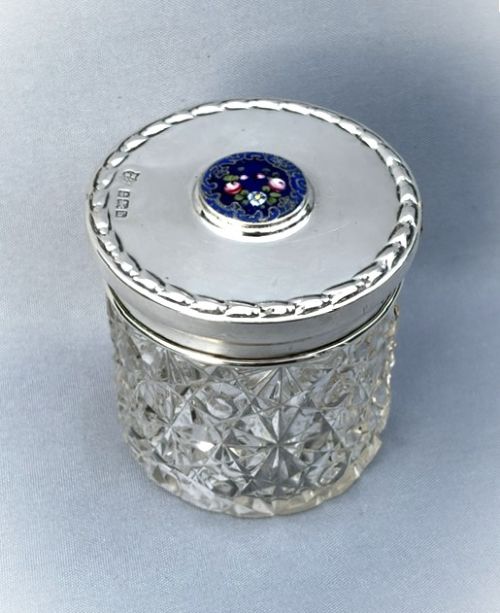
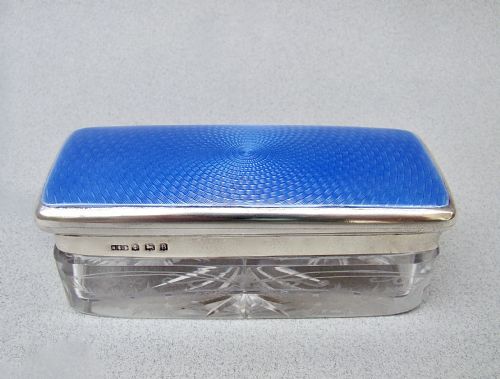
A silver enamel powder pot is a lidded container designed for the dressing table, used historically to hold cosmetic powder, rouge or small trinkets. These pieces survive in various forms, from small pill boxes and rouge pots to larger vanity jars and dressing table bowls.
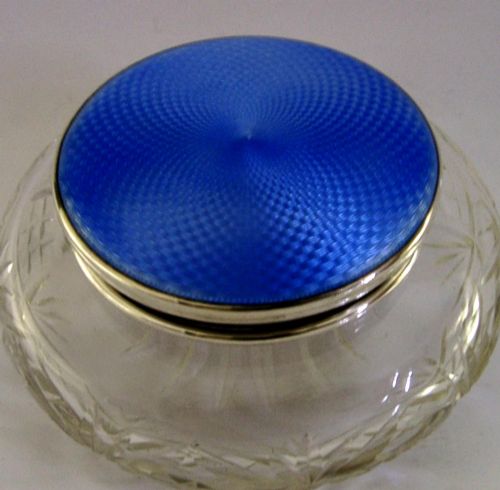
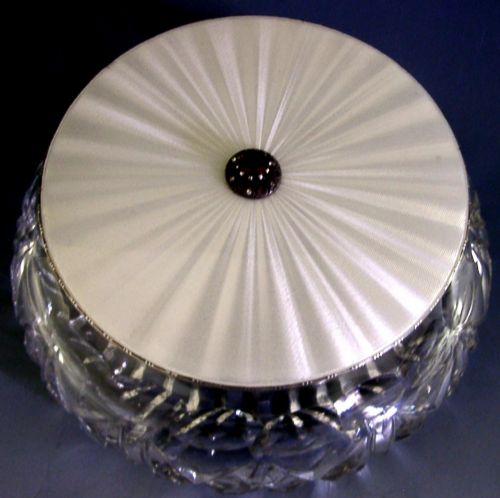
The pieces on this page span the Edwardian era through the Art Deco period and into the mid-twentieth century, with a strong representation of nineteen-twenties and nineteen-thirties geometric designs. Most examples combine a sterling silver mount or lid with glass bodies, cut glass, cranberry glass or solid silver bases.
Makers in Birmingham and London produced the majority of these accessories, often marking them with standard sterling silver hallmarks. Buyers will frequently encounter lidded boxes and jars that reflect the shifts in design from early twentieth-century Edwardian elegance to bold Art Deco styling.
What varies in quality
The clarity and depth of the guilloché engraving beneath the enamel set apart finer pieces from simpler ones. Tighter, more complex machine-turned patterns create a richer play of light through the translucent coloured glaze.
The weight and gauge of the sterling silver used for the lids and mounts indicate the standard of production. Substantial silver rims and heavy cut glass bodies demonstrate superior craftsmanship compared to thinner, lighter alternatives.
Some powder pots still carry the faint, sweet trace of forgotten face powder tucked inside for nearly a century.
Henry Clifford Davis
The Silver Enamel Powder Pot Glossary
- Guilloche Enamel
- A decorative technique where metal is engraved with an intricate repetitive pattern and then covered with translucent enamel. The underlying design shows through the glossy coloured surface.
- Sterling Silver
- An alloy of silver containing ninety-two point five percent pure silver and seven point five percent other metals, usually copper. This standard composition is marked on British silver items alongside assay office symbols.
- Cranberry Glass
- A type of red or pink glass created by adding gold chloride to the molten glass batch. It forms the striking coloured base of several dressing table jars.
- Dressing Table Jar
- A small lidded container meant for vanity accessories and cosmetics. These vessels sit upon dressing tables and dressing chests.
- Hallmark
- An official stamp applied to precious metals indicating the purity, maker, and year of assay. British pieces often display marks for cities such as Birmingham and London.
Silver Enamel Powder Pot: Frequently Asked Questions
What were silver enamel powder pots used for?
These containers held loose face powder, rouge, or small personal items on the dressing table during the early and mid-twentieth century.
Their decorative lids protected the contents while adding a flash of bright colour to the bedroom or vanity setup.
How do I date a silver enamel powder pot?
The hallmarks stamped into the sterling silver mounts provide the exact year of assay and the town where the piece was tested. Stylistic clues such as geometric Art Deco shapes or softer Edwardian motifs also point to the decade of manufacture.
Matching the assay letter on the silver with historical records gives a precise date for the metal components.
Are the glass bases original to the silver lids?
Most surviving pieces retain their original matched glass or cut glass bodies, shaped specifically to fit the silver collars. The weight and proportions usually remain consistent between the base and the lidded mount.
Close inspection of the fit where the silver meets the glass helps confirm that the components belong together.
How should I clean silver and enamel items?
Use a soft, dry cloth to gently wipe dust from the enamel surface and avoid soaking the piece in liquid cleaners. Harsh chemical dips can damage the delicate glass glaze or weaken older adhesives.
Keep silver polish away from the enamel areas to prevent scratching the translucent coloured glass layer.