







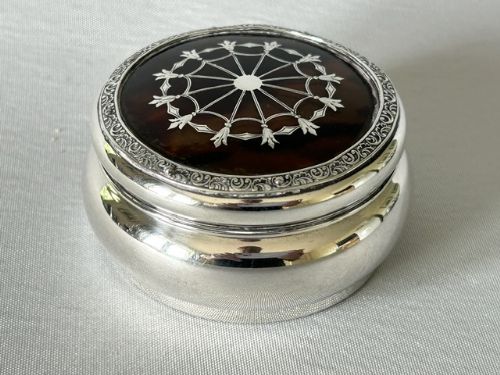


Edwardian Silver Dressing Jar
The edwardian silver dressing jar brings together heavy cut glass and chased metal to hold powders, pins and perfumes on the dressing table.
Edwardian Silver Dressing Jar
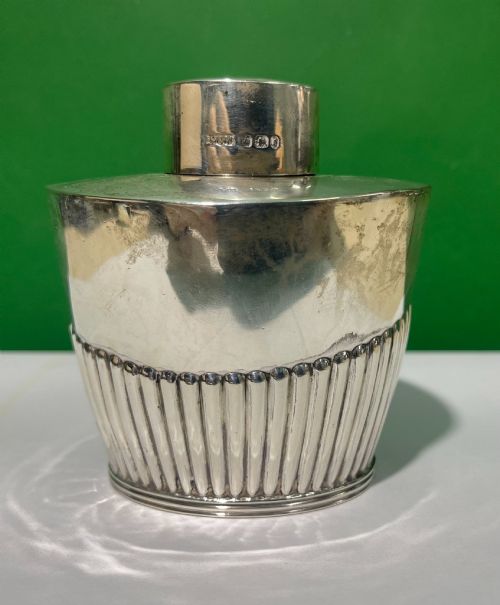
An edwardian silver dressing jar is a vanity container typically formed with a glass base and a removable or hinged metal lid. These items served a practical function on dressing tables during the late nineteenth and early twentieth centuries, containing everything from cosmetics to hairpins.
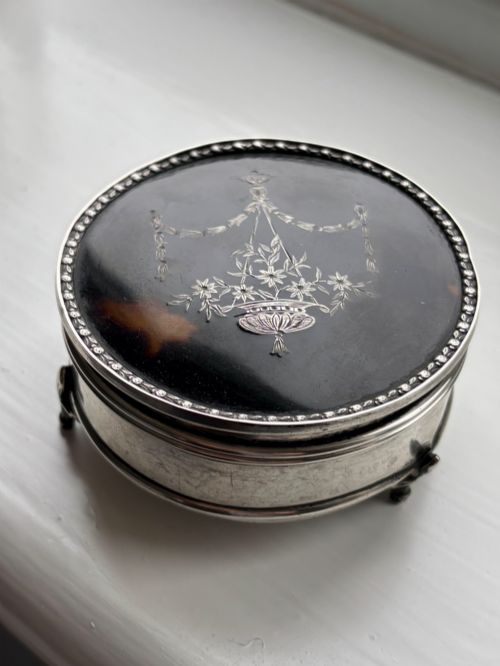
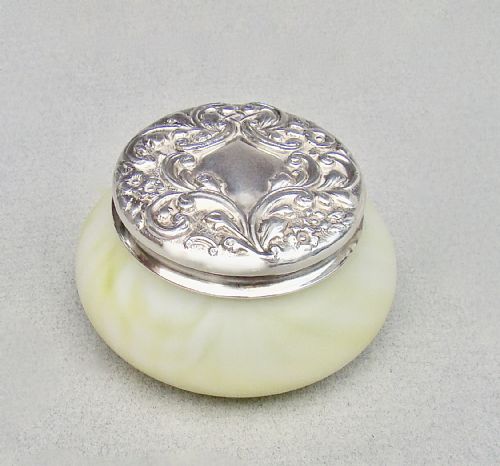
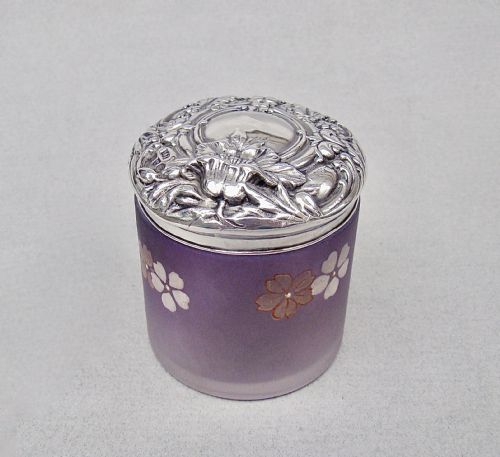
The most common versions on this page combine a cut glass or crystal vessel with a sterling silver top, often reflecting Edwardian, George V or Art Deco stylistic influences. Collectors also encounter variants incorporating tortoiseshell, enamel, or coloured glass bodies.
Objects span several decades surrounding the Edwardian period, running from Victorian origins through to the Art Deco era. Forms range from heavy round vanity jars and heart-shaped trinket boxes to tall scent bottles.
Materials and technique
Makers formed the glass bases using heavy cut crystal, satin glass or moulded vessels, frequently adding deep prismatic cuts to catch the light. Sterling silver lids were pressed, spun or cast, then decorated with repousse floral motifs, engine-turning or spot-hammered textures.
Specialist techniques included guilloche enamel work, pique inlay on tortoiseshell, and delicate coloured glass overlays. Silversmiths often incorporated internal collars to secure the lids onto the glass bodies.
Edwardian Silver Dressing Jar Retail Price Guide 2026
Typical asking prices for edwardian silver dressing jar among the pieces listed under this phrase on Sellingantiques today, from the lower quarter to the upper quarter. They describe what is for sale here now, not the wider market.
Gentlemen also utilised lockable cologne bottles on their dressing tables to prevent domestic staff from sampling the contents.
What separates the grades
Quality rests in the weight and clarity of the glass base alongside the thickness of the silver lid. Heavier gauge silver resists denting better and holds crisp, deep hand-chased detail much longer than thin metal stampings.
The sophistication of the secondary materials dictates distinction. Smooth, flawless enamel without hairline fractures, or well-figured tortoiseshell with intact pique inlay, elevates a jar far above standard mass-produced examples.
Ollivant and Botsford·Henry Clifford Davis·Goldsmiths and Silversmiths Company·A. Bromet and Co·Asprey and Co·Hasset and Harper·Nathan and Hayes·Barnsley and Co·Robert Pringle and Sons·Synyer and Beddoes·Thomas Hayes
The Edwardian Silver Dressing Jar Glossary
- Repousse
- A metalworking technique where the silversmith hammers the design from the reverse side to form raised patterns on the front. This method creates tactile, three-dimensional floral and scroll motifs on jar lids.
- Guilloche
- An ornamental pattern mechanically engraved into metal with precise geometric repetition. It often appears beneath a translucent layer of coloured enamel on vanity items.
- Pique
- The art of embedding tiny gold or silver pins into tortoiseshell to create delicate geometric or floral designs. Artisans heated the metal points before pressing them directly into the shell.
- Hallmark
- A stamped official mark indicating the metal purity, assay office, and year of manufacture. These small symbols allow collectors to date the silver mount accurately.
- Satin glass
- A type of glass treated with hydrofluoric acid to produce a velvety, frosted surface texture. It diffuses light softly on the dressing table.
Edwardian Silver Dressing Jar: Frequently Asked Questions
What were dressing jars used for?
These containers held daily cosmetics, powders, pins and lotions on nineteenth and early twentieth-century dressing tables. They kept dressing rooms tidy while displaying the owner's taste through decorative silver and glass.
Larger versions stored cotton wool or trinkets, while smaller bottles held scented perfumes and colognes securely with glass stoppers.
How do I date an edwardian silver dressing jar?
Dating relies heavily on the hallmarks stamped into the silver lid or collar. These marks reveal the assay office, the standard of silver, and a specific date letter corresponding to the year of manufacture.
Stylistic cues such as Art Nouveau curves or geometric Art Deco lines also help narrow down the period when hallmarks are rubbed.
How should I clean the silver mounts?
Silver mounts require gentle cleaning with a soft microfibre cloth and a mild, non-abrasive silver polish. Care must be taken to avoid getting liquid polish into porous materials like tortoiseshell or delicate enamel work.
Removing the lid from the glass base before cleaning prevents moisture from damaging old plaster or cork linings inside the collar.
Are the glass stoppers usually original?
Many scent bottles and jars retain their original ground glass stoppers, which were individually fitted to each neck during production. Because glass is fragile, finding a piece with its matching stopper intact adds considerably to its completeness.
Buyers should examine the neck and stopper for matching numbers or identical grinding marks that confirm they belong together.