

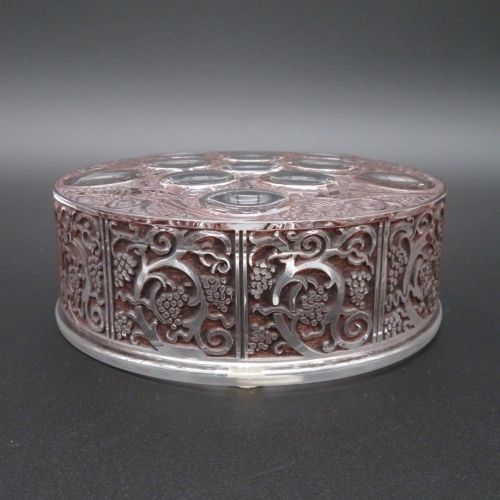


Art Deco Dresser Jar
An art deco dresser jar brings geometric elegance and period charm to a vanity, storing small treasures in style.
Art Deco Dresser Jar
When you search for an art deco dresser jar, you are looking at functional vanity vessels designed to hold powders, trinkets and cosmetics during the early twentieth century. The selection on this page centres on pieces originating from the 1920s and 1930s, capturing the distinct aesthetic of the period.
The forms you are most likely to meet include lidded bowls, powder boxes, and trinket boxes alongside more elaborate figural pieces. Many examples feature half doll figures depicting flapper girls or jesters, combining porcelain bodies with fitted lids to sit upon a dressing table.
Originating from makers and potteries in France, Germany, and Austria, these objects reflect European design trends of the interwar years. Alongside continental porcelain and ceramic bowls, you will encounter crystal vessels and glass items fitted with silver and enamel tops.
What varies in quality
Material choice also defines the tier of a piece, separating standard ceramics from heavy crystal or marked porcelain from Limoges and works bearing silver and enamel tops. The integration between the lid and the base determines how well the vessel holds its form.
Art Deco Dresser Jar Retail Price Guide 2026
Typical asking prices for art deco dresser jar among the pieces listed under this phrase on Sellingantiques today, from the lower quarter to the upper quarter. They describe what is for sale here now, not the wider market.
Continental workshops from France, Germany, and Austria dominate the origins of these dresser jars and powder bowls.
Lalique·W.M.F.·Limoges
The Art Deco Dresser Jar Glossary
- Half doll
- A ceramic or porcelain upper torso figure made without legs, commonly attached to the lid of a powder box or brush set. These figures typically represent fashionable women or flapper girls of the era.
- Powder bowl
- A lidded vessel designed to hold loose cosmetic powder on a dressing table. They are usually earthenware, porcelain, or glass.
- Enamel
- A glassy substance fused to metal through firing to provide colour and decoration. In vanity items, it often appears on silver or metal lids.
- Frosted glass
- Glass treated with acid or sandblasting to create a matte, translucent finish. This technique highlights relief details on decorative crystal boxes.
- Gilt
- A thin layer of gold applied to the surface of porcelain, metal, or wood. It accents rims and moulded motifs.
Art Deco Dresser Jar: Frequently Asked Questions
What is an art deco dresser jar used for?
These jars were originally used on dressing tables to hold face powder, small cosmetics, hairpins, and daily trinkets.
Today, they serve the same practical function while acting as decorative vanity accessories that display period craftsmanship.
How do I identify a 1930s powder box?
Look for characteristic geometric motifs, moulded glass, or porcelain half doll figures depicting flapper girls typical of the interwar decades.
Marks on the base from French, German, or Austrian potteries also help confirm the production era.
Are crystal and ceramic dresser jars fragile?
Yes, materials like frosted crystal, porcelain, and fine ceramics require careful handling, particularly around the rims and fitted lids.
Displaying them away from high-traffic edges on a vanity protects the delicate enamel and gilt details.
How do I clean an antique powder jar?
Dust ceramic and glass surfaces gently with a dry, soft cloth to preserve hand-painted details and gold leaf.
Avoid soaking metal lids that feature enamel or silver work to prevent tarnishing and moisture damage.