
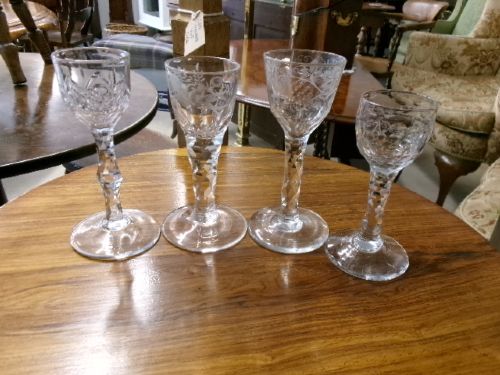
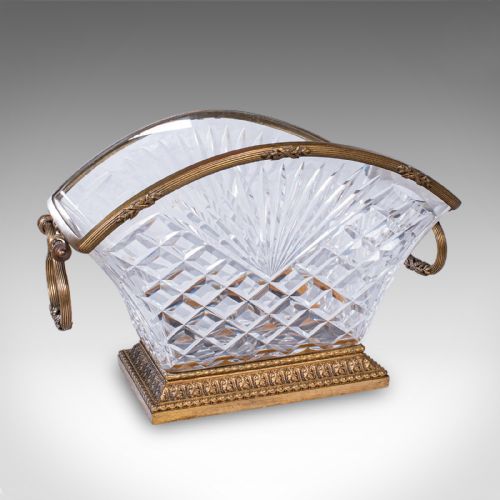
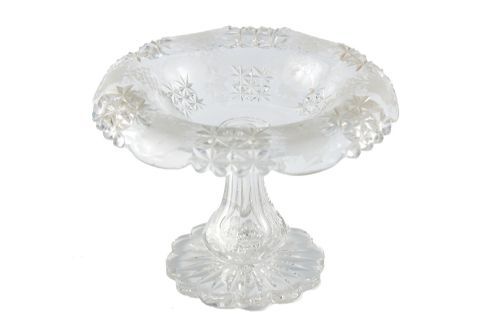
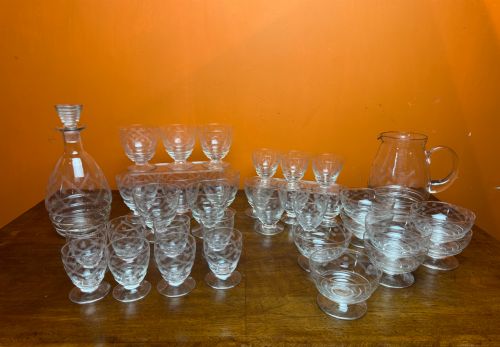


Vintage Cut Crystal Bowl
These heavy glass vessels span the Victorian, Edwardian and Art Deco periods, bringing sparkle and faceted depth to any table.
Vintage Cut Crystal Bowl
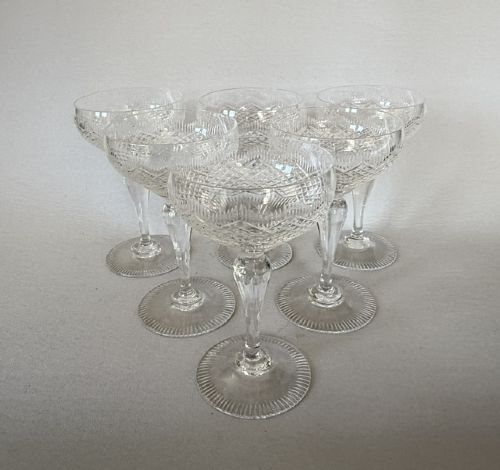
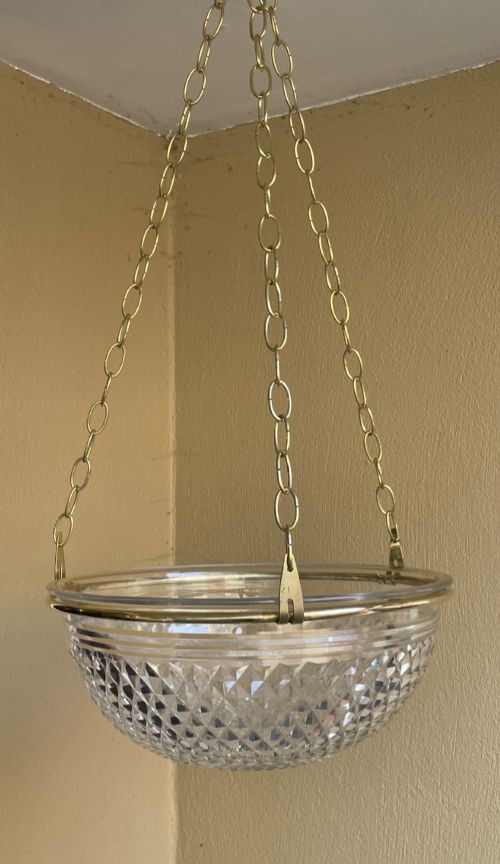
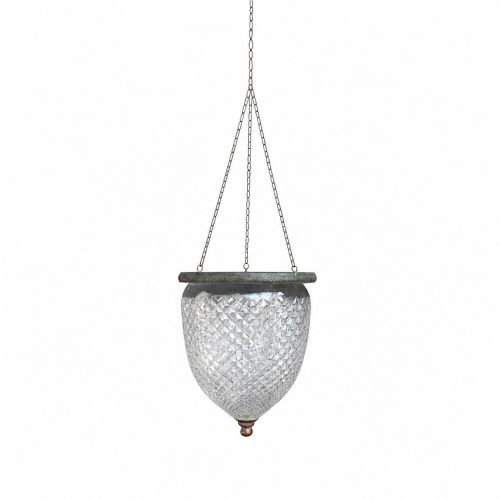
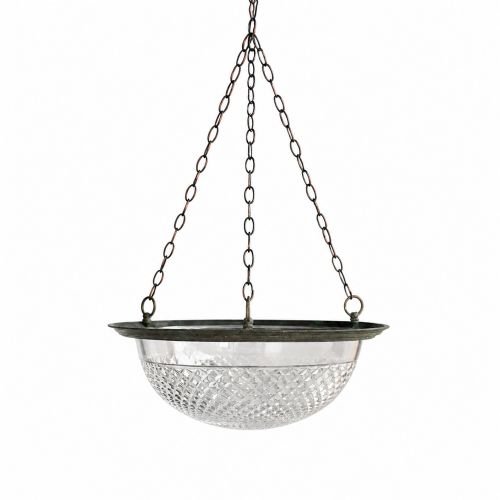
A vintage cut crystal bowl brings heavy, refractive glass into domestic spaces, appearing primarily as decorative fruit bowls, pedestal comports and serving dishes from the nineteenth and twentieth centuries.
Buyers seeking this phrase encounter a range of forms, from large Edwardian table centrepieces and Victorian pedestal bowls to coloured Art Deco designs featuring overlay glass.
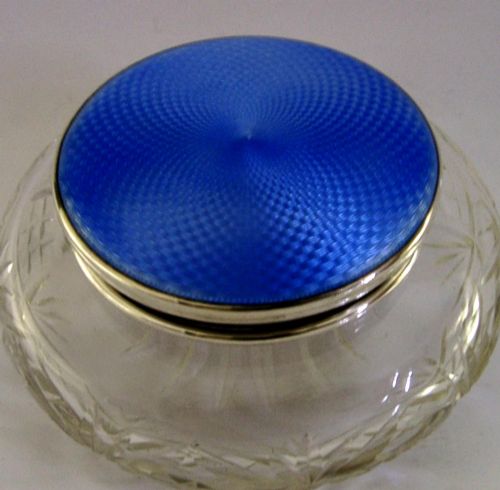
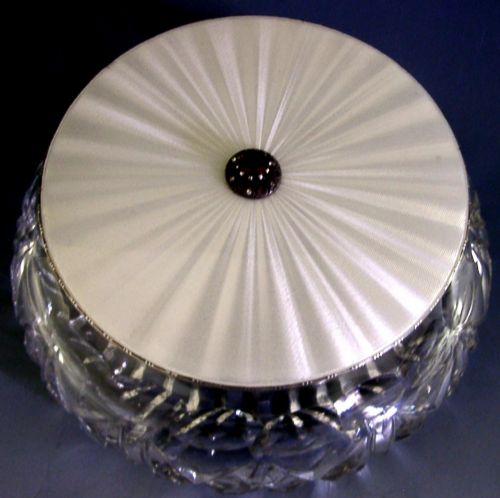
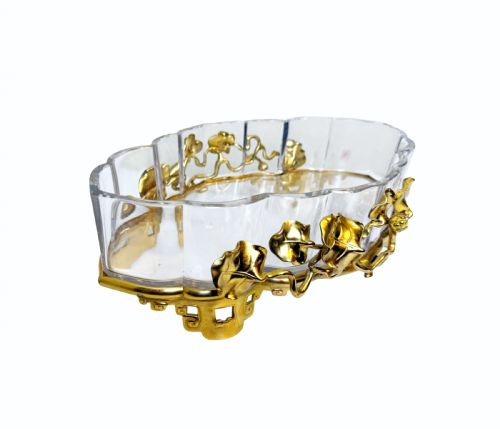
The selection extends beyond standard tableware to include lidded butter dishes, trinket boxes and mounted centrepieces set in gilt bronze or silver.
Materials and construction
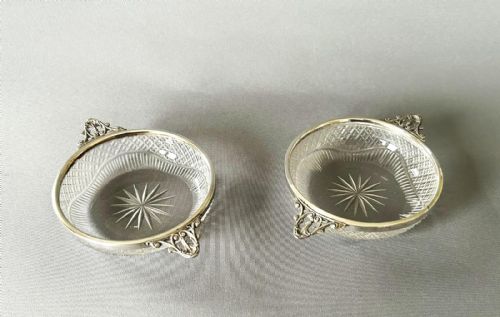
Pieces combine heavy lead crystal or cut glass with mounts of sterling silver, silver plate, brass, or gilt bronze, alongside enamel and ormolu details.
Craftsmen shaped the glass through hand blowing before cutting deep facets, hobnail patterns, and engraved decoration across the surface.
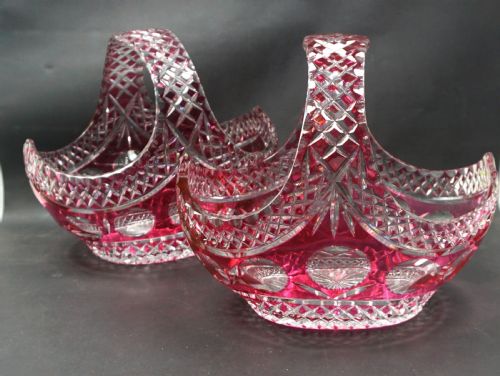
Overlay techniques produced coloured glass versions, where a layer of coloured crystal was fused over clear glass before being cut away.
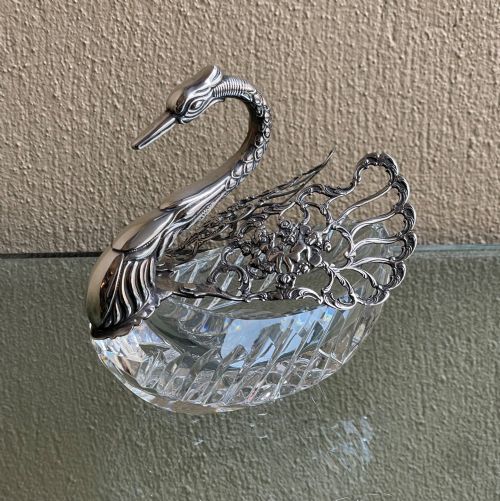
Swan-shaped dishes remind us that Victorians enjoyed serving their condiments from birds.
Factors of distinction
Quality rests on the crispness of the cutting and the weight of the crystal, where sharper facets catch the light more cleanly than softer, rounded impressions.
The integration of precious metals elevates a piece, distinguishing simple glass vessels from those fitted with hallmarked silver tops, gilt bronze frames, or enamel mounts.
Depth of colour and precision in overlay work separate standard production pieces from sophisticated designer items originating from notable continental glassworks.
Val St Lambert·Joseph Simon
The Vintage Cut Crystal Bowl Glossary
- Lead crystal
- Glass containing lead oxide, which increases weight, clarity, and the refractive index to create greater sparkle.
- Hobnail pattern
- A tactile geometric glass-cutting motif resembling the raised heads of old hobnails used on boots.
- Comport
- A raised pedestal bowl or dish traditionally used for serving fruit or sweetmeats at the table.
- Ormolu
- Gilt bronze mounts applied to decorative objects, frequently seen on French pieces from the nineteenth century onwards.
Vintage Cut Crystal Bowl: Frequently Asked Questions
How do I date a cut crystal bowl?
Dating relies on stylistic clues, such as the heavy geometric cutting typical of Victorian pieces versus the stylised lines of Art Deco items from the nineteen-thirties.
Material combinations also help, as silver mounts often bear hallmarks with specific date letters.
Were these bowls used for serving food?
Many examples served functional roles on the dining table for fruit, butter, condiments, or champagne.
Others functioned purely as decorative centrepieces or vanity items.
How should I clean cut crystal?
Wash pieces by hand in warm, soapy water using a soft cloth to protect the sharp edges of the cuts.
Avoid sudden temperature changes to prevent thermal shock and cracking in heavy lead glass.
What is overlay crystal?
Overlay crystal consists of a clear glass base covered by a thin layer of coloured glass.
When the artisan cuts through the coloured outer layer, the clear crystal beneath is revealed in a contrasting pattern.