
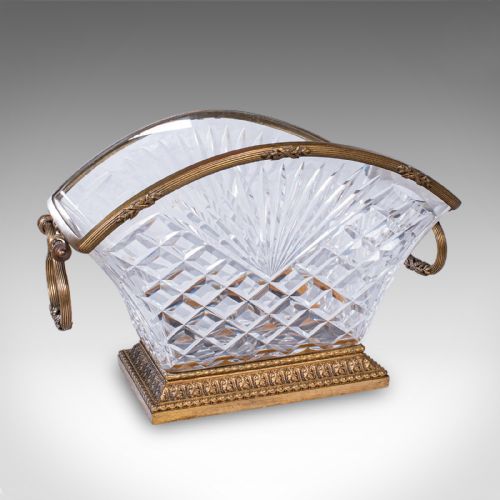


Clear Glass Serving Dish
These clear glass serving dish pieces offer practical elegance, bringing cut glass and metal mounts together for modern tables.
Clear Glass Serving Dish
A clear glass serving dish encompasses a variety of forms designed for presentation at the table, ranging from fruit bowls to lidded dishes. When you search for a clear glass serving dish, you encounter items spanning the Victorian, Edwardian, and Art Deco periods, alongside mid-century examples.
The most common versions on this page are Edwardian cut glass dishes and bowls, often complemented by silver-plated mounts or rims. Pieces originate from diverse makers across England, France, Germany, and Bohemia, reflecting distinct regional tastes from the late nineteenth and early twentieth centuries.
Forms include centerpiece bowls, serving trays, sweet dishes, and hors d'oeuvres dishes with original glass liners. Buyers select these items for their decorative utility, combining transparent glass surfaces with metal accents in bronze, ormolu, or silver plate.
How they were made
Makers utilised heavy lead crystal and standard glass, often shaping them through deep cutting techniques to create starburst and geometric patterns. These glass bodies were frequently paired with metal components, including cast ormolu, bronze, and silver-plated mounts fixed securely to the rims or bases.
Specialised techniques such as cobalt casing and silver plating allowed workshops to combine coloured elements with clear glass bowls. Lidded dishes and framed trays required precise metalwork to house the glass liners safely without risking breakage during daily use.
Listings feature items from the Victorian, Edwardian, and Art Deco eras, constructed from cut glass, silver plate, and ormolu.
What varies in quality
The standard of a clear glass serving dish rests on the depth and crispness of the cut glass facets, alongside the weight and clarity of the crystal. Superior examples display sharp, clean geometric cutting that refracts light effectively, whereas simpler items show softer, shallower impressions.
Metal mounts also define the grade of the piece, with substantial silver plating or chased ormolu frames marking out finer productions. The integration between the glass bowl and its metal rim or handles reveals the care taken during assembly by the original workshop.
Rene Lalique·German WMF
The Clear Glass Serving Dish Glossary
- Cut glass
- Glass decorated by grinding facets and patterns into the surface using a rotating wheel. This technique creates sharp edges that catch the light.
- Ormolu
- Gilded bronze mounted onto decorative objects or furniture. It provides a rich golden contrast against clear glass and silver elements.
- Silver plate
- A base metal coated with a thin layer of silver. This process offered the appearance of solid silver for serving trays and dish rims.
- Jugendstil
- The continental German-speaking variant of Art Nouveau. It is characterised by flowing, organic lines visible in metalwork from the early twentieth century.
- Lead crystal
- Glass containing metal oxides that increase weight, brilliance, and resonance. It allows for deeper cutting and greater clarity than standard glass.
Clear Glass Serving Dish: Frequently Asked Questions
Can I use these dishes for food?
Most clear glass serving dishes remain entirely suitable for serving dry foods, fruit, sweets, or nibbles at the table. Ensure that items with older silver plating or lead content are washed before serving food.
Avoid using antique glass with acidic foods for prolonged periods if the metal rims show wear. Gentle handling ensures these decorative items serve a functional role during meals.
How do I date a glass dish?
Examine the style of the cutting, the shape of the mounts, and any visible maker marks on the glass or metal. Edwardian and Victorian pieces often feature heavy hobnail or starburst cuts combined with ornate silver-plated rims.
Art Deco and later twentieth-century items display cleaner geometric lines or minimalist silver rims. Comparing the form against documented design periods helps narrow down the decade of production.
What is the difference between cut glass and crystal?
Crystal contains lead oxide, which adds weight, brilliance, and a clear ringing tone when struck. Cut glass refers more broadly to any glass vessel decorated with wheel-cut facets, regardless of lead content.
Heavy lead crystal permits deeper, sharper facet cutting that reflects light with high intensity. Standard glass vessels remain lighter and feature shallower surface decoration.