




Silver Mounted Glass Bowl
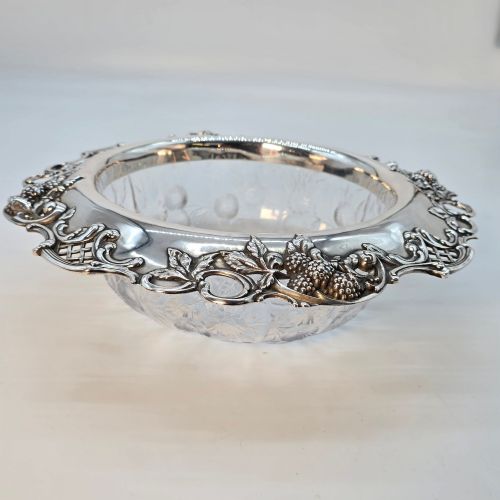
A silver mounted glass bowl brings together the brilliance of crystal or coloured glass and the solid lustre of hallmarked metal.
Silver Mounted Glass Bowl
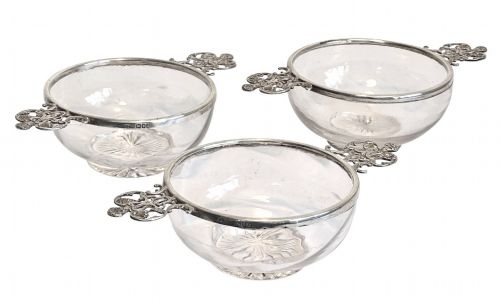
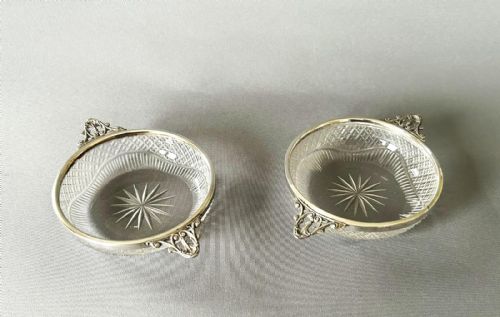
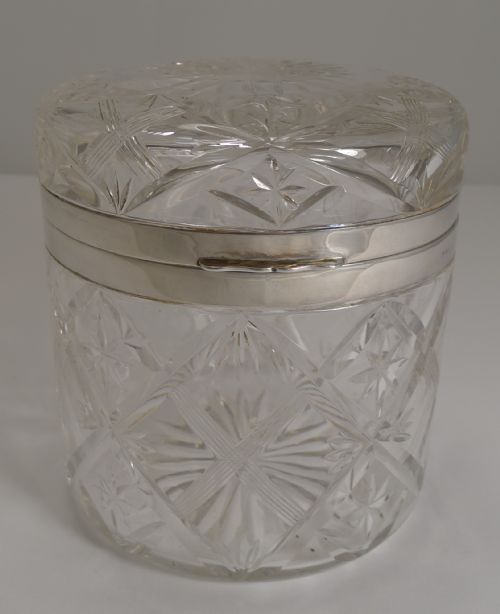
A silver mounted glass bowl combines blown or cut glass vessels with sterling silver rims, collars, and hinged lids. These domestic objects serve as dressing table accessories, sweet dishes, bonbon baskets, and salad service bowls.
The pieces on this page span the Victorian, Edwardian, and mid-twentieth-century periods, alongside examples from the nineteen-twenties and nineteen-thirties. Victorian and Edwardian examples predominate, frequently featuring cut crystal or cobalt blue glass paired with sterling silver.
Forms range from small trinket dishes and vanity jars to large decorative baskets and covered sweet bowls. Each item balances the fragility of glass with the robust structure of metal mounts.
How they were made
Glass vessels are created through blowing, moulding, or heavy cutting to produce deep facets and patterns in crystal. Coloured glass varieties such as cobalt blue appear alongside clear crystal.
Sterling silver mounts, rims, and lids are shaped by silversmiths to fit the contours of the glass precisely. Tortoiseshell inlays and hinged mechanisms add complexity to vanity jars and boxes.
Listings feature sterling silver, cut crystal, cobalt glass, and tortoiseshell across Victorian, Edwardian, and twentieth-century periods.
What varies in quality
Quality rests on the weight and depth of the glass cutting, alongside the gauge of the sterling silver used for the mounts and rims. Thicker crystal and heavier silver rims denote superior manufacture.
The integration between the metal collar and the glass vessel dictates the standard of the piece, as secure mountings prevent movement and protect the edges of the glass.
Tiffany & Co.·William Comyns
The Silver Mounted Glass Bowl Glossary
- Sterling silver
- An alloy of silver containing 92.5 percent pure silver and 7.5 percent other metals, typically copper. This standard is marked by hallmarks on the metal mounts.
- Cut crystal
- Glass containing lead oxide that increases its weight, clarity, and refractive index. Deep geometric cuts catch the light across bowls and dishes.
- Cobalt glass
- Deep blue glass produced by adding cobalt oxide to the molten batch. This material appears in Edwardian bonbon dishes.
- Tortoiseshell
- The shell of certain turtle species used historically as an overlay on vanity jars and boxes. It provides a mottled amber and brown contrast to the silver mounts.
- Hallmark
- An official stamp applied by an assay office indicating the purity of the metal, the maker, and the year of manufacture. These marks help date the silver mounts.
Silver Mounted Glass Bowl: Frequently Asked Questions
How do I clean a silver mounted glass bowl?
Use warm soapy water and a soft cloth for the glass while keeping moisture away from any tortoiseshell panels or paper linings. Polish the sterling silver mounts separately with a dedicated silver cloth to avoid marking the glass.
Submerging pieces with glued or cemented mounts in water can weaken the adhesive over time. Dry the metal and glass thoroughly immediately after washing.
Are these bowls safe for serving food?
Many period bowls and baskets were designed for sweets, bonbons, or salads and remain suitable for serving dry foods. Older glass may contain lead, so check the specific material before using items for acidic or wet foods.
Pieces featuring tortoiseshell or delicate hinged lids serve better as decorative vanity accessories or display items rather than daily tableware.
How can I date the silver mounts?
British silver mounts carry hallmarks that include a date letter indicating the exact year of assay, alongside maker marks and the lion passant for sterling standard. These stamps provide a reliable method for dating the metal component.
Remember that mounts can occasionally be older or younger than the glass they encase, though most period pieces were manufactured together.
What is the difference between crystal and glass?
Crystal contains a proportion of lead oxide which increases its density, refractive index, and weight compared to standard soda-lime glass. This high lead content allows for deeper, sharper facets when cut.
When tapped, good crystal produces a clear resonant ring, whereas standard glass produces a duller sound.