


Silver Berry Bowl
When you handle a silver berry bowl, you hold a piece of dining history designed to cradle soft summer fruit.
Silver Berry Bowl
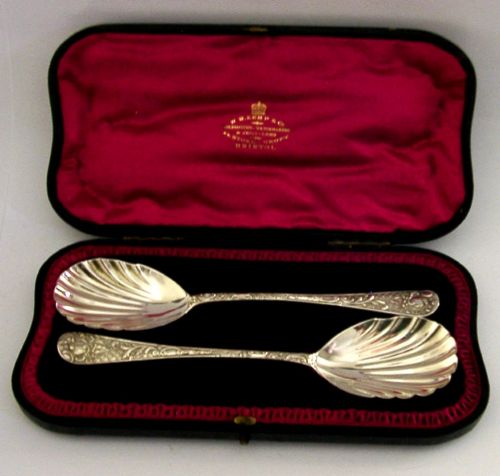
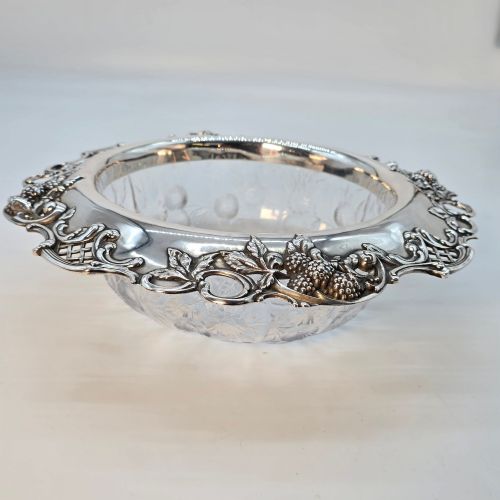
A silver berry bowl encompasses both deep open vessels designed to hold fruit and the large spoons fashioned specifically to serve them. You will encounter open footed dishes alongside glass liners in ruby tones and matched pairs of serving spoons with scalloped bowls.
The pieces on this page span the Georgian and Victorian eras through to the Edwardian period and the early twentieth century. Forms range from heavy handled serving spoons to pierced dishes and glass liners fitted with cast silver rims.
Many items in this category pair solid sterling silver or silver plate with cranberry glass or crystal inserts. Others rely entirely on metalwork, featuring chased fruit motifs and engraved family crests upon the handle terminals.
Materials and construction
Makers shaped these bowls and spoons using sterling silver, silver plate, and silver gilt, frequently pairing the metal with blown cranberry glass or crystal. Silversmiths hammered, pierced, and cast the metal to create gadroon borders, lion head handles, and pierced lattice patterns.
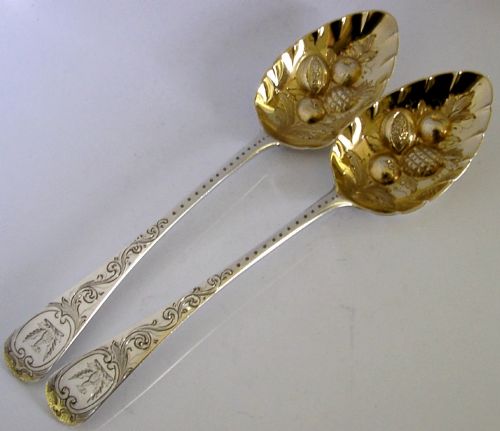
Spoons often received secondary chasing and engraving long after their initial manufacture, transforming plain serving spoons into ornate berry spoons with fruit and leaf decoration. Glass components were mouth-blown and fitted directly into pierced silver frames or plate mounts.
Some Victorian spoons show evidence of having their plain bowls upgraded with chased strawberries decades after leaving the forge.
Distinctions in quality
The standard of a silver berry bowl rests upon the weight of the metal and the crispness of the chased or engraved fruit decoration. Heavy gauge sterling silver maintains its structural integrity and sharp detail across centuries of use.
Pieces that retain their original matched glass liners or intact gilding command greater attention from collectors. The integration between the glass insert and the silver rim demonstrates the skill of the original workshop.
Tiffany and Co.·William Chawner II·Whiting Co.·Mappin and Webb·Hukin and Heath·WMF
The Silver Berry Bowl Glossary
- Berry spoon
- A large serving spoon, often Georgian or Victorian in origin, featuring chased fruit and leaf decoration added to the bowl. These spoons were frequently matched into pairs for formal dining.
- Cranberry glass
- A rich red glass produced by adding gold chloride to the molten batch. It appears frequently in Victorian and Edwardian bowl liners.
- Sifter spoon
- A serving spoon with a pierced or perforated bowl designed to drain liquid from fruit. They often appear alongside berry spoons in fitted presentation cases.
- Silver gilt
- Silver covered with a thin layer of gold through a chemical or electrochemical process. This technique protects the underlying metal and adds a warm interior glow to bowls.
- Gadroon border
- A decorative chased or embossed rounded moulding edge. It appears frequently around the rims of Edwardian and Georgian bowls.
- Sterling silver
- An alloy containing a high proportion of pure silver combined with copper for strength. British pieces typically carry standard hallmarks indicating this composition.
Silver Berry Bowl: Frequently Asked Questions
What is a silver berry bowl used for?
These vessels were created to serve soft fruits like strawberries and raspberries at the dining table. The deep bowls and paired spoons accommodated juicy portions during formal dessert courses.
Many examples include glass liners designed to protect the metal from fruit acids. Others use pierced spoons to let juices drain back into the dish.
How do I care for a silver berry bowl?
Wash silver and glass components separately using warm water and mild soap, avoiding harsh abrasive cloths. Dry the metal promptly to prevent water spots.
Store pieces away from damp environments and rubber materials which can tarnish silver surfaces. Glass liners should be removed before cleaning the surrounding metal mount.
How can I tell a Georgian spoon from a Victorian one?
Georgian spoons typically display cleaner lines, crisper hallmarks from the eighteenth or early nineteenth century, and hand-engraved crests. Many Victorian berry spoons started life as plain Georgian flatware before receiving later ornate fruit chasing.
Victorian and Edwardian examples often include matched glass liners or complete cased presentation sets. Examine the hallmarks and style of decoration to confirm the period of manufacture.
Are cranberry glass liners original?
Original glass liners fit the contours of the pierced silver or plated basket without excessive movement. The colour should match the production techniques of the late nineteenth or early twentieth century.
Replacement liners appear frequently because glass is fragile. Inspect the rim where it meets the metal for signs of wear that indicate long association.