
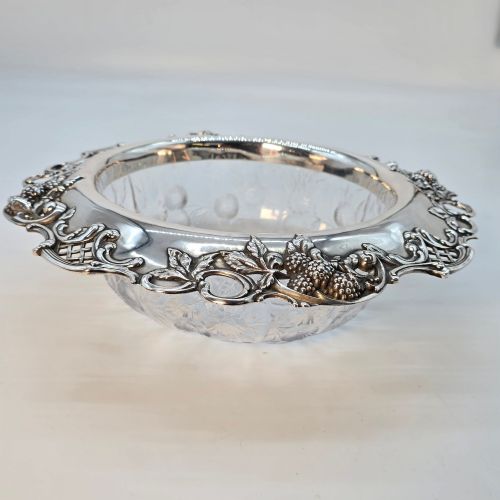
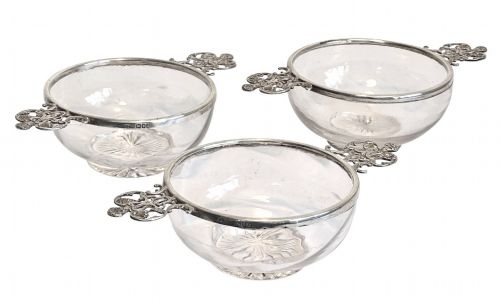


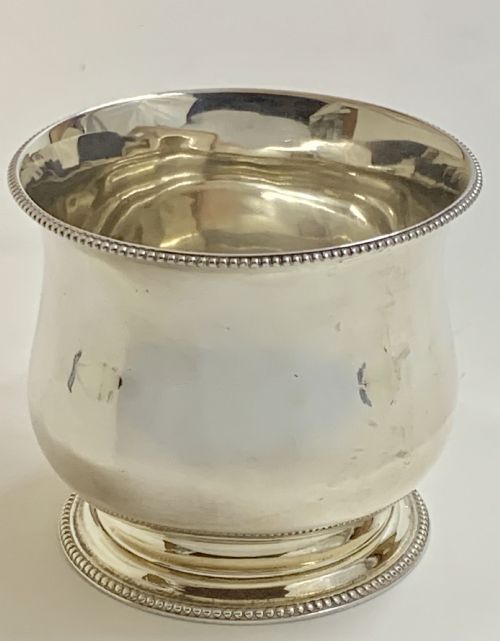


Sterling Silver Rimmed Bowl
These sterling silver rimmed bowl examples bring together clear crystal, cut glass and solid silver mounts from centuries past to grace a dining table.
Sterling Silver Rimmed Bowl
A sterling silver rimmed bowl combines a glass or crystal body with a precious metal mount or collar, offering a functional vessel for the dining table or sideboard. These items appear in forms ranging from small bonbon dishes and table salts to large salad services and decorative bowls.
The pieces spanning this page reach from the eighteenth century through the Victorian and Edwardian eras into twentieth century modern design. Buyers frequently encounter Victorian and Edwardian examples featuring cut glass or crystal bodies paired with hallmarked silver rims.
Makers utilised these vessels for domestic service, dressing table accessories and sugar storage. The variety includes individual small salts alongside substantial bowls produced by prominent workshops and retailers.
How they were made
Silversmiths formed the rims and mounts from sterling silver, frequently applying hallmarks to indicate assay office, date and maker. These metal collars were then secured to vessels made from glass, cut crystal or ceramic bodies.
Glassblowers and cutters produced the transparent bodies using techniques of moulding, blowing and hand-cutting to create facets and patterns that catch the light. The combination of glass and metal required precise fitting to ensure stability between the contrasting materials.
Listings span from the eighteenth century to the mid twentieth century, uniting sterling silver, cut glass, crystal and gilt.
What varies in quality
Quality rests in the weight and thickness of the silver rim, the clarity of the glass or crystal body, and the crispness of any cut decoration. Substantial metal mounts demonstrate greater substance than thin, pressed alternatives.
The presence of clear hallmarks by notable makers elevates an object, as does the balance between the metal collar and the glass vessel. Pieces showing precise fitting and unblemished crystal represent the upper tier of production.
Tiffany & Co.·William Comyns·Royal Doulton·Walter Brind·S. Kirk & Son Company
The Sterling Silver Rimmed Bowl Glossary
- Hallmark
- An official stamp applied to precious metals indicating the standard of purity, the assay office, and the date of manufacture. These marks allow collectors to trace the origin of silver rims.
- Bonbon dish
- A small, shallow vessel intended for holding sweets, nuts or small confections. These often feature decorative pierced silver rims or swing handles.
- Table salt
- A small open container used to hold salt at the dining table before the widespread use of shakers. They frequently appear as pairs or sets with matching silver rims and glass bodies.
- Crystal
- A type of glass containing lead oxide, which increases brilliance, weight and clarity. This material allows for deep, sharp cutting on decorative bowls.
Sterling Silver Rimmed Bowl: Frequently Asked Questions
How do I clean a silver rimmed bowl?
Wash the glass or crystal body in warm soapy water using a soft cloth, taking care not to submerge compromised cemented mounts for extended periods. Polish the silver rim gently with a dedicated silver cloth while avoiding abrasive cleaners that might scratch the surrounding glass.
Store the vessel in a dry environment to slow down the natural tarnishing process of the sterling silver mount.
Are these bowls safe for daily use?
Most of these vessels function adequately for serving dry foods, salads or fruits, provided they are handled with care. Older crystal and glass require hand washing rather than mechanical dishwashing to preserve their surface finish and protect the silver mount.
Heavier antique pieces suit occasional display or gentle dining use rather than rough everyday service.
How can I date a silver rimmed bowl?
Examine the hallmarks stamped on the silver rim, which typically indicate the exact year of manufacture and the assay office. The style of the glass cutting, the shape of the bowl and any engraved decoration provide additional clues to the period.
Comparing the form to documented Victorian, Edwardian or Georgian examples helps narrow down the decade of production.
What is the difference between glass and crystal?
Crystal contains lead oxide, which gives the material greater weight, refractive brilliance and a clear ring when struck. Standard glass lacks this lead content and usually feels lighter with less sparkle in cut facets.
Both materials appear paired with sterling silver rims across different periods of manufacture.