
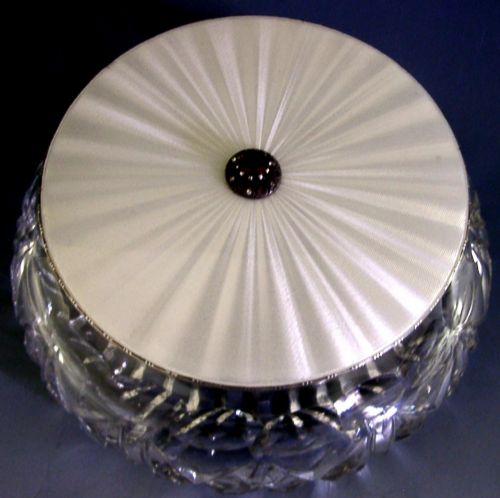


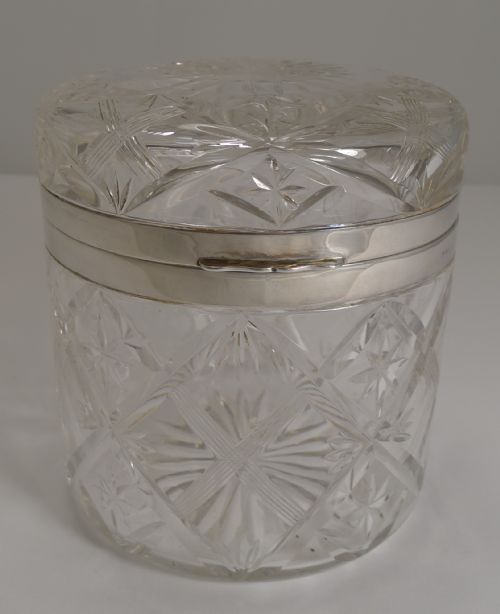


Silver Topped Glass Bowl
These silver topped glass bowl selections bring together cut crystal, cranberry glass, and sterling silver lids for dressing tables and dining rooms.
Silver Topped Glass Bowl
A silver topped glass bowl combines a glass vessel with a metal lid, taking forms from trinket boxes and dressing table jars to salt cellars and serving dishes. These items serve dressing table and dining table functions alike, spanning the Victorian, Edwardian, and mid-century periods.
The most common form encountered on this page is the dressing table jar or trinket box, often featuring cut crystal or cut glass bodies paired with hallmarked sterling silver. Other variations include cranberry glass, amethyst glass, and opaline glass mounted in silver plate or Dutch silver.
Makers and designers from William Comyns to James Dixon produced these pieces across the nineteenth and twentieth centuries, utilising styles from early twentieth-century work to Art Deco and Mid-Century Modern designs.
How they were made
Vessels are formed from cut crystal, moulded glass, or coloured glass such as cranberry and amethyst, frequently finished with deep wheel-cut facets. Lids and mounts consist of sterling silver or silver plate, sometimes stamped with Birmingham assay office hallmarks or maker marks.
Many lids incorporate coloured enamel panels, tortoiseshell, or swing handles attached to the glass body by silver rims and collars. Metal components are shaped by stamping, casting, or spinning, then joined securely to the glass base.
Scottish cut glass meets Dutch silver in these selections, proving that antique tableware loves international travel as much as we do.
What varies in quality
Quality rests upon the weight and clarity of the glass, the depth and precision of the cutting, and the gauge of the silver used for the lid. Thicker crystal bodies and heavier sterling silver mounts indicate superior manufacture compared to thinner glass and silver plate.
The presence of undamaged enamel work, intact tortoiseshell inserts, and clear hallmarks adds distinction to individual examples. The proportion between the glass vessel and its metal top also dictates the overall visual balance of the piece.
William Comyns·James Dixon
The Silver Topped Glass Bowl Glossary
- Cut Glass
- Glass shaped and patterned by abrasive wheels, creating faceted surfaces that reflect light. This technique defines the bodies of many dressing table jars and bowls.
- Sterling Silver
- An alloy consisting of ninety-two point five percent silver and seven point five percent other metals, typically copper. Most lids and rims on these items bear hallmarks certifying this standard.
- Cranberry Glass
- Transparent red glass coloured with gold chloride during production. It appears frequently in nineteenth and early twentieth-century trinket boxes.
- Potpourri Basket
- An open or lidded bowl designed to hold dried scented plant material, often fitted with a swing handle. These pieces combine cut crystal bodies with hinged silver mounts.
- Hallmark
- A series of official marks stamped on precious metals indicating the maker, assay office, and year of testing. Birmingham is a common assay origin found on these items.
Silver Topped Glass Bowl: Frequently Asked Questions
How do I clean the silver top?
Use a soft cloth and a dedicated silver polish, taking care to avoid getting polish on the glass or any enamel panels.
Keep moisture away from the interior lining of the lid, as many vintage boxes contain plaster or card inserts beneath the silver top.
Are these glass bowls dishwasher safe?
Hand washing in warm soapy water is essential for antique glass and silver pieces, as machine washing damages both materials.
Thermal shock from hot water can crack old crystal, so water temperature should remain moderate throughout cleaning.
What were dressing table jars used for?
Victorian and Edwardian dressing table jars held powders, pins, trinkets, and cosmetics in private bedrooms.
They formed part of larger matching dressing set accessories displayed on dressing tables and vanity surfaces.
How do I date an Edwardian piece?
Edwardian items date from nineteen hundred to nineteen ten, a span identified through hallmark date letters and prevailing design motifs.
Stylistic cues include neoclassical revival patterns alongside early geometric precursors to Art Deco.