

Sterling Silver Glass Dish
When you search for a sterling silver glass dish, you find tableware and dresser items that combine precious metal with clear, cut, or coloured glass.
Sterling Silver Glass Dish
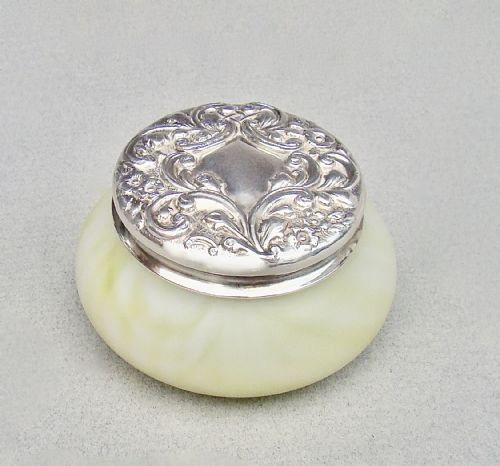
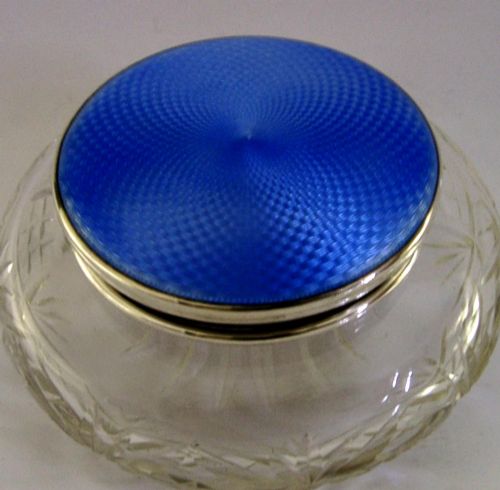
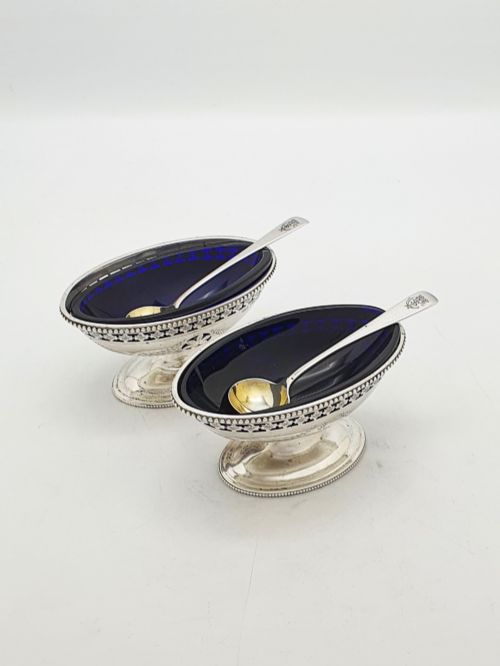
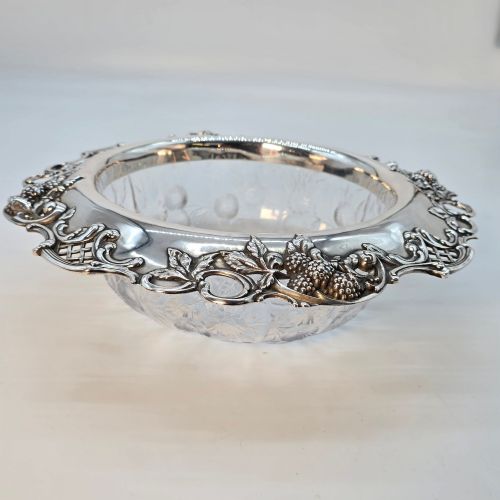
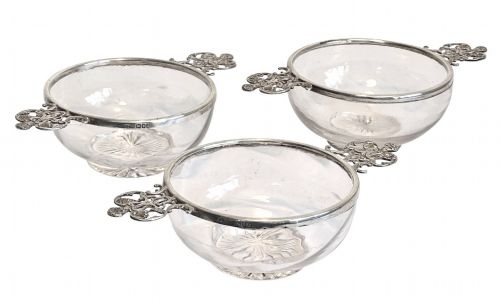
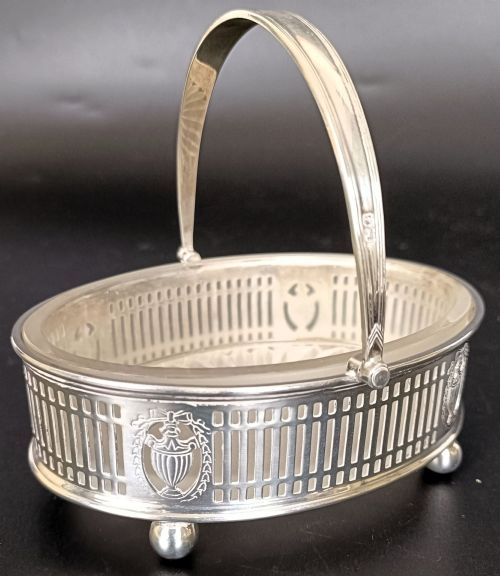
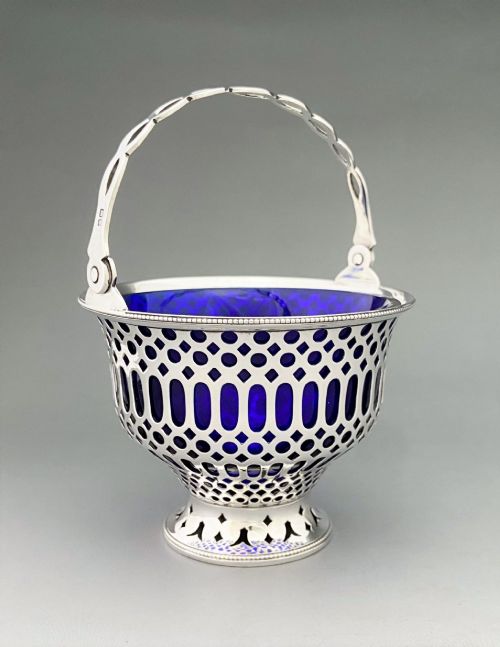
A sterling silver glass dish encompasses diverse forms including sugar baskets, butter dishes, trinket boxes, and salt cellars with coloured glass liners. These pieces originate across periods from the Georgian era through to the mid twentieth century, with strong representation from Victorian and Edwardian workshops.
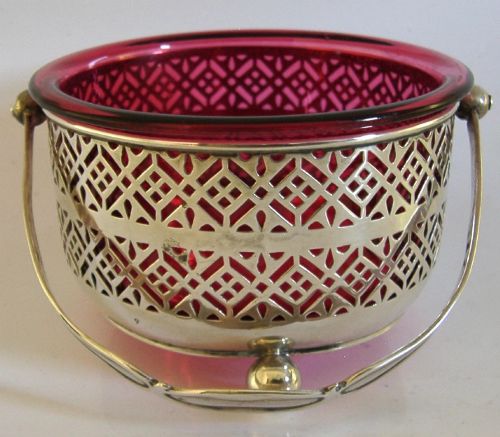
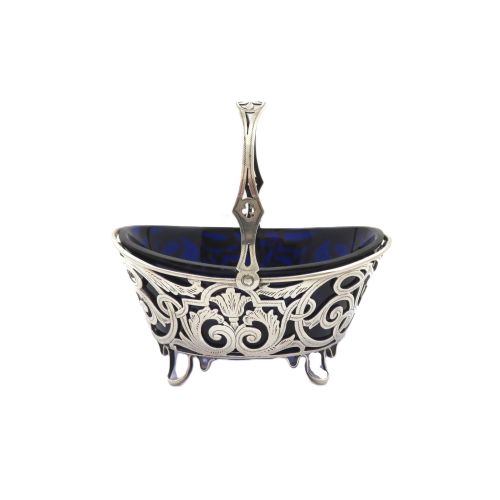
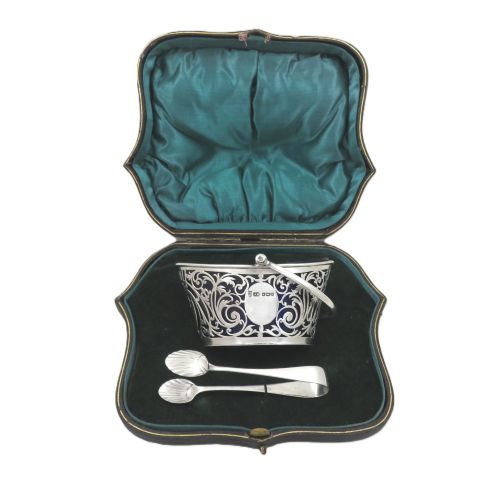
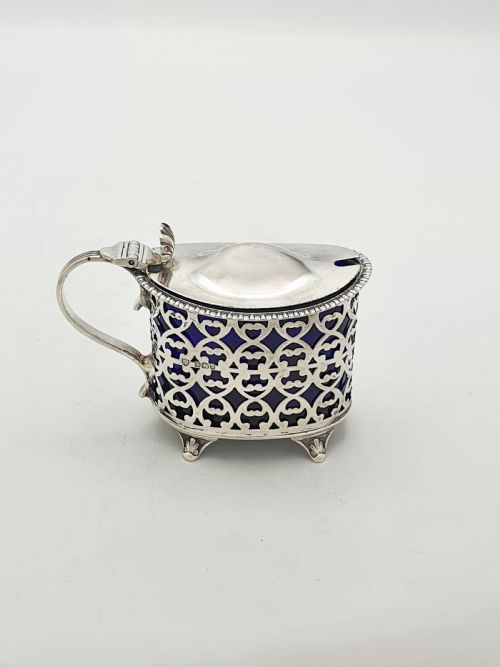
The version most commonly met on this page is the Edwardian or Victorian salt cellar, sugar basket, or lidded trinket box featuring cobalt or cranberry glass. Tableware forms frequently include swing-handled baskets and pierced frames designed to hold fitted glass inserts.
Materials and Technique
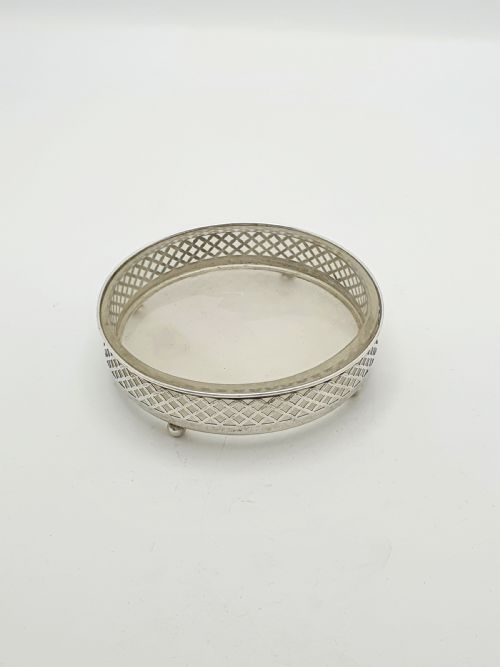
Items in this category pair sterling silver mounts, rims, or pierced frames with blown, moulded, cut, or satin glass vessels. Coloured elements appear specifically as cobalt, cranberry, blue, or amethyst glass liners and inserts.
Silversmiths employed techniques such as piercing, casting, and repoussé for the metal mounts, whilst glassmakers utilised cutting, hobnail moulding, and enamelling to create decorative surfaces.
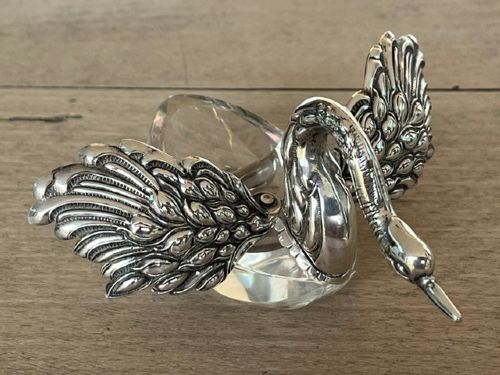
Some salt cellars feature movable swan wings that fold back to reveal the hidden glass basin underneath.
Craftsmanship and Proportion
Quality separates on the weight and gauge of the sterling silver frame alongside the clarity and heft of the glass component. Finer examples display crisp piercing, substantial cast handles, and well-fitted glass liners that sit flush within the metalwork.
The integration between the two media dictates overall excellence. Superior pieces show careful attention to detail in the silver hallmarks, hand-cut facets on crystal sections, and undamaged enamel or coloured glass elements.
A. J. Pepper & Co·A. Bromet & Co·Tiffany & Co·William Comyns·George Fox·Adie Brothers
The Sterling Silver Glass Dish Glossary
- Sterling silver
- An alloy containing 92.5 percent silver and 7.5 percent other metals, typically copper, used to form the structural mounts and frames of these dishes.
- Cobalt glass
- Deep blue glass frequently utilised for removable liners inside open salt cellars and mustard pots.
- Cranberry glass
- Transparent pinkish-red glass produced by the addition of gold to the molten batch, seen in baskets and trinket boxes.
- Pierced work
- A decorative technique where metal is cut through to create openwork patterns such as lattices and scrolls on baskets and dish rims.
- Salt cellar
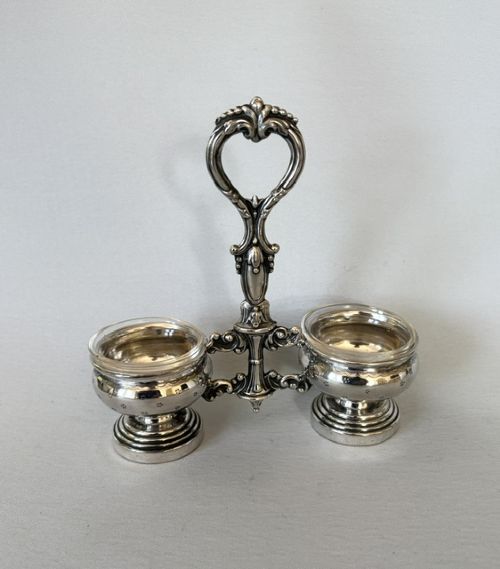
- A small open vessel or container used on the dining table to hold salt, commonly paired with a coloured glass liner.
Sterling Silver Glass Dish: Frequently Asked Questions
What are these glass dishes used for?
These pieces served functional roles on dining and dressing tables, holding butter, sugar, condiments, or small personal items. Their dual-material construction allowed practical utility while displaying decorative metalwork.
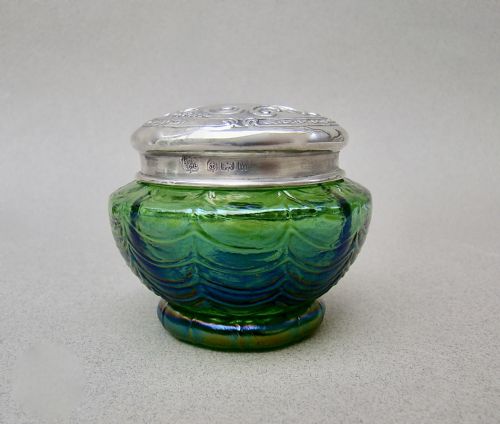
Dining forms included salt cellars and butter dishes with glass liners to protect the silver from corrosive contents. Dressing table versions functioned as powder jars, trinket boxes, and match strikers.
How do I identify the period?
Dating relies primarily on the hallmarks stamped into the sterling silver mounts, which indicate the assay office, date letter, and maker's mark. Stylistic indicators like Edwardian pierced scrollwork or Art Deco geometric lines provide secondary clues.
Changes in glass manufacturing techniques and colours also align with specific eras, such as deep cranberry glass in Edwardian pieces or heavy cut crystal in Victorian items.
Are the glass liners original?
Original glass liners fit snugly into the silver framework without excessive movement or gaps. Matching the shape and exact dimensions to the pierced gallery is key to determining period correctness.
Replacement liners often appear in a different shade or glass thickness compared to standard production methods of the stated year.
How should I care for silver and glass?
Cleaning requires separating the glass insert from the silver mount where possible to prevent moisture trapping between the surfaces. Gentle washing in warm soapy water suits the glass component.
Silver parts benefit from specialised polish applied sparingly with a soft cloth, avoiding contact with any enamel or glass surfaces.