


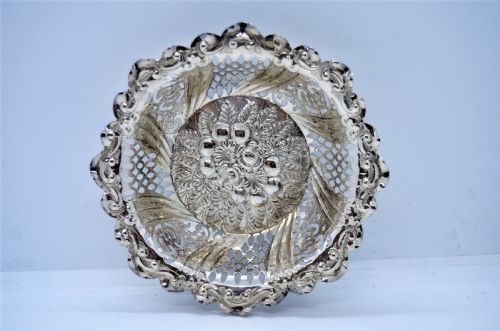


Pair Silver Sweetmeat Dishes
These pair silver sweetmeat dishes offer the elegance of the dining table from past centuries, ready to serve small treats or decorate a room.
Pair Silver Sweetmeat Dishes
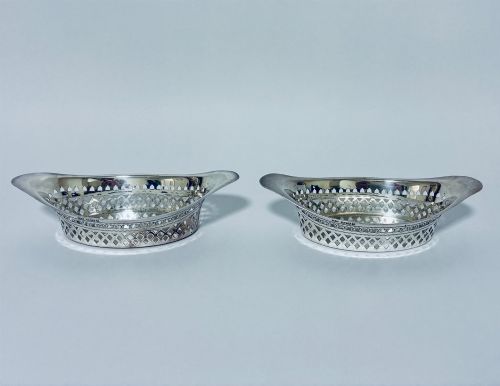
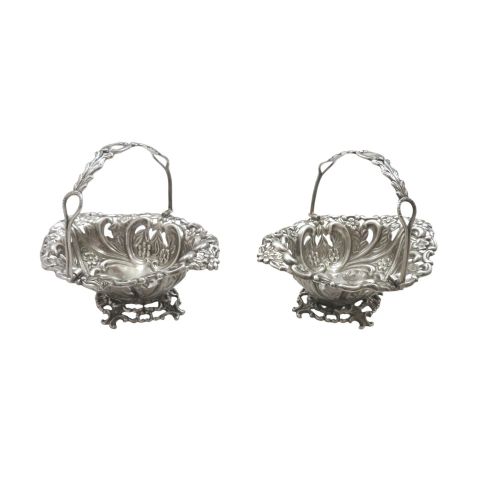
When you search for pair silver sweetmeat dishes, you encounter matching sets designed for confectionery, nuts, and small sweets during formal meals. The examples on this page span from the eighteenth century through the Victorian, Edwardian, and Art Deco periods, showing how table tastes evolved over generations.
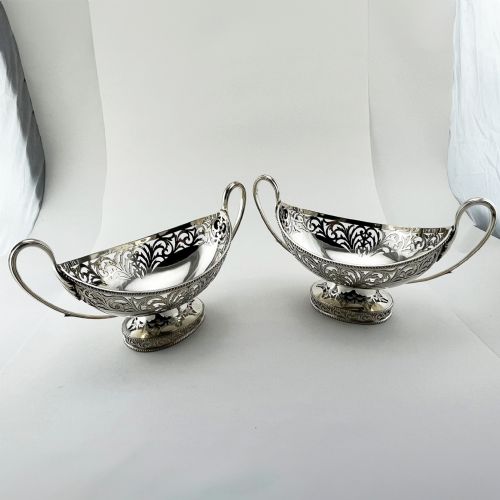
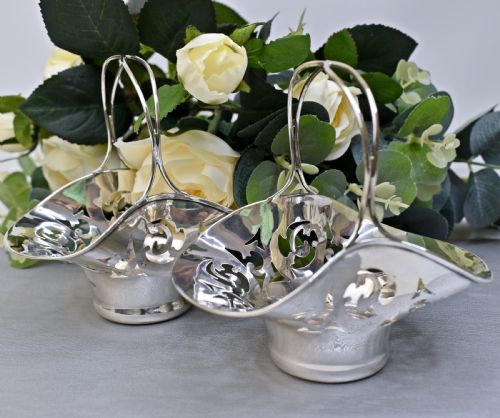
Most items you meet here take the form of small decorative baskets, bonbon dishes, or pedestal bowls shaped for display. Many retain openwork piercing or swing handles, reflecting their dual purpose as both functional tableware and decorative objects for the sideboard.
Materials range from solid sterling silver and silver plate to combinations involving glass liners, tortoiseshell, and gilt interiors known as vermeil. The diversity of forms includes pieces housed in original fitted cases as well as standalone bowls and baskets.
What varies in quality
The distinction between standard production and the finest work lies in the crispness of the piercing, the weight of the metal, and the harmony of the matching pair. Heavier gauge sterling silver provides a more substantial feel in the hand and resists denting during use.
Detailing on handles, feet, and chased borders separates ordinary tableware from exceptional pieces bearing notable maker marks. The survival of original fitted presentation cases or intact glass liners also elevates the desirability of a pair.
Some pairs spent a century safely tucked inside their original velvet-lined cases, waiting patiently for another sugar almond.
Thomas Bradbury·Fenton Brothers·William Comyns·Viners·D & M Davis
The Pair Silver Sweetmeat Dishes Glossary
- Sweetmeat
- A small confection, sugary treat, or dried fruit served after a meal. These dishes were specifically sized to hold such delicacies.
- Piercing
- The technique of cutting decorative openwork patterns into sheet metal. This process lightened the appearance of baskets and bowls while displaying the surface beneath.
- Vermeil
- Gold plating applied over sterling silver. This finish provided a rich golden interior that prevented sweetmeats from tarnishing the silver.
- Pedestal dish
- A bowl or basket raised on a central foot or stem. This form added height and presence to table arrangements.
Pair Silver Sweetmeat Dishes: Frequently Asked Questions
What were sweetmeat dishes used for?
These dishes held small sweet treats, nuts, or preserves served at the end of a formal meal or during social gatherings. They sat centrally on tables or sideboards for guests to help themselves.
Over time, their role shifted from active dining accessories to decorative display pieces that highlighted the owner's taste and silver collections.
How do I care for silver sweetmeat dishes?
Regular dusting with a soft cloth and occasional gentle cleaning with a specialist silver polish keeps the metal bright. Avoid abrasive materials that can wear down hallmarks or delicate pierced details.
If your pieces feature glass liners or tortoiseshell panels, remove the inserts during cleaning to protect vulnerable non-metal components from moisture and polish residue.
How can I tell the period of a pair?
Stylistic clues such as Rococo Revival curves, Victorian floral chasing, Edwardian pierced lattice work, and geometric Art Deco lines help date the pieces. Hallmarks provide definitive year letters and town marks for British items.
Comparing the weight, handle construction, and presence of original accessories like glass liners also points towards specific manufacturing eras.