


Arts Crafts Silver Dish
An arts crafts silver dish brings hand-beaten texture and honest construction to the table, uniting utility with the distinct ideals of the movement.
Arts Crafts Silver Dish
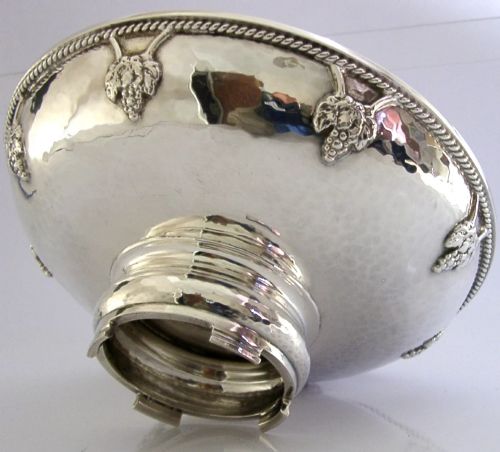
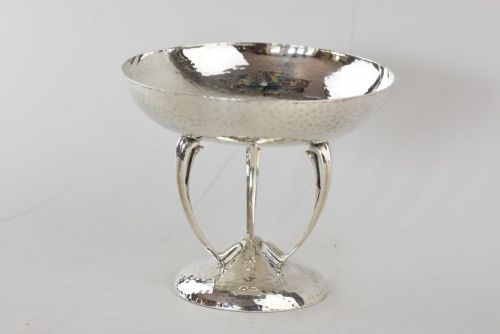
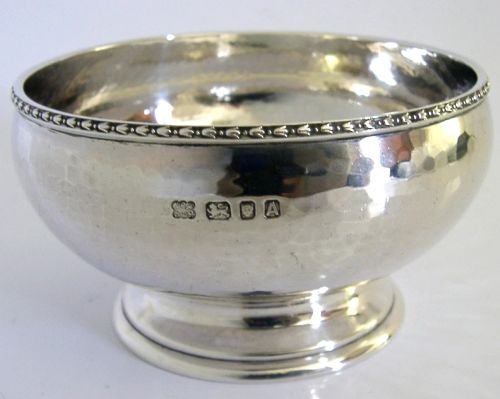
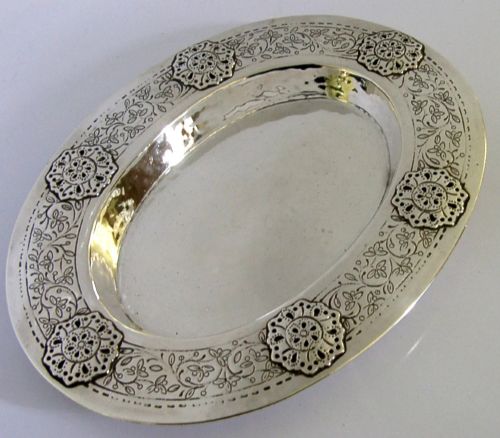
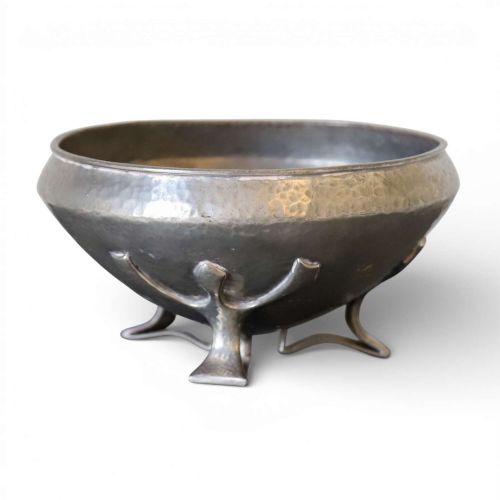
An arts crafts silver dish appears in forms such as open bowls, shallow tazzas, twin-handled vessels, and wall plates that showcase the hand of the maker. These pieces emerge primarily from the early twentieth century, spanning Edwardian iterations through to later mid-century works.
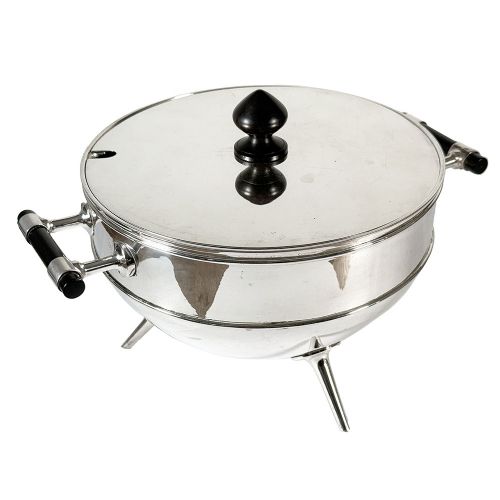
The objects frequently display circular rims, tripod supports, and beaten surfaces that reject machine-made perfection in favour of tactile individuality. Bowls and dishes serve decorative and functional roles alike, often incorporating applied motifs like clover flowers, enamel, or cabochons.
Makers across England, Scotland, Germany, and Sweden contribute to this tradition, utilising sterling silver, silver plate, and pewter to create enduring domestic metalwork.
Materials and Techniques
Silversmiths shape sterling silver, silver plate, and pewter by hand, working sheet metal over stakes to raise bowls and dishes from flat blanks. Hammer marks, known as planishing, remain visible across the surfaces as evidence of manual labour.
Designers integrate mixed media such as ebonised wood, stoneware, cane, and turquoise stones into the metal framework to create contrast and texture. Rivets, mounts, and cast legs are assembled mechanically rather than hidden, celebrating the structural anatomy of each vessel.
Some dishes feature tiny clover flowers marching around the rim, proving that even hardworking metalware can wear foliage.
The Measure of Craft
The distinction between ordinary production and superior craftsmanship lies in the rhythm and control of the hammer work across the metal surface. Crisp, deliberate planishing creates a balanced play of light, whereas dull or uneven texturing lacks structural purpose.
The weight of the silver or pewter relative to the size of the dish dictates the physical substance and durability of the piece. Proportion, clean lines, and the integration of decorative elements like enamel cabochons separate standard workshop output from exceptional commissions.
A E Jones·Goldsmiths and Silversmiths Company·Liberty and Co·Oliver Baker·Hukin and Heath·Frank Butler·Roberts and Belk·John Barrett·Stanley G Morris·CR Ashbee·Guild of Handicrafts·Omar Ramsden·James Weir
The Arts Crafts Silver Dish Glossary
- Planishing
- The technique of smoothing and shaping metal using a light-faced hammer to leave a distinct, faceted texture across the surface. This process hardens the silver while creating a characteristic light-catching finish.
- Tazza
- A shallow bowl or dish raised on a circular foot or tripod support, often used for serving fruit or sweets. The elevated form emphasises the decorative qualities of the metal.
- Pewter
- A malleable alloy of tin mixed with copper and antimony, utilised for bowls and dishes requiring a softer grey lustre. Tudric pewter represents a specific high-grade alloy developed for commercial production.
- Cabochon
- A polished, convex gem or stone set without facets into the metal body of a dish. These additions provide spots of colour against the hammered silver.
- Quaiche
- A traditional two-handled drinking vessel adapted in this period as a low, wide serving bowl. The handles, or lugs, require precise hand-joining to the main body.
Arts Crafts Silver Dish: Frequently Asked Questions
What defines an arts crafts silver dish?
These pieces display visible hammer marks and structural honesty, valuing manual skill over industrial perfection.
They reflect a design philosophy that champions traditional metalworking techniques and tactile surfaces.
How were these dishes used originally?
Households utilised them as sweetmeat dishes, fruit bowls, rose bowls, and decorative wall plates.
Their forms suited both formal dining tables and domestic display spaces.
How do I care for antique silver and pewter?
Clean the metal gently with non-abrasive cloths and mild solutions to preserve the original patina and hammer texture.
Avoid harsh dips that strip away the historical surface character built over decades.
How do I identify a period piece?
Examine the metalwork for hallmarks, maker stamps, and distinctive design motifs characteristic of early twentieth-century workshops.
Weights, construction methods, and materials such as Tudric pewter help confirm the era.