


Antique Silver Tazza
When you search for an antique silver tazza, you are looking at elevated pedestal dishes that serve as striking centrepieces or decorative bowls.

Antique Silver Tazza
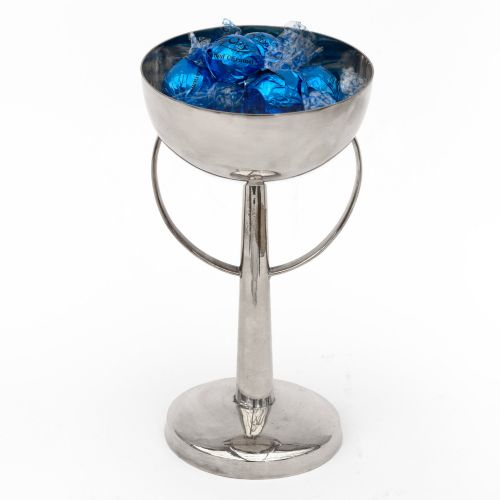
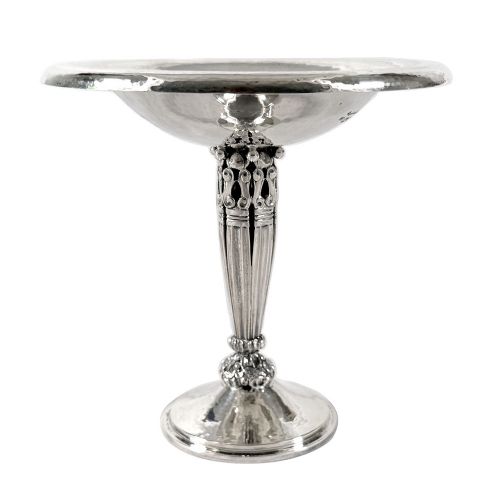
An antique silver tazza is a raised vessel supported by a central foot or pedestal, designed primarily for display, fruit or sweetmeats rather than everyday dining use. These pieces often appear under alternative descriptions such as comport, pedestal dish, cake stand or decorative bowl.
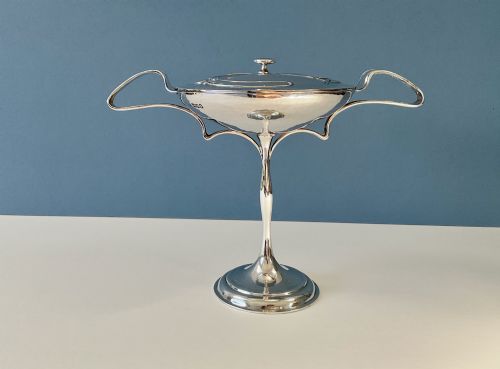
The pieces available span from the 18th century through the Victorian, Edwardian, Art Nouveau and Art Deco periods into the 1930s. Edwardian sterling silver examples alongside silver plate and bronze variants are most frequently encountered on this page.
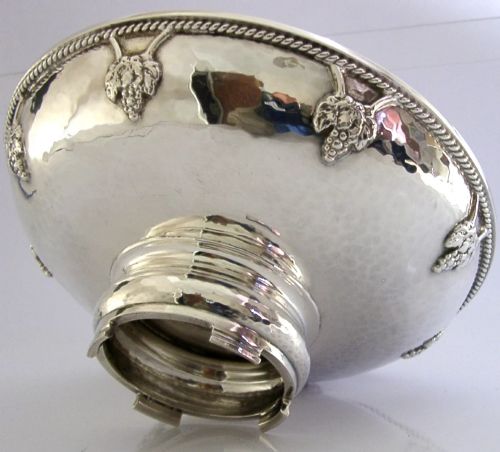
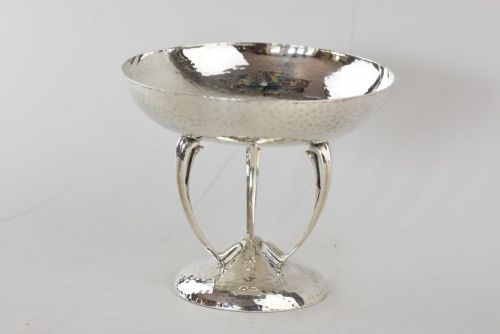
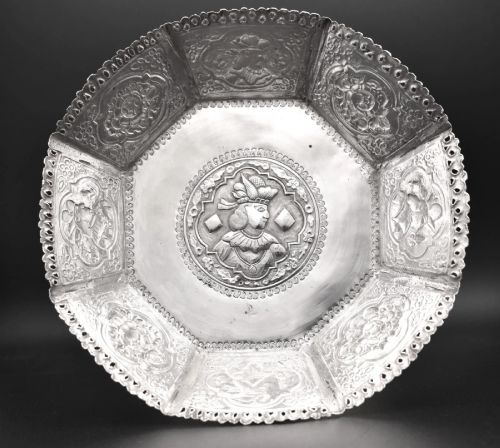
Forms range from simple circular dishes to elaborate multi-tiered centrepieces incorporating cut glass, crystal or gilt interiors. Makers utilised diverse stylistic influences, producing everything from austere Arts and Crafts hammered surfaces to ornate Burmese repoussé and Persian patterns.
Materials and construction methods
Makers utilised solid sterling silver, silver plate, Britannia metal, bronze and silvered metals, often combining them with cut glass or crystal liners. Construction techniques involved casting, hammering by hand, wirework and piercing to create openwork lattices.
Surface decoration required skilled handwork such as repoussé relief, chased engravings and delicate vermeil or gilt interiors. Stands and pedestals were frequently formed separately before being securely joined to the main bowl or dish.
Antique Silver Tazza Retail Price Guide 2026
Typical asking prices for silver tazza among the pieces listed under this phrase on Sellingantiques today, from the lower quarter to the upper quarter. They describe what is for sale here now, not the wider market.
Determining quality and craftsmanship
The distinction between standard production and exceptional work rests on the weight of the metal and the crispness of the hand-chased or hammered details. Heavier gauge sterling silver and substantial bronze bases provide structural integrity that lighter plated items lack.
Artistry in design elevates certain pieces, particularly where naturalistic motifs like dolphins, cherubs or botanical forms are integrated seamlessly into the foot and stem. The quality of the pairing with original cut glass inserts also influences the overall coherence of the object.
Goldsmiths and Silversmiths Company London·Charles Boyton·Mappin and Webb·Walker and Hall·James Dixon and Sons·Martin Hall and Co·Christofle et Cie
The Antique Silver Tazza Glossary
- Tazza
- A shallow bowl or flat dish mounted on a stem and foot, used historically for serving food or displaying items on a table.
- Comport
- A large pedestal dish or stand used for holding fruit, sweets or decorative arrangements during formal dining.
- Repoussé
- A metalworking technique where the artisan hammers the design from the reverse side to form a raised pattern in relief on the front.
- Vermeil
- Sterling silver that has been plated with a thin layer of gold, providing a rich interior or surface finish.
- Britannia metal
- A specific type of pewter alloy composed of tin, antimony and copper, often utilised as a base metal for silver plating.
Antique Silver Tazza: Frequently Asked Questions
What is a tazza used for?
Historically, a tazza functioned as a raised presentation dish for serving fruit, sweetmeats or nuts during formal dining occasions. They were placed centrally on tables to draw the eye and add height to table settings.
Today, these pieces serve well as standalone decorative objects on sideboards or as functional bowls for holding small items in a living space.
How do I date an antique tazza?
Dating relies heavily on hallmarks stamped into solid silver pieces, which indicate the assay office, year of production and maker's mark. Stylistic clues such as the flowing organic lines of Art Nouveau or the geometric symmetry of Art Deco also help narrow down the era.
Unmarked silver plated or bronze pieces require stylistic comparison and material analysis to approximate their decade of manufacture.
Are comports and tazzas the same thing?
The terms are frequently used interchangeably by dealers and collectors to describe footed pedestal dishes. Both feature a raised bowl supported by a central stem and base.
Minor regional or period preferences dictated which term was preferred, but the functional design remains identical.
How should I clean antique silver?
Silver requires gentle cleaning with a specialised non-abrasive silver polish and a soft microfibre cloth to remove tarnish without scratching the metal. Avoid harsh chemical dips, particularly on pieces with gilt interiors or delicate pierced work.
Regular, light dusting helps prevent heavy tarnish accumulation and preserves the natural patina over time.