


Sterling Silver Compote
These sterling silver compote pieces elevate any table, offering raised bowls and dishes designed for fruit, sweets, or floral displays.
Sterling Silver Compote
A sterling silver compote brings elevated presentation to the table, taking the form of footed bowls, tazzas, pedestal dishes, and centrepiece bowls. When searching for a sterling silver compote, buyers encounter raised vessels designed for fruit, sweets, or floral arrangements.
The selections span several centuries and movements, ranging from Georgian pedestal dishes and Edwardian pierced centrepieces to Arts and Crafts hammered tazzas and Art Deco designs. Makers from London, Sheffield, Edinburgh, and Birmingham produced these elevated serving pieces in various sizes.
Variations include single vessels, pairs, and larger sets, alongside regional expressions such as Anglo-Indian repoussé work and Spanish silver dishes. Buyers frequently find forms featuring lattice detail, gilt interiors, or three-legged supports.
Materials and construction methods
Silversmiths constructed these compotes primarily from sterling silver, occasionally applying a gilt interior finish known as vermeil to create a contrasting gold-coloured surface within the bowl.
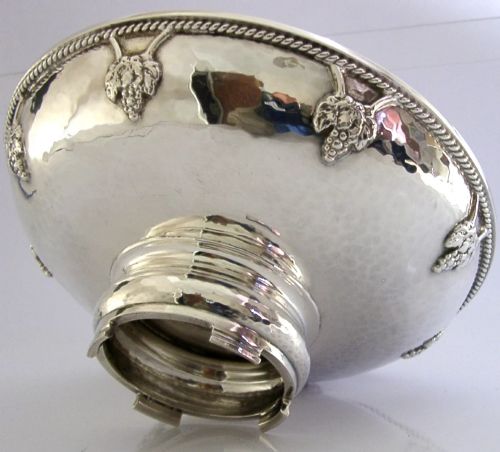
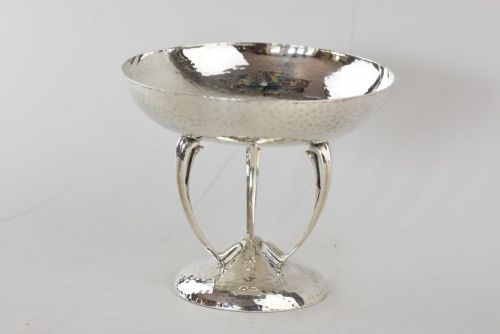
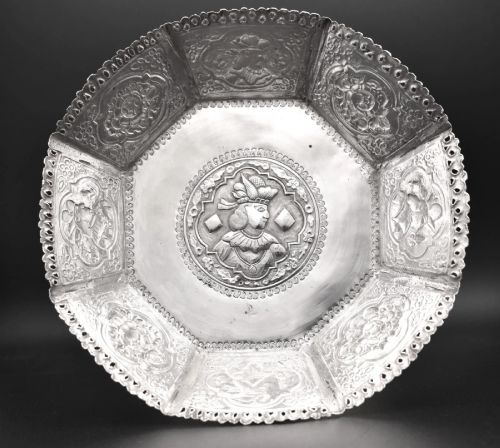
Techniques range from smooth spun or raised body forms to hand-hammered surfaces characteristic of the Arts and Crafts movement, alongside intricate pierced decoration and detailed repoussé relief work seen on Anglo-Indian pieces.
The listings include sterling silver, silver, and vermeil materials across periods spanning the eighteenth century through the 1960s.
Assessing quality and craftsmanship
Quality rests upon the weight of the metal, the balance of the pedestal foot, and the crispness of any hand-applied chasing, piercing, or hammering.
Pieces bearing marks from recognised makers or specific guilds display superior junction work and finishing detail compared to unmarked or mass-produced commercial examples.
A E Jones·Goldsmiths and Silversmiths Company·Charles Boyton·Walker & Hall·James Dixon & Sons
The Sterling Silver Compote Glossary
- Compote
- An elevated bowl or dish on a stem or foot used for serving fruit, compotes, or sweets at the table.
- Tazza
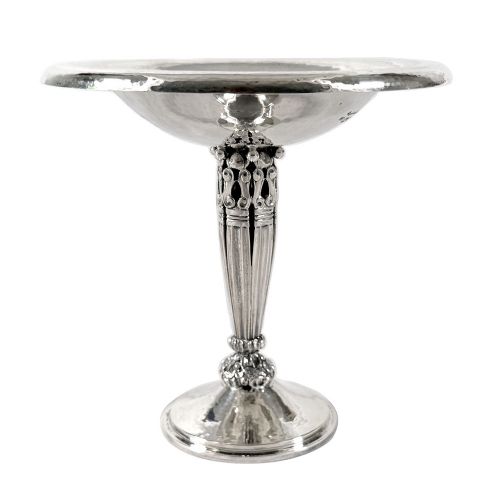
- A shallow bowl or plate mounted on a pedestal foot, originating in the Renaissance and frequently produced by silversmiths in the Arts and Crafts and later periods.
- Repoussé
- A metalworking technique where the silversmith hammers the design from the reverse side to form a raised relief pattern on the front.
- Vermeil
- Sterling silver that has been plated with a thin layer of gold on the interior or exterior surfaces.
- Pedestal Dish
- A serving vessel raised on a central foot or base, designed to display fruit or decorative items above the table surface.
Sterling Silver Compote: Frequently Asked Questions
What is a sterling silver compote used for?
These vessels were traditionally used to serve fruit, nuts, or sweetmeats at the conclusion of a formal meal, placing the contents at a raised height on the table.
Today, they function equally well as decorative centrepieces, flower bowls, or standalone display items in domestic interiors.
How do I identify an Edwardian silver compote?
Edwardian examples typically date from the reign of King Edward VII, featuring stylistic influences that blend late Victorian richness with early Edwardian lightness, often including pierced decoration and classical motifs.
Official hallmarks stamped on the silver will confirm the exact assay office and date letter corresponding to the early twentieth century.
What is the difference between a tazza and a compote?
While both terms describe elevated serving vessels on stems, a tazza generally refers to a shallower, flat-topped plate or dish on a pedestal.
A compote more specifically implies a deeper bowl shape intended for fruit or compote, though the terms often overlap in antique descriptions.
How should I clean a sterling silver compote?
Maintenance requires gentle cleaning with a specialist silver polish and a soft cloth to preserve the patina and any delicate hand-hammered or pierced details.
Avoid harsh abrasive cleaners and chemical dips, which can strip away the subtle details of repoussé work or damage gilt interiors.