
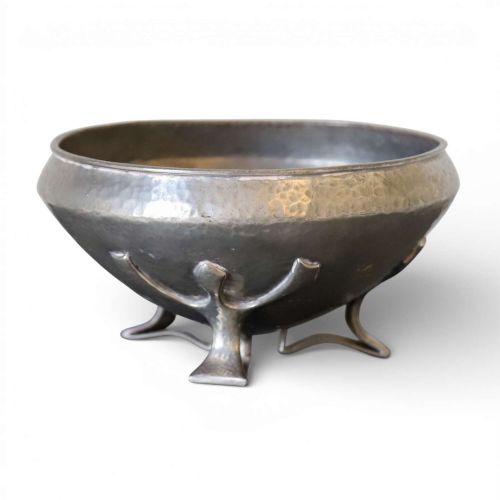
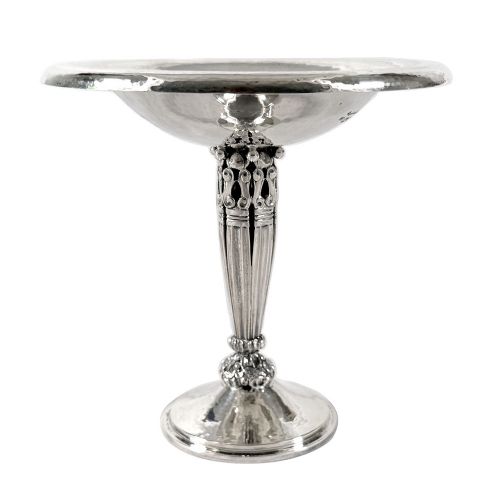


Hammered Silver Dish
A hammered silver dish brings tactile warmth and historic craft into a room, offering the visible mark of the maker's hand.
Hammered Silver Dish
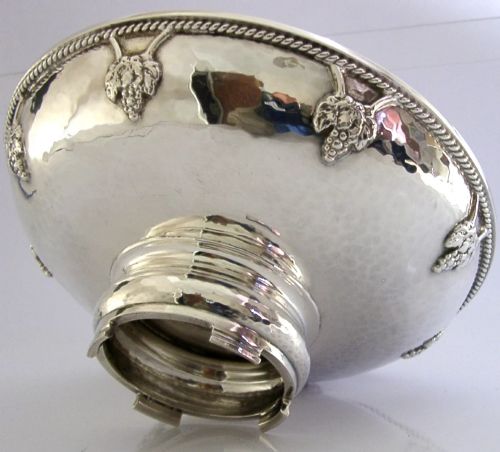
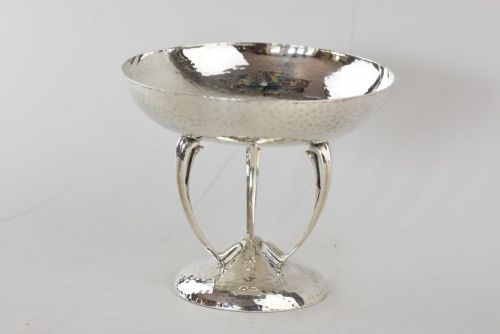
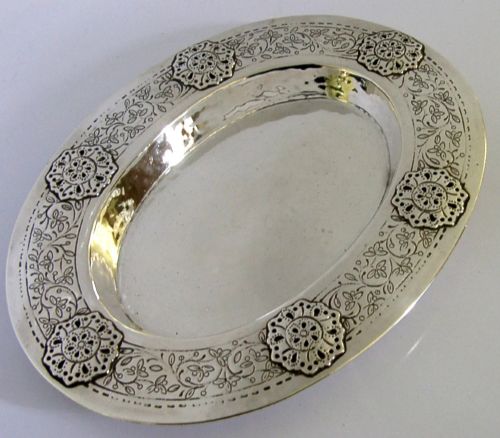
A hammered silver dish is a vessel shaped by hand through repetitive mallet or hammer strikes, creating a textured surface that catches the light differently than smooth metal. The pieces seen here span from early eighteenth-century chargers to mid-twentieth-century tazzas and bowls.
The Arts and Crafts movement dominates the selection, alongside Art Deco designs, earlier William and Mary works, and Chinese export pieces. Buyers will encounter both sterling silver and pewter alternatives produced by major retail houses and individual makers.
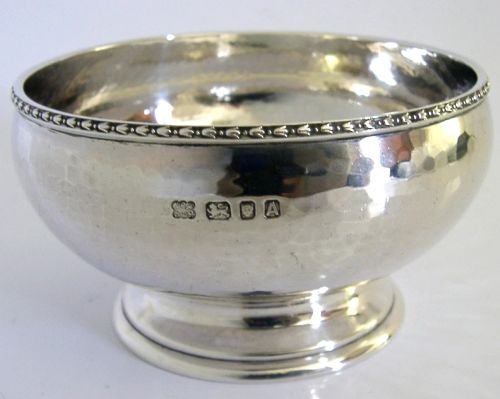
Forms range from small sugar bowls and footed fruit baskets to large wall plates and ceremonial tazzas standing on three legs. Most examples emphasise functional utility combined with distinct decorative metalwork.
What varies in quality
Quality rests in the rhythm and uniformity of the hammer marks and the balance of the vessel's proportions on its base or feet. A successful piece demonstrates deliberate control over the metal thickness during the raising process, ensuring the rim remains even and the weight feels substantial.
The distinction between standard commercial production and distinguished studio work often appears in the crispness of applied decorative elements, such as cabochons or handles. Maker attribution and documented provenance further elevate certain pieces above anonymous workshop output.
Listings feature items spanning from the early eighteenth century through the Edwardian era and into the mid-twentieth century.
A E Jones·Goldsmiths and Silversmiths Company·Liberty and Co·Oliver Baker·Charles Boyton·John Barrett·Thomas Powell
The Hammered Silver Dish Glossary
- Planishing
- The final stage of hammering a metal vessel with a flat-faced hammer to smooth the surface and harden the metal. This technique creates the characteristic shimmering texture seen on Arts and Crafts metalwork.
- Tazza
- A shallow bowl or dish mounted on a stem and foot, often used for serving fruit or display. These elevated vessels draw the eye upward and showcase detailed smithing on the underside.
- Charger
- A large decorative or ceremonial plate, frequently measuring twenty inches or more across. These substantial pieces were traditionally displayed upright on sideboards or walls.
- Cabochon
- A gemstone shaped and polished rather than faceted, frequently set into the metalwork of Arts and Crafts silver. These smooth stones provide a contrasting spot of colour against the hammered surface.
- Quaiche
- A traditional two-handled drinking vessel originating in Scotland, adapted during the twentieth century into shallow bowls. The twin lugs allow the piece to be held securely with both hands.
Hammered Silver Dish: Frequently Asked Questions
What is a hammered silver dish?
A hammered silver dish is a hand-formed vessel where the silversmith has shaped the metal using repeated hammer blows. This process creates a distinctive textured surface that sets the piece apart from mass-produced smooth silverware.
These dishes range from small sugar bowls to large display pieces and fruit vessels. They draw collectors who appreciate the physical evidence of traditional handcraft techniques.
How do I clean a hammered silver dish?
Cleaning requires a soft cloth and a reputable silver polish formulated to protect antique surfaces. Care must be taken around textured facets and applied decorative elements to avoid abrasive wear.
Harsh chemical dips should be avoided, particularly on pieces with patinated recesses or set stones. Gentle manual upkeep preserves the subtle finish left by the original maker's hammer.
How do I identify an Arts and Crafts dish?
Arts and Crafts pieces typically feature visible hand-hammered surfaces, organic motifs such as clover leaves, and sturdy proportions without excessive ornamentation. Maker marks stamped on the base often point to specific guilds or prominent designers.
The aesthetic values utility and honest construction, celebrating the marks of manual labour rather than hiding them beneath machine-polished perfection.
How were tazzas used historically?
A tazza served primarily as a display piece or a vessel for presenting fruit, sweets, or ceremonial items during formal dining. Their elevated form placed delicacies at a convenient height for guests.
Today, these footed dishes function effectively as decorative focal points on tables or sideboards. Their architectural presence adds height and structure to a room.