
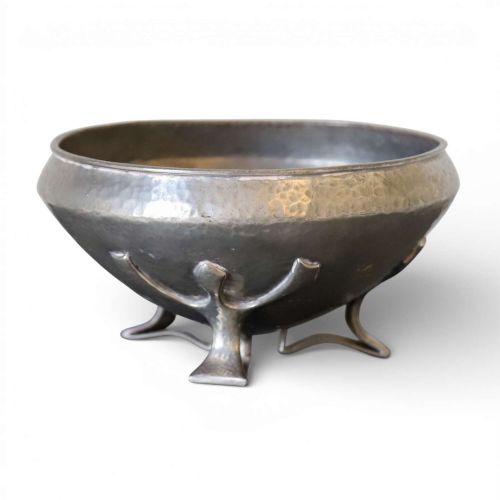
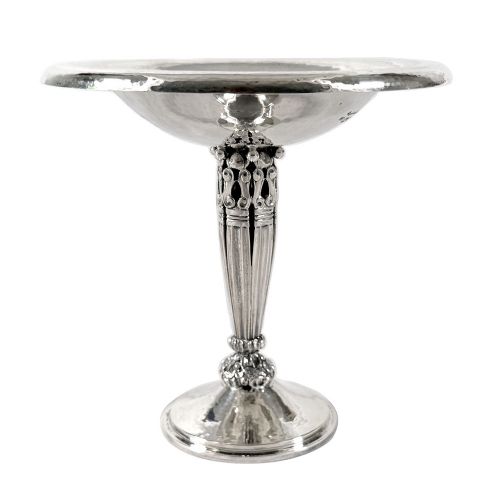


Hand Hammered Bowl
These hand hammered bowls bring visible texture and weight to a room, forged in copper, silver, pewter, and brass by makers of the Arts and Crafts era and beyond.
Hand Hammered Bowl
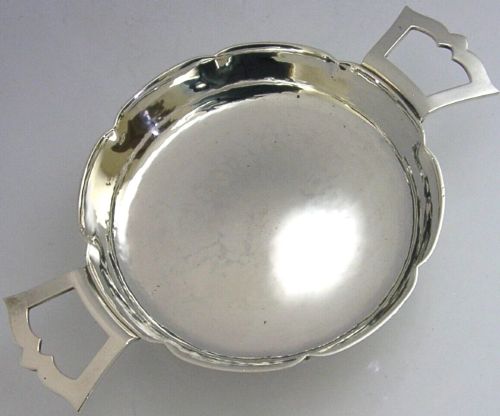
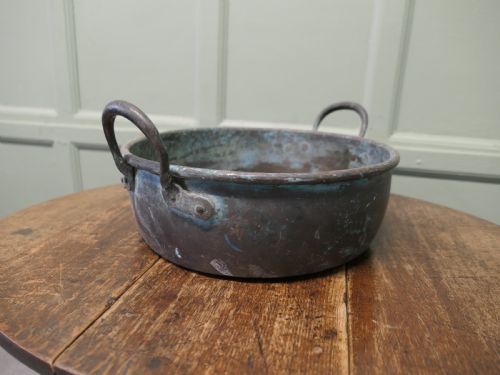
A hand hammered bowl is a functional or decorative vessel showing the direct marks of the metalsmith's hammer across its surface. When you search for a hand hammered bowl, you encounter domestic items ranging from heavy kitchen preserving pans to delicate silver quaich cups and pedestal tazzas.
The pieces listed here lean heavily into the Arts and Crafts movement, alongside Victorian copperware and early twentieth-century designs. You will frequently find works associated with Liberty & Co in pewter and silver, as well as unassigned vernacular copper chargers and jardinières.
Origins span English workshops, Scottish silversmiths, and colonial export traditions including Chinese and Anglo-Indian production. The forms serve various uses, from sugar basins and dishes to large centrepiece bowls set with enamel cabochons.
How they were made
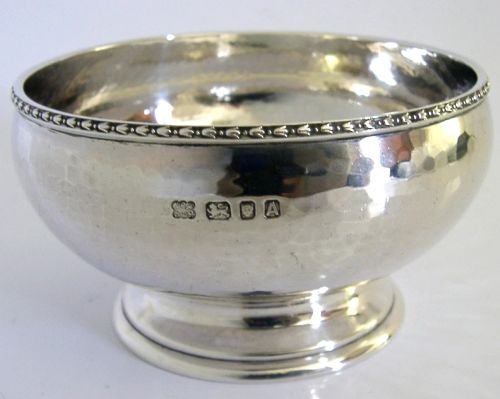
Metalsmiths shaped these vessels by raising sheets of copper, sterling silver, pewter, or brass over stakes using hand hammers. This process left characteristic planished facets across the metal that catch the light differently than machine-pressed items.
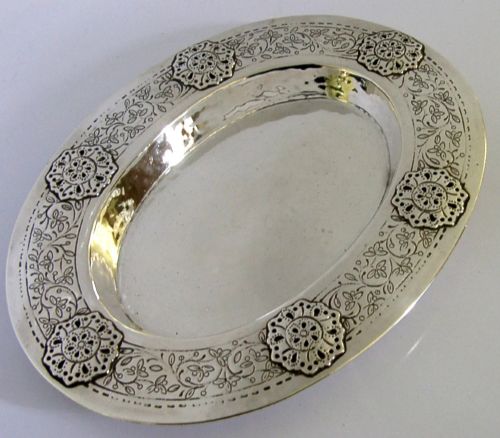
Makers often applied decorative elements by hand, setting enamel cabochons into pedestals or hammering clover flowers and foliage directly into the rims of pewter dishes. Wrought iron stands and cast brass components provided structural support for larger copper bowls and jardinières.
Materials span sterling silver, copper, pewter, brass, iron, and enamel, reflecting diverse domestic and decorative workshop traditions.
What varies in quality
Quality rests in the deliberate rhythm and consistency of the hammer marks across the metal surface, showing the maker's control over the material. Superior pieces display thoughtful weight and balance, particularly evident in the thickness of the silver or the substantial gauge of the copper.
Design integrity separates standard utility items from distinguished studio pieces, seen in the proportion of a pedestal tazza or the clean integration of handles on a quaich. Maker attribution and disciplined execution of Arts and Crafts motifs elevate certain bowls above anonymous vernacular examples.
R E Stone·Liberty & Co·Oliver Baker·Charles Boyton·John Barrett
The Hand Hammered Bowl Glossary
- Planished
- A surface finish achieved by smoothing metal with a flat-faced hammer, leaving regular, shallow facets that display the maker's hand.
- Quaich
- A traditional two-handled drinking vessel or shallow bowl of Scottish origin, often executed by silversmiths in solid silver.
- Tazza
- An ornate pedestal cup, dish, or shallow bowl raised on a foot, frequently utilised as a centrepiece.
- Jardiniere
- A large ornamental pot or bowl designed to hold plants or flowers, commonly rendered in heavy Victorian copper.
- Cabochon
- A gemstone or piece of enamel shaped and polished with a convex top rather than faceted, often set into metalwork.
Hand Hammered Bowl: Frequently Asked Questions
How do I clean a copper bowl?
Wash the metal gently with warm soapy water and dry it thoroughly with a soft cloth to preserve the surface. Avoid harsh abrasive cleaners that remove the natural ageing and historical character.
Leaving the metal unpolished allows a dark, warm patina to develop naturally over decades of handling.
Can I use these silver bowls daily?
Sterling silver vessels tolerate everyday use for serving dry foods or display purposes without sustaining damage. Hand washing prevents any harm to the delicate hammered details and hallmarks.
Store them away from direct moisture and harsh chemicals to maintain their structural integrity.
What is an Arts and Crafts bowl?
These pieces originate from a late nineteenth and early twentieth-century design movement valuing visible handcraftsmanship over industrial manufacturing. They typically display honest construction methods and tactile hammered surfaces.
Many examples carry workshop stamps or specific maker attribution from this period.
How do I date a hammered metal bowl?
Inspect the base and rim for stamped hallmarks, maker marks, or registration numbers that indicate the year of manufacture. Assay office marks on silver provide exact dates of testing and production.
Stilistic cues, such as riveted construction and enamel decoration, help place unmarked copper and pewter items within their proper era.