
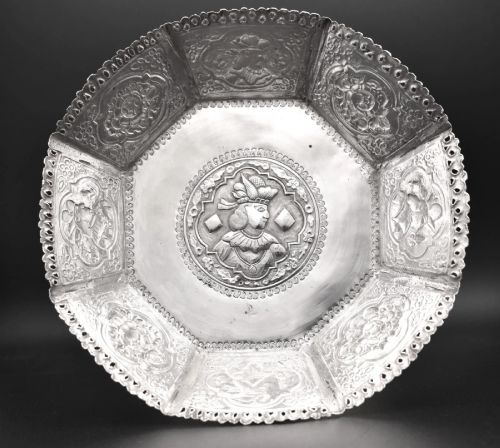


Silver Compote Dish
A silver compote dish is an elevated serving vessel designed to display fruit or sweets, offering a striking focal point for a table.
Silver Compote Dish
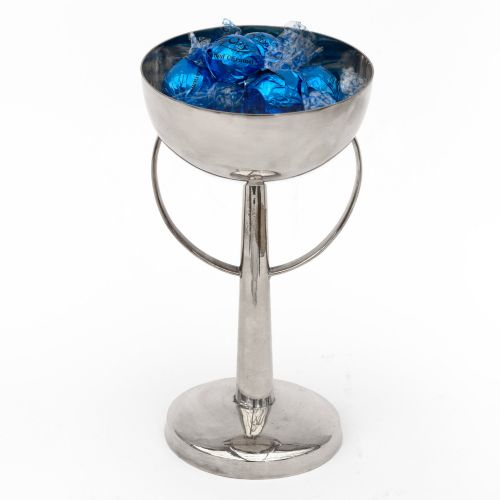
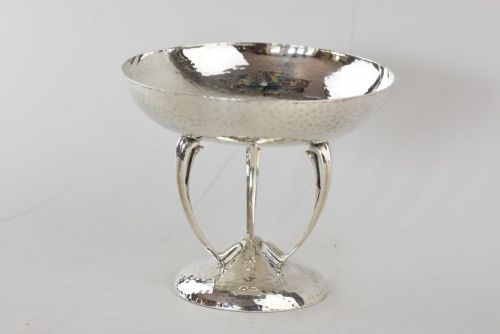
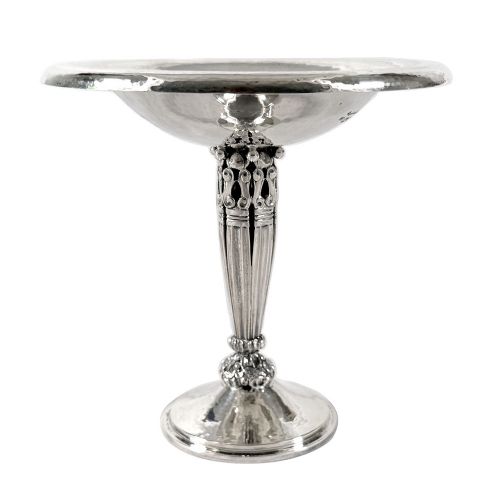
A silver compote dish is a raised vessel used traditionally for serving fruit, nuts, or sweetmeats at the table. These pedestal pieces take various forms, including tazzas, footed bowls, and formal centrepieces.
The selections available here span from the elegance of the eighteenth century through to the clean lines of the Art Deco and Modernist twentieth-century periods. Buyers will find sterling silver, silver plate, and even chrome examples representing styles such as Arts and Crafts, Art Nouveau, and Georgian design.
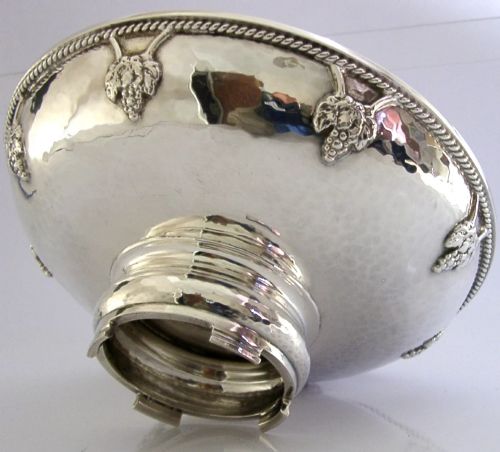
Pedestal bowls and compotes often feature detailed surface work, ranging from delicate pierced lattice patterns to bold repoussé motifs. Originating from diverse workshops across England, Scotland, India, China, and Europe, these vessels bring sculptural height to a display surface.
Materials and Construction
The primary metals utilised across these pieces include sterling silver, silver plate, and chrome, occasionally paired with cut glass inserts or enhanced with vermeil gilt interiors. Silversmiths shaped these materials through hammering, wirework, and casting to create sturdy pedestals and delicate rims.
Decorative techniques such as repoussé involve hammering the metal from the reverse side to form raised relief designs, which appear on several regional and period pieces. Piercing is another common method, creating openwork lattice details that lighten the visual weight of the heavy metal bowls.
Even swans occasionally lend their silhouette to the silver table, as seen in unusual figural dishes designed to glide across the sideboard.
Evaluating Quality and Craftsmanship
Quality in a silver compote dish rests upon the harmony of its proportions and the crispness of its execution. Pieces bearing the hand-hammered marks of skilled workshops display an individuality that separates them from standard commercial production.
The weight of the metal and the stability of the pedestal base indicate the integrity of the maker's construction. Furthermore, the finesse found in chased repoussé work or precise piercing demonstrates the artisan's mastery over the medium.
A E Jones·Goldsmiths and Silversmiths Company·Charles Boyton·Walker and Hall·W M F·James Dixon and Sons
The Silver Compote Dish Glossary
- Tazza
- An Italian term for a shallow bowl or cup mounted on a stem and foot, frequently used interchangeably with compote. These elevated dishes serve to present fruit or sweetmeats.
- Repoussé
- A metalworking technique where the artisan hammers the metal from the reverse side to create a raised design in relief on the front. This method creates tactile, highly decorative surfaces.
- Vermeil
- Sterling silver that has been plated with a thin layer of gold, providing a rich, dual-tone finish often seen on the interior of pedestal dishes.
- Centrepiece
- A large decorative vessel placed in the middle of a dining table for formal display. These objects command visual attention through their scale and elaborate ornamentation.
- Pierced
- Metalwork that has been cut through in specific patterns to create openwork decoration. This technique reduces weight and adds intricate visual texture to the rim or bowl.
Silver Compote Dish: Frequently Asked Questions
What is a silver compote dish used for?
These elevated vessels serve primarily to hold fruit, nuts, or confectionery on a dining table or sideboard. Their raised pedestal design lifts the contents above the surface, creating a distinct visual display.
Historically, they formed part of grand tablescape arrangements alongside matching tazzy and baskets. Today, they function equally well as standalone decorative objects or practical serving pieces.
How do I date an antique silver compote?
Dating relies heavily upon hallmarks stamped into the metal, which indicate the assay office, the specific year of production, and the maker's mark. British pieces make use of standardised date letters that change alphabetically by year.
Stylistic markers also help determine age, as the organic flowing lines of Art Nouveau give way to the geometric precision of Art Deco. Comparing the construction methods against known period styles narrows down the decade of manufacture.
Are silver compotes difficult to care for?
Maintenance requires regular, gentle polishing using a specialised silver cloth or cream to prevent heavy tarnish accumulation. Storing the piece in a dry environment away from direct sunlight helps preserve the metal's finish.
For pieces featuring gilt interiors or cut glass inserts, hand washing with mild soap is necessary to protect the varied materials. Avoid harsh abrasive cleaners that can wear away thin silver plate or delicate detailing.