
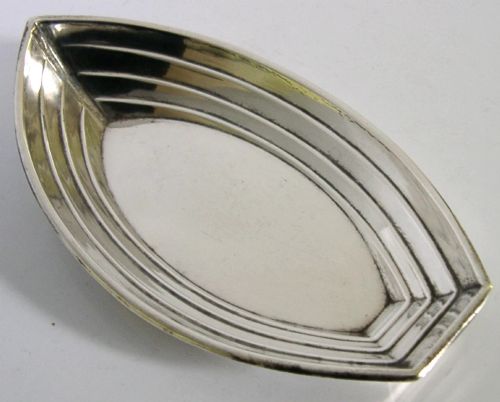
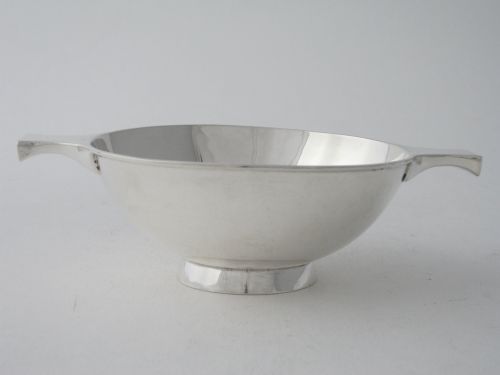
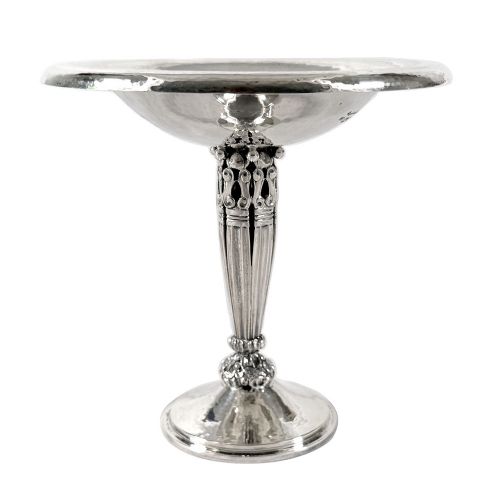
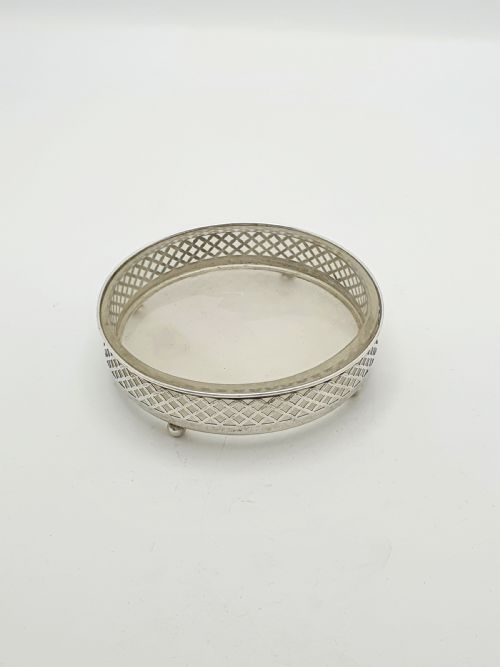

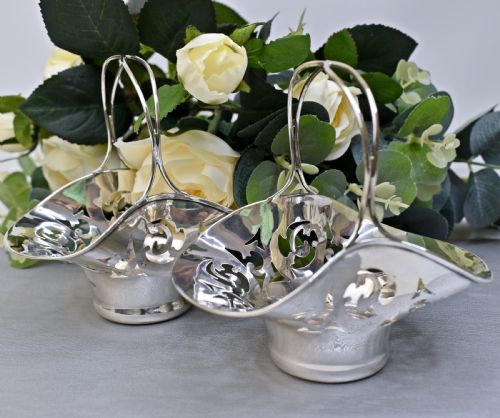


Art Deco Silver Dish
An art deco silver dish brings geometric clarity and functional elegance to a table, combining polished metal with contrasting glass or enamel inserts.
Art Deco Silver Dish
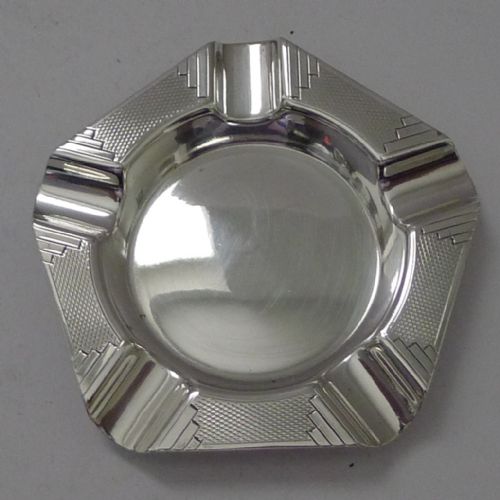
An art deco silver dish encompasses a wide variety of utilitarian and decorative forms, ranging from small trinket trays and ashtrays to larger serving dishes, tazzas, and butter dishes.
Makers produced these pieces in sterling silver and silver plate, frequently pairing the metalwork with contrasting materials like cut glass, cobalt glass, enamel, and tortoiseshell.
Originating largely from British, French, American, and Scandinavian workshops, these items reflect the stylistic shifts of the early to mid-twentieth century, spanning George V reigns through to the modernist period.
Materials and Techniques
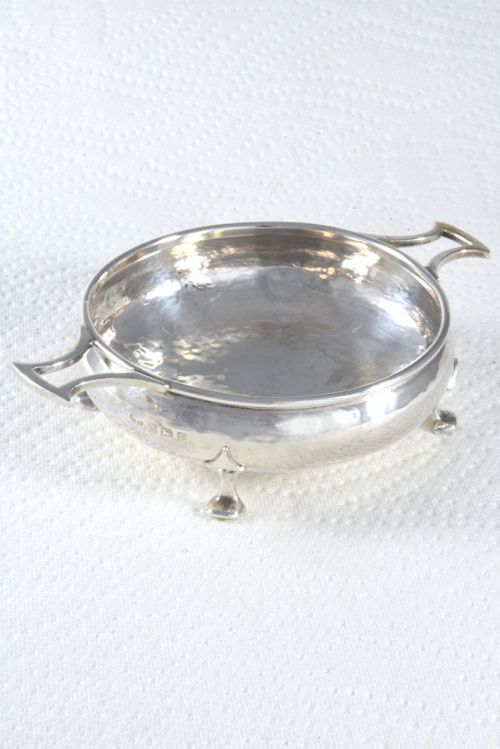
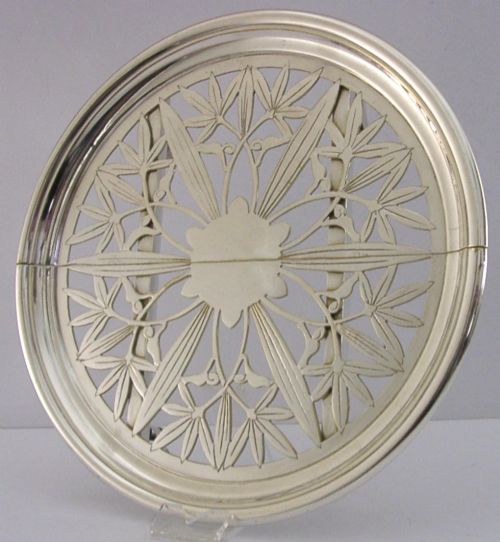
Craftsmen utilised sterling silver and silver plate as the primary structural foundations, often employing hammering, piercing, or engine-turning techniques to create geometric surface patterns.
Many items incorporate functional glass liners in cut glass, vaseline glass, or deep cobalt blue, which sit securely within pierced or solid metal frameworks.
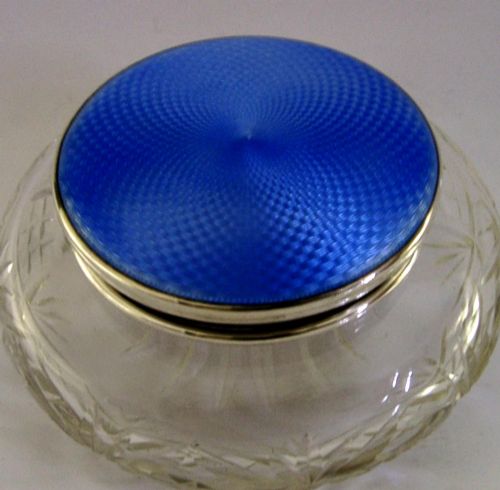
Vivid colour accents were achieved through the application of enamel, guilloché work, or the incorporation of organic materials such as tortoiseshell and exotic woods.
Art Deco Silver Dish Retail Price Guide 2026
Typical asking prices for art deco silver dish among the pieces listed under this phrase on Sellingantiques today, from the lower quarter to the upper quarter. They describe what is for sale here now, not the wider market.
Listings feature sterling silver, silver plate, and pewter, frequently combined with glass, cobalt glass, enamel, wood, and tortoiseshell.
Assessing the Pieces
Quality rests significantly on the prestige of the maker or silversmith, alongside the clarity of the Birmingham, Sheffield, or foreign hallmarks stamped into the metal.
The sophistication of the design execution, such as the precision of pierced geometric galleries or the integration of specialised glass and enamel components, separates standard production from finer examples.
Condition plays a defining role, particularly the intact survival of delicate glass liners, unblemished enamel work, and the original plating on silver-plated items.
Walker & Hall·Christofle·Charles Boyton·Fenton Brothers·John Grinsell & Sons·Viners·Brille Paris·Mappin & Webb·William Neale & Son·The Adie Brothers·Elkington & Co
The Art Deco Silver Dish Glossary
- Tazza
- A shallow bowl or dish raised on a standard and foot, often utilised for serving fruit or sweets.
- Guilloché
- A decorative engined-turned technique that etches precise, intricate geometric patterns beneath a translucent layer of enamel.
- Quaich
- A traditional two-handled Scottish drinking vessel, occasionally adapted into shallow dish forms during the twentieth century.
- Comport
- An ornamental dish or bowl elevated on a foot, used for serving fruit or small desserts at the table.
- Hallmark
- An official stamp applied to precious metals indicating the standard of purity, the assay office, and the date of manufacture.
Art Deco Silver Dish: Frequently Asked Questions
What were art deco silver dishes used for?
These vessels served diverse domestic functions at dining tables, dressing tables, and reception rooms. They held everything from butter, bonbons, and caviar to trinkets, stamps, and ashes.
Larger versions accommodated entrees and fruit, while smaller dishes functioned as desk accessories or ashtrays during formal gatherings.
How do I care for silver and glass dishes?
Maintenance requires gentle cleaning with appropriate silver polish, avoiding abrasive cloths that can damage delicate plated surfaces or enamel work. Glass liners should be washed separately in warm soapy water.
When storing or displaying the items, keep them away from direct sunlight and damp environments to preserve both the metal and any organic inserts like tortoiseshell.
How can I tell sterling silver from silver plate?
Sterling silver items generally bear official hallmarks indicating the silver standard, such as a lion passant for British pieces, along with maker marks and date letters. These pieces are solid metal throughout.
Silver-plated items utilise a base metal like pewter or copper coated in a thin layer of silver, and their stamps typically denote the manufacturing company rather than metal purity.