


Hammered Silver Bowl
A hammered silver bowl brings tactile warmth to a room, catching the light across hand-beaten surfaces.
Identifying your hammered silver bowl
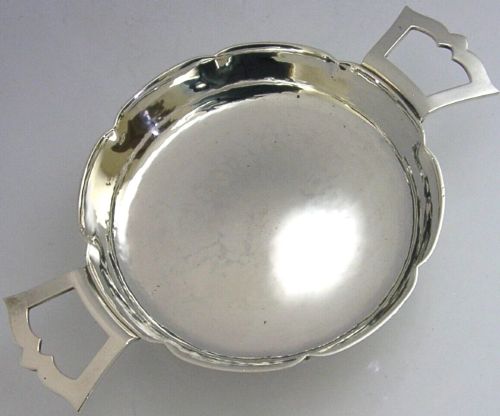
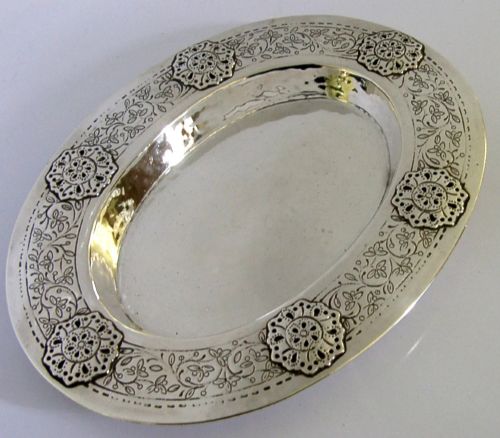
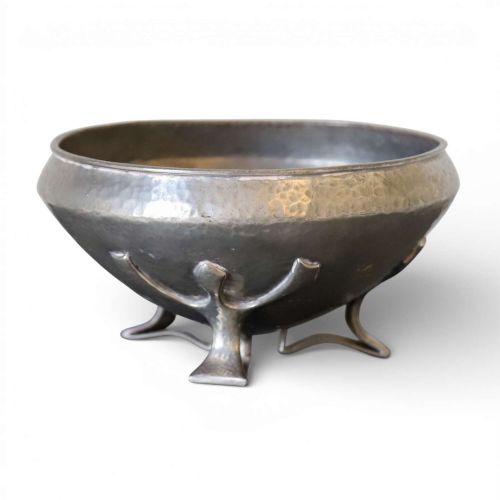
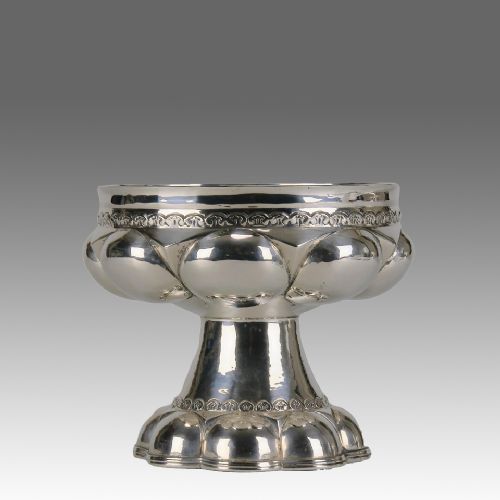
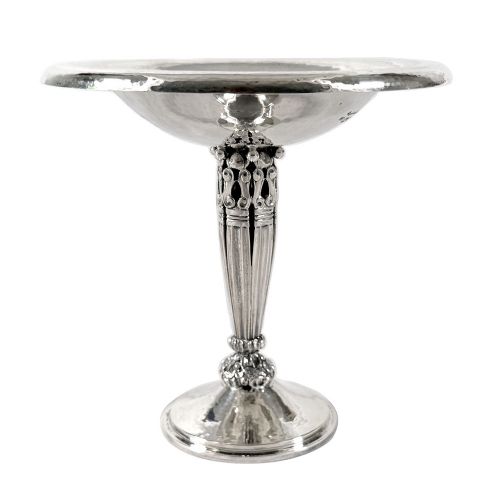
A hammered silver bowl represents a distinctive category of hollowware shaped by hand-beating techniques rather than smooth mechanical rolling. When you search for a hammered silver bowl, you encounter forms that span sugar bowls, tazzas, quaichs, and wine coolers. These pieces bridge utilitarian vessels and decorative objects through disciplined craftsmanship.
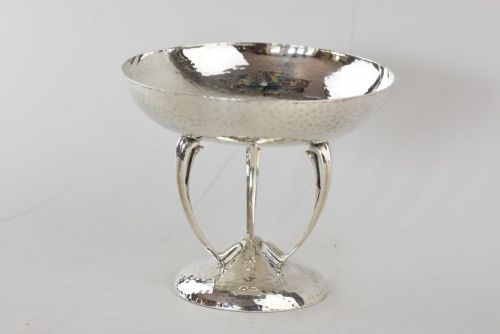
The selections available here predominantly showcase the Arts and Crafts and Art Deco styles, originating from periods such as the Edwardian era through to the late twentieth century. You will frequently find three-legged tazzas, open bowls, and sugar basins fashioned from sterling silver. The designs emphasise manual labour and visible tool marks over factory uniformity.
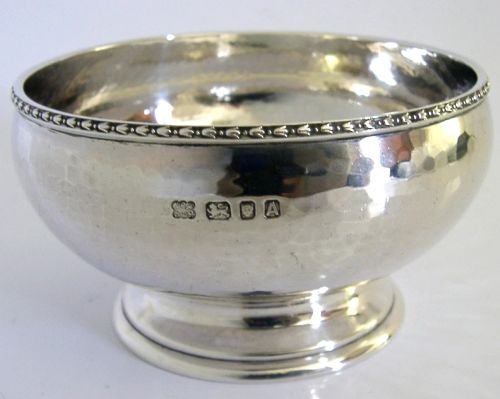
Originating largely from British workshops and assay offices in London, Birmingham, and Sheffield, these items carry historical hallmarks that anchor their provenance. The recurring presence of Arts and Crafts pieces demonstrates a sustained interest in domestic metalwork from the early twentieth century. Each object displays the distinct manual signature of its maker.
Materials and construction methods
Every piece recorded in this category is constructed from solid sterling silver, ensuring substantial weight and durability. The metal provides a responsive medium that takes the blow of the hammer while retaining structural integrity.
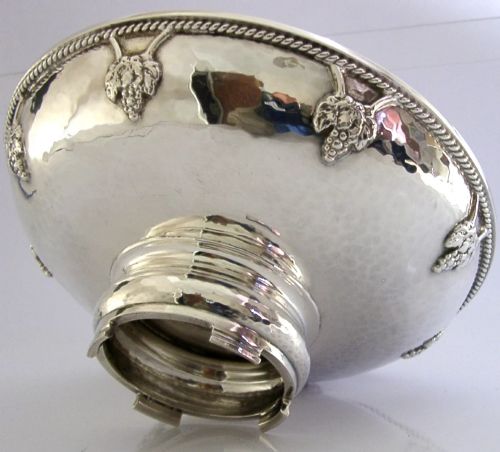
Makers shaped these vessels through manual raising and sinking techniques, striking the silver sheet repeatedly with specialised hammers. This process leaves characteristic facets across the surface, known as planishing or spot-hammering, which diffuse light across the metal.
A champagne wine cooler in this group doubles as a formidable lion bowl for your sideboard.
Assessing quality in hammered silver
Quality reveals itself in the rhythm and consistency of the hammer marks across the silver surface. A superior piece displays deliberate, uniform faceting that demonstrates absolute control by the metalsmith, whereas lesser execution appears irregular or haphazard.
The weight of the sterling silver and the balance of the form dictate the vessel's presence. Well-proportioned handles, sturdy feet, and clean intersection lines separate standard production items from distinguished workshop creations.
Goldsmiths and Silversmiths Company·Charles Boyton·John Barrett·A E Jones·Albert Edward Jones·Marples and Co·Asprey
The Hammered Silver Bowl Glossary
- Sterling silver
- An alloy comprising a high percentage of pure silver combined with other metals to increase hardness. This standard material forms the foundation of all items in this category.
- Planishing
- The process of smoothing and shaping metal with a flat-faced hammer. This technique creates the characteristic texture seen on these vessels.
- Tazza
- An ornamental shallow cup or bowl mounted on a stem and foot. Several examples in this category take this elevated form.
- Quaich
- A traditional two-handled drinking vessel of Scottish origin. Examples rendered in silver appear within the archive.
- Hallmark
- An official mark stamped onto precious metals in Britain to indicate standard of purity and origin. These stamps verify the city and year of manufacture.
Frequently Asked Questions
How do I clean a hammered silver bowl?
Use a soft microfiber cloth and a mild silver polish specifically formulated for sterling silver. Avoid harsh abrasive pads that can wear down the delicate hammer marks.
Wash the bowl in warm soapy water and dry it thoroughly immediately after cleaning to prevent water spots from forming on the surface.
Were these bowls used for dining?
Many examples served functional roles on the dining table, holding sugar, fruit, or small portions of food. Others functioned as decorative tazzas or presentation pieces.
Over time, domestic habits shifted, and many collectors now display them as standalone decorative items rather than utilitarian tableware.
What period do most hammered silver bowls come from?
The majority of pieces originate from the early twentieth century, coinciding with the height of the Arts and Crafts movement. Workshops in London and Birmingham produced significant quantities during this window.
Later twentieth-century examples also appear, often bearing special commemorative hallmarks that celebrate craftsmanship from specific decades.