


Edwardian Silver Tazza
An Edwardian silver tazza brings architectural height and formal elegance to a table, offering a raised platform for fruit, sweets or display.
Edwardian Silver Tazza
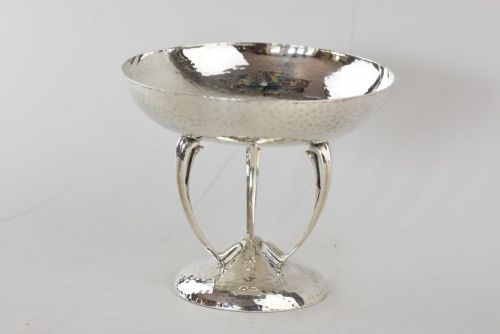
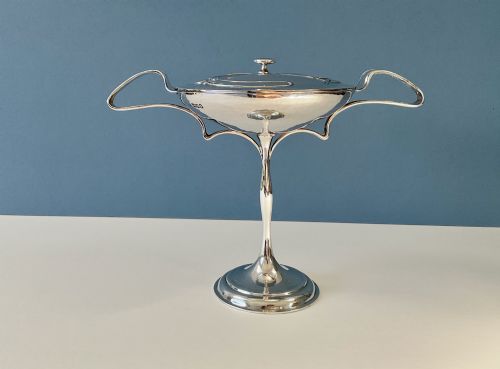
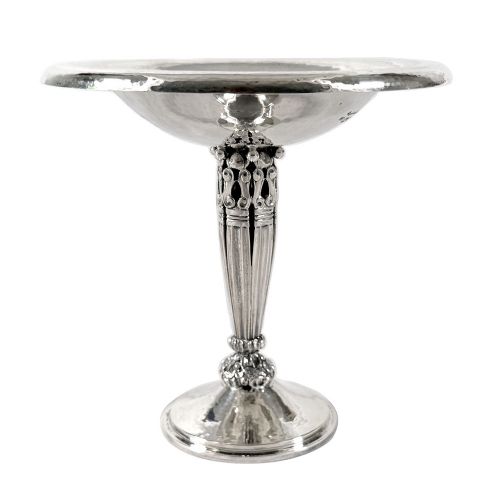
An edwardian silver tazza is a raised pedestal dish designed primarily for display or presentation on a dining table or sideboard. These pieces typically feature a shallow bowl supported by a distinct stem and foot, creating a sense of vertical proportion.
The pieces on this page span the Edwardian period alongside adjacent eras like the nineteenth century and the nineteen-twenties, reflecting shifts in taste. Alongside traditional solid sterling silver models, buyers encounter silver plate, EPNS, and examples incorporating cut glass or lattice detail.
Forms vary from simple circular dishes to square models, oval stands, covered bowls, and handled comports. Makers utilised distinct regional styles ranging from classical symmetry to the flowing lines of Art Nouveau and the honest construction of the Arts and Crafts movement.
Assessing quality and craftsmanship
The distinction between standard production and exceptional work lies in the weight of the metal and the crispness of the decorative detailing. Hand-hammered surfaces and intricate pierced patterns demand greater skill than plain stamped or spun metal.
Proportion and balance also define the better pieces, where the height of the pedestal complements the diameter of the bowl without feeling cumbersome. Maker attribution adds notable weight, with items bearing marks from recognised silversmiths demonstrating superior finishing.
Edwardian Silver Tazza Retail Price Guide 2026
Typical asking prices for edwardian silver tazza among the pieces listed under this phrase on Sellingantiques today, from the lower quarter to the upper quarter. They describe what is for sale here now, not the wider market.
Some pieces feature three sturdy little legs, proving that even a formal pedestal occasionally requires a tripod stance to keep its balance.
Goldsmiths and Silversmiths Company London·Charles Boyton·Mappin and Webb·Walker and Hall·James Dixon and Sons·Fenton Russell·Asprey
The Edwardian Silver Tazza Glossary
- Tazza
- A shallow bowl or plate mounted on a stem and foot, used traditionally for serving fruit or small items.
- Comport
- A decorative pedestal dish or bowl similar in function and form to a tazza.
- Pierced
- Metalwork decorated by cutting or piercing patterns through the surface to create openwork designs.
- EPNS
- Electroplated nickel silver, a base metal coated with a thin layer of silver through an electrolytic process.
- Assay mark
- A stamp indicating the purity of the precious metal and the office where it was tested.
Edwardian Silver Tazza: Frequently Asked Questions
What is an edwardian silver tazza used for?
These pieces served historically as centrepieces for formal dining tables, holding fruit, sweetmeats, or ornamental displays.
Today they function effectively on sideboards or coffee tables as decorative objects or holding vessels.
How do I clean my silver tazza?
Use a soft cloth and a specialised silver polish formulated to remove tarnish without abrading the surface.
Avoid harsh chemical dips, particularly on pieces with cut glass inserts or delicate pierced work.
Are these pieces made of solid silver?
The inventory includes both solid sterling silver and silver plate or EPNS options.
Checking the hallmarks stamped on the metal confirms whether a piece is solid silver or plated.
How can I tell the date of a tazza?
British pieces feature hallmarks that include a date letter corresponding to the specific year of assay.
Assay office marks from cities like London, Sheffield, Edinburgh, and Chester help narrow down the origin and date.