

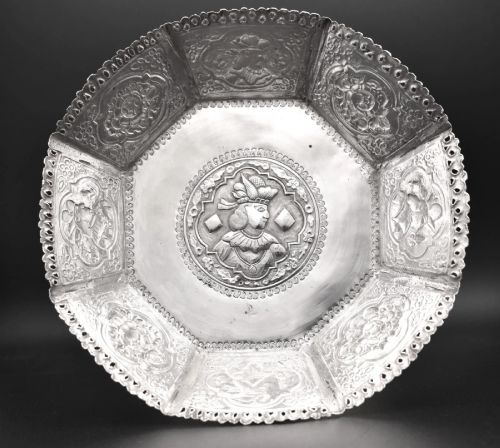


Antique Silver Compote
These antique silver compote pieces bring raised centrepieces of sterling and vermeil to the dining table, offering height and elegance for fruit or display.
What an antique silver compote is
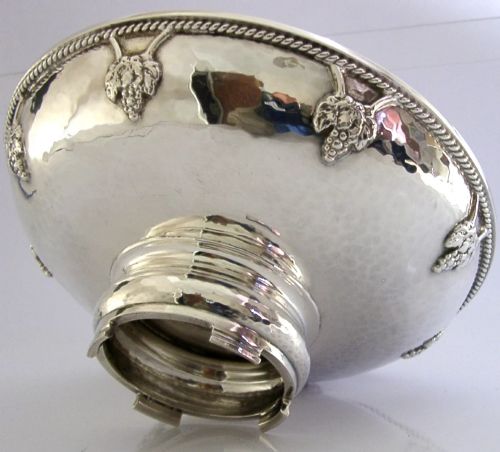
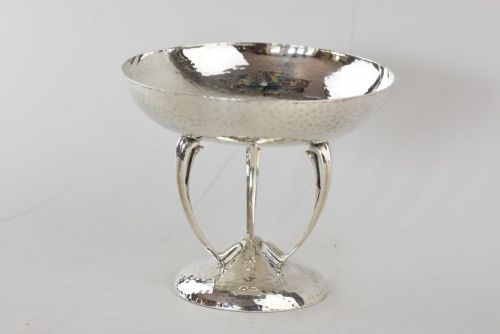
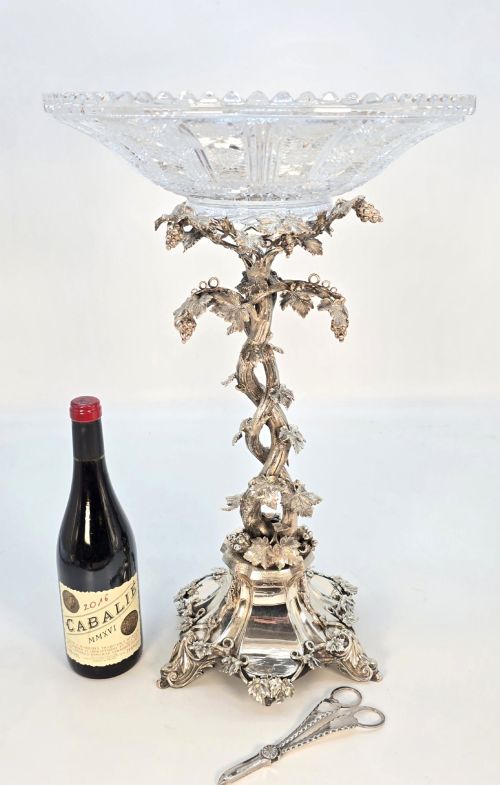
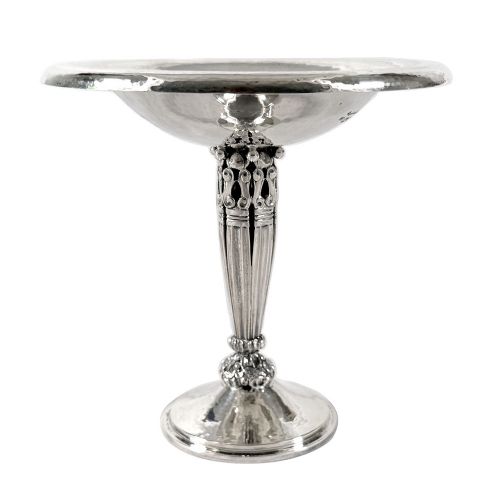
An antique silver compote is a raised pedestal vessel designed for serving fruit, sweetmeats or nuts at the formal table. Buyers seeking this form encounter elevated pedestal dishes, tazzas and footed bowls spanning several centuries of design.
The pieces on this page include Georgian examples from the eighteenth century alongside Edwardian and later creations. Forms range from classical pedestal bowls with gilt interiors to intricate wirework and Persian pattern dishes.
Origins stretch from English workshops in London and Sheffield to Anglo-Indian makers and Persian-inspired designs. The overarching category encompasses both deep decorative bowls and shallow footed dishes on substantial stems.
How they were made
Silversmiths constructed these vessels primarily in sterling silver and silver, frequently applying vermeil to create a rich gold wash upon the interior surfaces. Construction involves raising sheet silver from a single disc or casting components separately before joining them securely.
Decoration relies on techniques such as pierced lattice detail, fine wirework, and chased patterns following Persian motifs. Handles, stems and feet are often cast in distinct parts and soldered to the main bowl body to ensure balance.
Retail Price Guide 2026
Typical UK retail prices for silver compote, calculated from the Sellingantiques database of over a million retail prices indexed since 2003. This retail price guide relies exclusively on Sellingantiques data; no external sources or auction records are used, so the figures do not describe the wider market.
Geographic origins represented include English production from London and Sheffield alongside Anglo-Indian and Persian styles.
What varies in quality
Quality rests on the crispness of the chasing, the structural integrity of the pedestal stem, and the preservation of any original gilt interior. Superior examples exhibit harmonious proportions between the bowl and its foot, with no distortion to the raised metal.
The distinction between standard production and finer work lies in the hand-finishing of details like pierced lattice panels and wirework. Makers who invested greater labour into the secondary chasing and internal gilding separate themselves at the upper end of the range.
Walker and Hall·Wakelin and Taylor
The Antique Silver Compote Glossary
- Compote
- A raised vessel with a stem and foot, used for serving fruit or small dishes at table. It shares its origins with the tazza.
- Vermeil
- Silver gilt, comprising a layer of gold applied over a solid silver base. This finish protected the silver from food acids and added visual warmth.
- Tazza
- A shallow saucer-like dish mounted on a stem and foot. The form dates back to the Renaissance and appears frequently alongside pedestal bowls.
- Pedestal dish
- Any vessel elevated upon a central foot or stem. This form gives height and presence to the dining surface.
Frequently Asked Questions
What is an antique silver compote used for?
These elevated vessels serve fruits, nuts, and sweetmeats on the dining table, adding height and architectural interest to a tablescape.
Historically, they sat as central ornaments during dessert courses, holding delicate foodstuffs above the level of the main table linen.
How do I date an antique silver compote?
Dating relies on maker marks, town hallmarks, and stylistic indicators such as Georgian symmetry or Edwardian neoclassical details.
Examining the manufacturing techniques and the presence of specific period motifs helps place the piece within the eighteenth, nineteenth, or early twentieth century.
What does a gilt interior mean on a compote?
A gilt interior means the inside of the bowl is coated with a thin layer of gold over the silver.
This treatment, known as vermeil, prevented acidic fruits from tarnishing or corroding the underlying sterling silver.
How should I clean my silver compote?
Cleaning requires a soft cloth and a gentle silver polish specifically formulated for antique metals to preserve surface detail.
Avoid harsh abrasive cleaners, particularly on pieces with delicate wirework, lattice piercing, or internal gilding.