
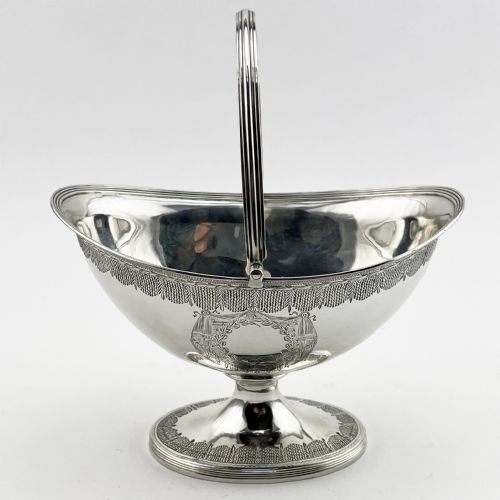
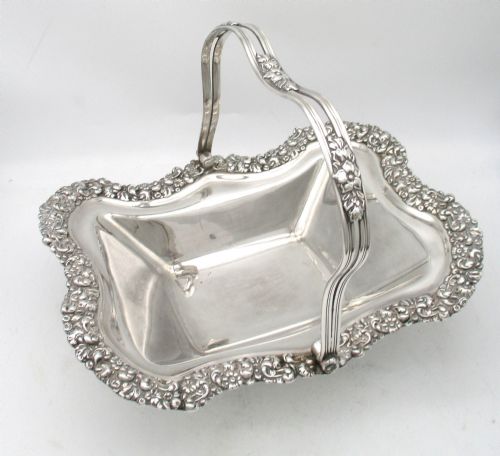
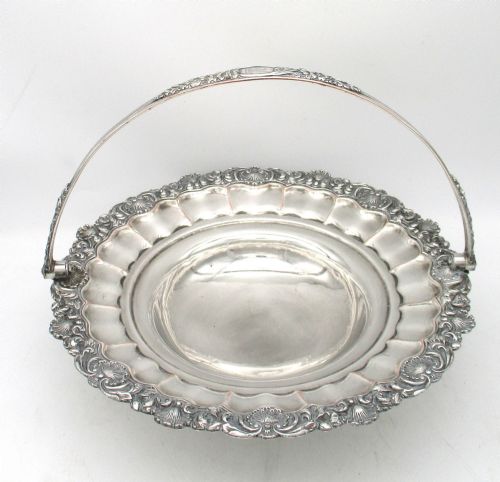
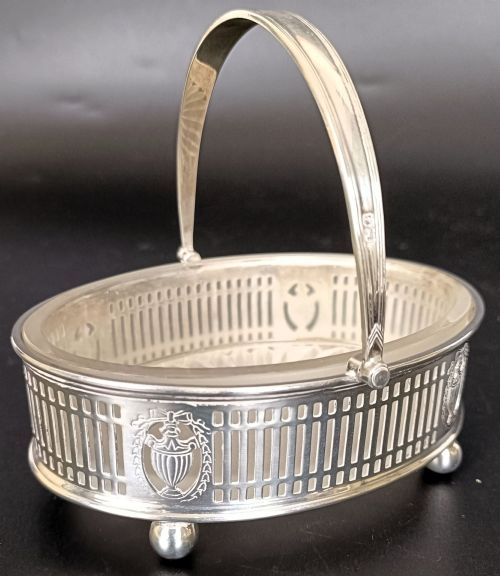

Georgian Silver Dish
A georgian silver dish brings crisp 18th-century smithing and refined dining ceremony straight to the modern table.
Forms and Origins
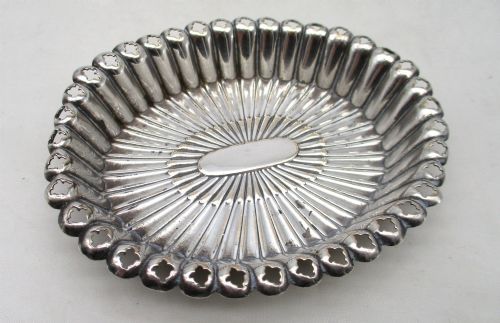
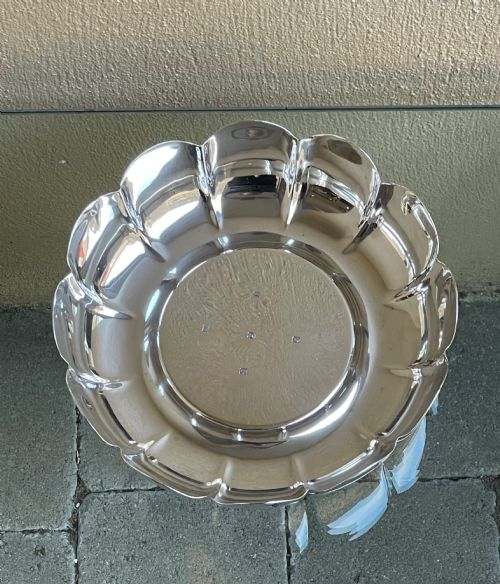
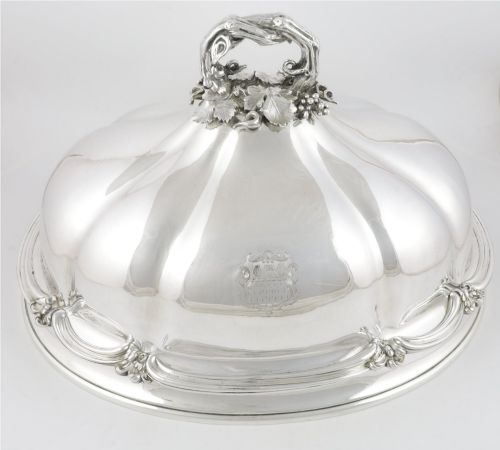
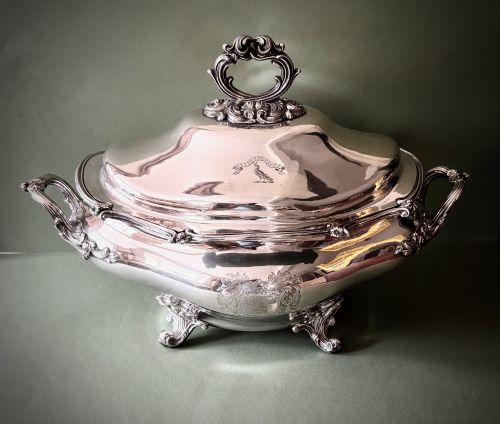
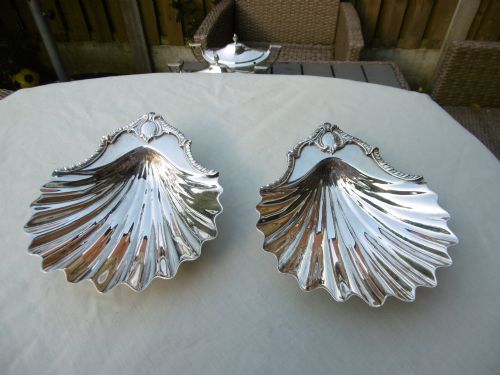
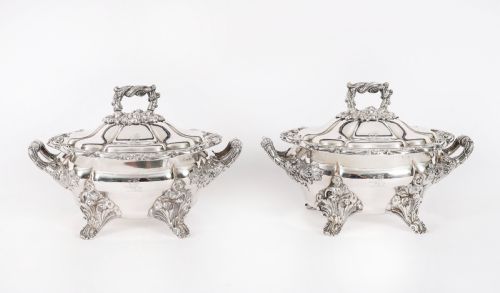
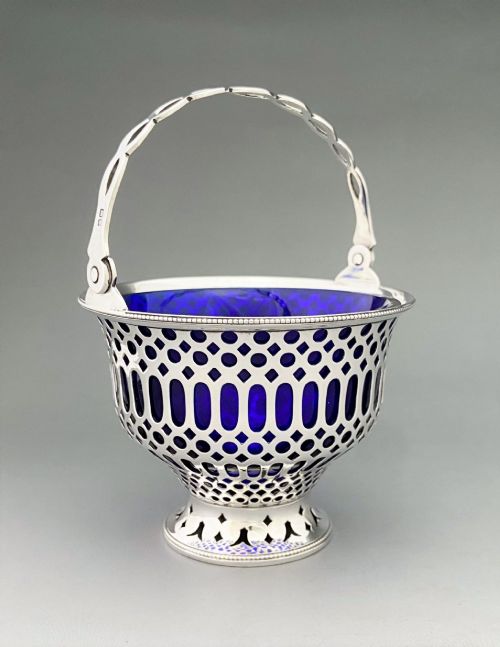
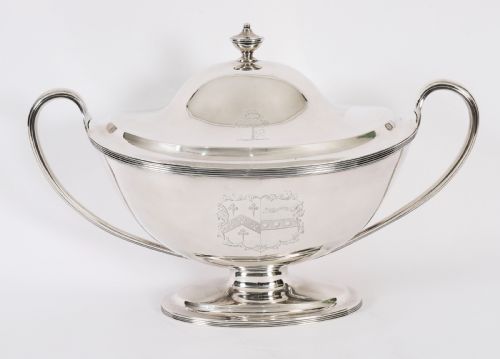
A georgian silver dish encompasses everything from shallow patens and butter shells to substantial entree dishes and pedestal bowls produced across the eighteenth and nineteenth centuries. Buyers frequently encounter shell-moulded butter dishes, twin-handled serving pieces, and heavy entrée dishes bearing hallmarks for London silversmiths.
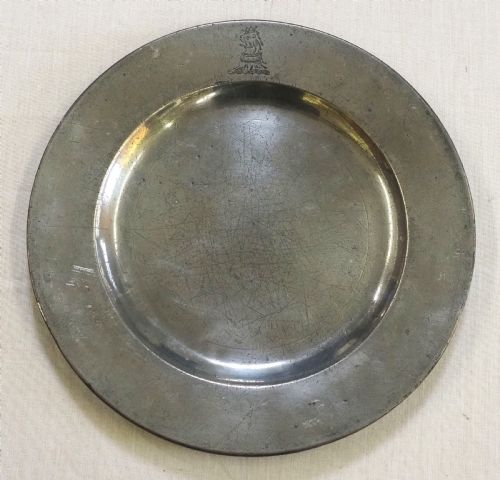
The objects span periods from the reign of George II through to the Regency era and George IV, reflecting changing dining fashions of the Georgian period. Forms range from simple circular plates and coin dishes to ornate pedestal dishes with gilt interiors and shaped gadrooned rims.
While many examples originate from the 18th century, the selection also includes early 19th-century silver plate and sterling silver items designed for formal service. Whether used as a standalone decorative bowl or paired as entree dishes, these pieces demonstrate enduring utility.
Materials and Technique
Silversmiths utilised sterling silver and silver plate, frequently applying vermeil or gilding to the interior surfaces of bowls and salts to create a rich two-tone contrast. Heavy gauge metal was hammered, raised, and cast to form sturdy vessels capable of withstanding daily dining use.
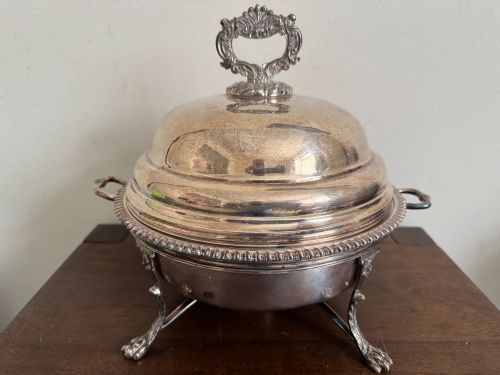
Decoration relied on traditional hand-working techniques including repoussé work, chasing, and crisp border casting such as gadrooning or pie crust edges. Makers incorporated functional elements like twin handles, footed pedestals, and fitted warmers into the heavier serving pieces.
Retail Price Guide 2026
Typical UK retail prices for georgian silver dish, calculated from the Sellingantiques database of over a million retail prices indexed since 2003. This retail price guide relies exclusively on Sellingantiques data; no external sources or auction records are used, so the figures do not describe the wider market.
Listings feature sterling silver, silver plate, and vermeil across the 18th Century, 19th Century, and Georgian periods.
Judging Quality
Quality rests upon the crispness of the chased decoration, the weight and gauge of the silver, and the preservation of original hallmarks struck by the assay office. Pieces bearing maker marks from renowned workshops display superior finishing in structural joints and decorative borders.
The application of vermeil, the symmetry of cast shell motifs, and the retention of clean lines without excessive polishing distinguish finer examples. Maker attribution and matched pairs command distinct attention among collectors.
Wakelin and Taylor·William Garrard·Samuel Hennell·Matthew Linwood·Cresswick·Samuel Herbert·Goldsmiths Co·Barnard·J T Younge·Walker and Crowder·Thomas Robbins·George Burrows·Charles Reily·George Storer·Paul Storr
The Georgian Silver Dish Glossary
- Gilt
- Silver that has been coated with a thin layer of gold, often referred to as vermeil in period descriptions. This technique protected the silver from food acids and added visual warmth.
- Patem
- A small shallow plate or dish originally used for ecclesiastical purposes but frequently adapted as domestic silver. These early pieces often date from the mid-eighteenth century.
- Entree dish
- A large covered serving vessel designed for the second course of a formal Georgian meal. They often appear in matched pairs.
- Gadrooning
- A decorative carved or embossed border pattern consisting of convex curves, commonly found along the rims of Georgian dishes and serving trays.
- Butter shell
- A small scallop-shaped dish used for serving butter at the table, frequently modelled directly from natural shells during the mid-18th century.
Frequently Asked Questions
How were these dishes used?
Georgian silver dishes served specific functions at the dining table, ranging from holding butter and sweetmeats to presenting meat courses and entrees. Heavier vessels were utilised with warmers or stands to keep food tempered during long meals.
Smaller shell dishes and salts sat directly on the dining surface for individual condiments. Larger chargers and tazzas functioned as centrepieces or sideboard displays for wealthy households.
How do I identify periods?
Hallmarks stamped directly into the silver provide the most reliable guide to dating, showing assay office symbols, date letters, and maker marks. Stylistic shifts also help, as mid-18th-century pieces often feature rococo shell motifs while Regency and George IV items display stricter classical lines.
Maker attributions recorded in the registry further narrow down the production decade. Comparing rim styles and weight adds confidence to period identification.
Are they safe for food?
Solid sterling silver possesses natural antibacterial properties and remains entirely suitable for serving dry foods, butter, and sweets. Care should be taken with gilded or vermeil interiors to preserve the gold wash over time.
Hand washing with mild soap and warm water protects the antique surface. Avoid abrasive cleaners that can wear away crisp chased details.
What is silver gilt?
Silver gilt, also known as vermeil, is solid sterling silver coated with a fine layer of gold. This process was commonly applied to the interiors of bowls, salts, and presentation dishes.
The gold layer prevented tarnishing from reactive foods and offered a luxurious aesthetic. Surviving gilt often appears bright and rich inside older Georgian vessels.